The Labor Tell
Before the doors open, before the first basket rolls through produce, the store is already telling the truth. It is in the carts lined up outside, the wet rack that either looks loved or left behind, the deli case before lunch, and the cashier who has to carry the front end with a smile. Labor does not show up first as a number. It shows up as a feeling customers can read.
This Week in Grocery
The labor conversation usually starts in the office: hours, wages, vacancies, turnover, budgets. Operators know those numbers matter. But the sales floor asks a harder question: what did those numbers do to the store by noon, by 4 PM, and by the final walk before the lights go down?
The physical store is where trust gets inspected
FMI shopper research still points back to the building: 54% of grocery shoppers always shop in-store at their primary store, another 20% mostly shop in-store, 73% want a clean and neat store, and 69% want to examine produce up close and move through departments easily.
That is not just shopper preference. It is a daily inspection by hundreds of people who never see the schedule, the call-outs, or the labor budget. They only know whether produce feels cared for, checkout feels owned, and the store still has control of itself.
Labor is not just expense control. It is the store's ability to keep its promise.
The 2025 FMS/NGA Independent Grocers Financial Study gives the squeeze a hard edge: total expenses reached 25.8% of sales, labor and benefits hit a record 16.3% of net sales, and part-time turnover landed at 40.7%.
Those are financial numbers, but behind them are people: the closer who stayed late to recover the wet rack, the deli clerk trying to survive lunch while the line grows, the front-end lead trying to keep the last five minutes of the trip from feeling abandoned. Labor pressure becomes human before it becomes visible on a report.
Checkout tells the truth out loud
FMI Industry Speaks reporting shows nearly 60% of 2024 transactions happened at regular cashier lanes, up from 52% the year before, while self-checkout fell to just over one-third from 44%.
That shift matters because checkout is where coverage becomes public. A shopper may forgive a missing item. They are less forgiving when the end of the trip feels like nobody owns it. The last impression of the store should not be an associate apologizing for a labor plan they did not write.
Stop asking whether the store has enough labor. Ask where the labor is supposed to show up.
A schedule can be technically right and operationally wrong. The real test is not whether the spreadsheet balanced. The real test is whether the hours protected the moments customers actually judge: the first impression, the meal window, the late fresh condition, and the final five minutes at checkout.
The strongest operators do not defend the labor plan from the office. They walk the floor until the plan either proves itself or confesses.
A store does not have to be failing to feel tired. Sometimes the labor tell is quieter: a first display that never got loved, a deli case that missed the lunch rush, or a closing walk that pushed yesterday's work into tomorrow morning. Stores rarely lose standards all at once. They drift.
Walk the hours customers actually feel
Do not audit labor only from the schedule. Walk the dayparts where the operation has to prove itself: opening, lunch, dinner, checkout, and close. Those are the moments where pride either shows up or slips.
The morning tells you how last night really ended
Stand in the parking lot before the first rush and look at the building like a customer who has no idea what happened yesterday. Are the carts ready? Is the entrance clean? Does produce feel awake? Are ad signs right? If the first hour is spent recovering the close, the store opened with debt.
Prepared foods should look like someone expected company
At lunch and dinner, the deli line is more than traffic. It is a trust test. Thin pans, tired labels, missing chicken, and a counter with effort but no speed all say the same thing: the store wanted the sale, but did not fully staff the promise.
The last five minutes decide how the trip feels
Listen for the labor plan: self-checkout interventions stacking up, one cashier absorbing every exception, a customer looking for help, a lead trying to smile through the pressure. The line can move and still feel uncared for.
Dinner hour is the real fresh audit
Fresh departments can look beautiful after the morning set and tired by 5 PM. That gap is the tell. Customers do not separate labor from quality. They see produce that faded, meat that looks thin, bakery that lost its shape, and a store that stopped feeling alive.
Run the Closing Debt Audit.
Monday morning, pick one daypart where the schedule says covered but the floor says behind. Do not start with a labor lecture. Start with proof. Walk it with the manager who owns it, name the visible customer friction, and decide what has to change before the next same-daypart walk.
- At the front end, count interventions and customer waits, not just open lanes.
- In prepared foods, ask whether the case still looks like a meal solution at the hour customers need dinner.
- In fresh, walk the department after it has been shopped hard, not only after it has been set.
The schedule is only useful if it protects the handoff.
A good operator can feel where the day is about to break. It is rarely in the total hours. It is in the handoff between opening and lunch, lunch and dinner, dinner and close. That is where unfinished work changes shifts, pressure changes departments, and yesterday starts stealing from tomorrow.
If customers walked your store at 5 PM instead of 9 AM, would they believe the same leader was in charge?
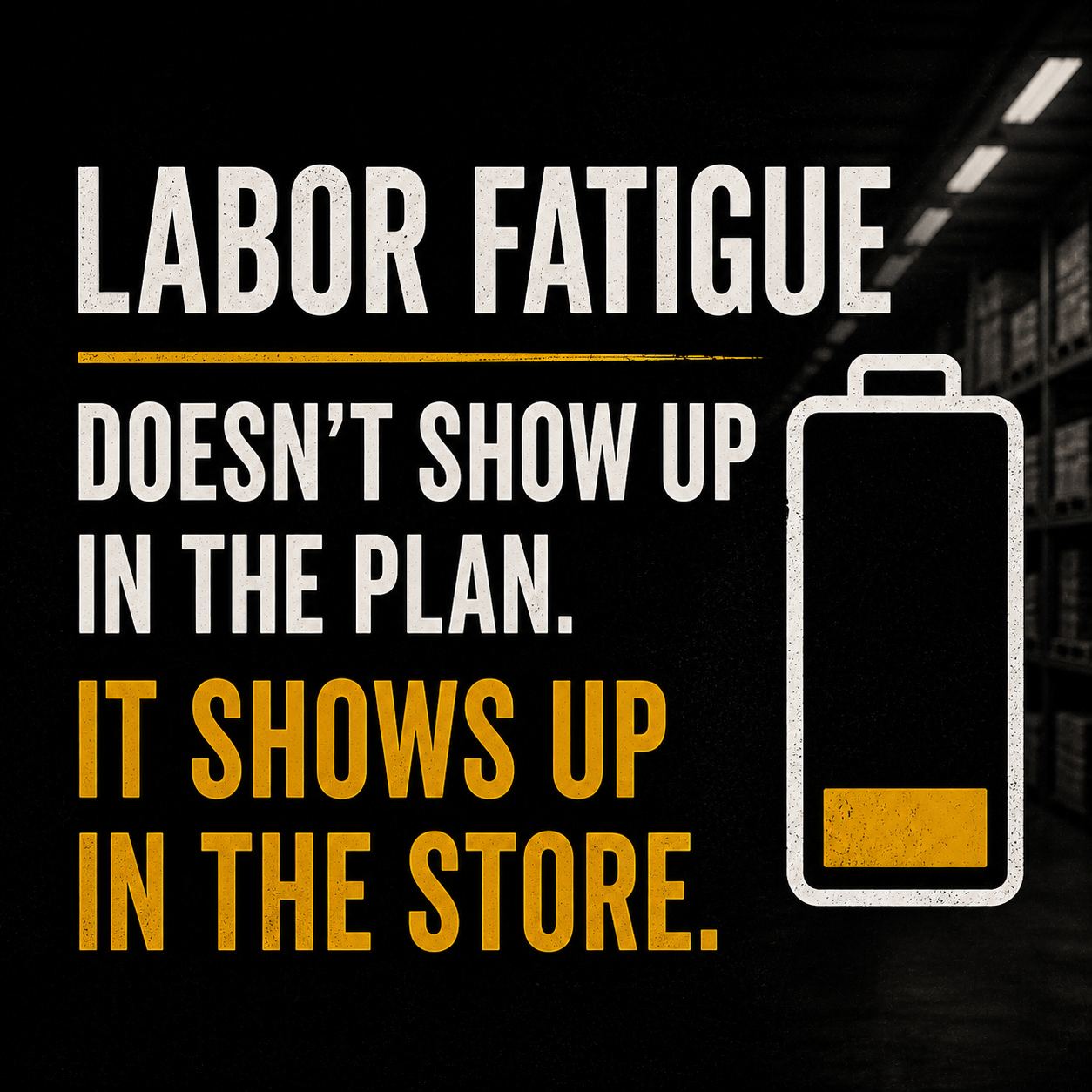
It becomes the first customer waiting at an empty counter. It becomes the produce table that was full at 8 and tired by 4. It becomes the associate trying to protect service while the floor keeps asking for more than the schedule gave them.
Customers do not shop payroll percentages. They shop conditions.
“The schedule is the plan. The floor is the proof.”
