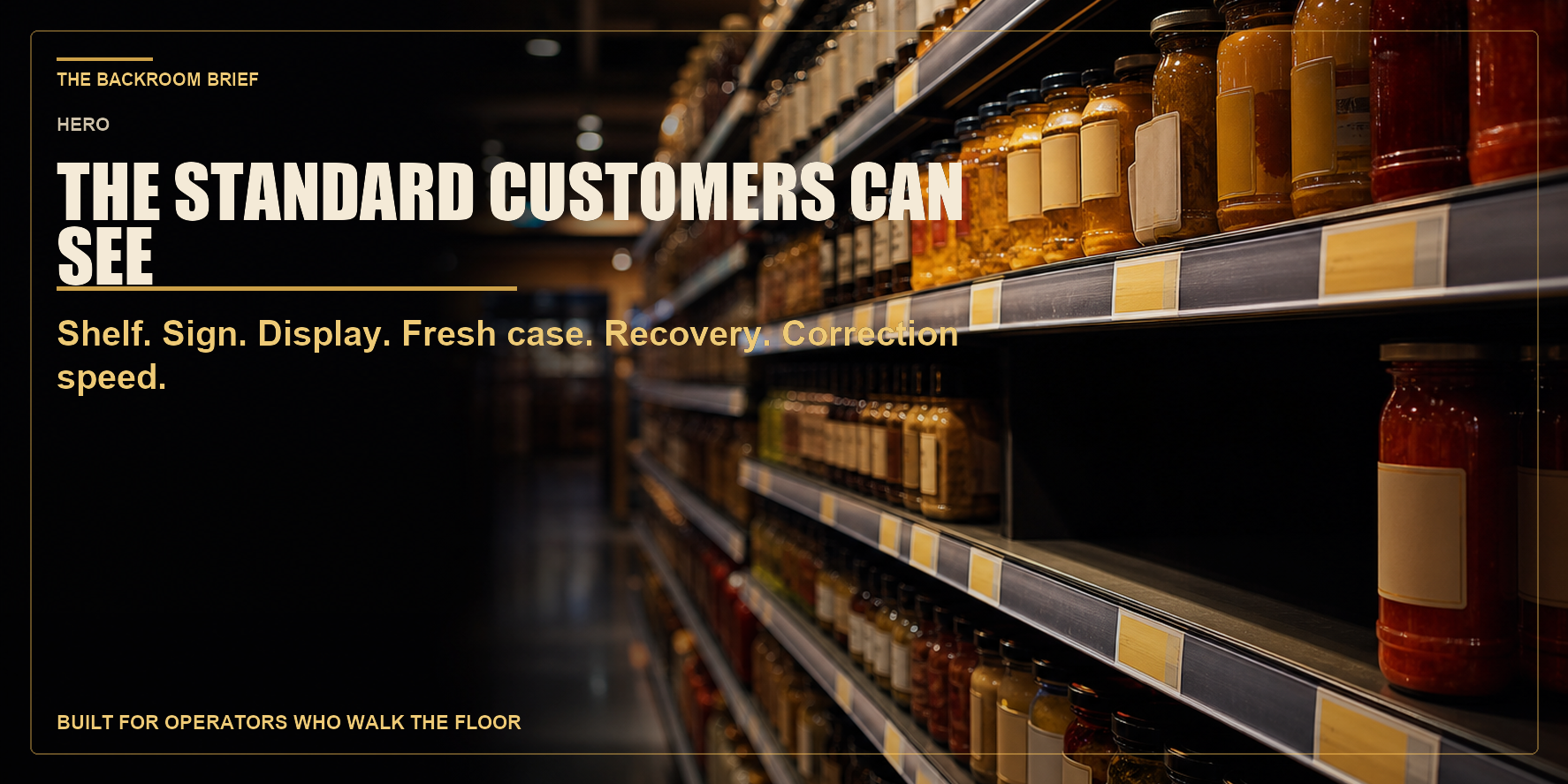
The Standard Customers Can See
There is a moment every grocery operator knows: standing in the aisle and seeing the store the way a customer will see it. Not the plan, not the report, not the meeting notes — the actual shelf, the actual sign, the actual display, the actual fresh case. That is where pride shows up. That is where trust gets built. This issue is about the visible standard operators protect with their teams, one detail, one correction, and one honest walk at a time.
This Week in Grocery
Three signals matter this week: shelf reality, public fresh promises, and the rising cost of visible misses. None of them are the whole story alone. Together they point to one operating truth: customers grade the standard they can see.
One in five grocery trips can still hit an availability miss
Retail Economics and DHL’s 2026 availability audit found 89.7% average on-shelf availability, with roughly one in five grocery trips involving an out-of-stock item — about 930 million trips a year in the UK market. The exact market matters less than the operator truth: even strong systems still leave customers staring at holes.
One operator is making the fresh standard public
Schnucks put a customer-facing Fresh Guarantee across produce, bakery, deli, meat, seafood, dairy, and floral in its 112 Midwest stores, with refunds or exchanges within seven days. It also calls out daily prep, triple-inspected produce, and 3–7 p.m. rotisserie and fried-chicken in-stock guarantees. That is a visible standard moved out of the back room and into the shopper’s hands.
Retail is spending billions to find visible misses faster
The on-shelf availability market is estimated around $6.85 billion in 2026 and projected near $13.59 billion by 2035, an 8.7% CAGR. That growth says something simple: the industry is putting real money behind a problem good operators have always felt on the walk.
The floor whispers before it shouts
Every operator has had that walk. Nothing is technically wrong. Nobody is panicking. But something feels off. The wet rack is clean, but not sharp. The banana table lost its shape. A display that looked intentional yesterday suddenly feels like leftover freight. Customers may never say a word about it. But they feel it. Stores whisper before they shout. Good operators learn to hear the whisper.
Every store has misses. Strong stores do not pretend otherwise. They build a rhythm that turns a walk into action: see it, name it, assign it, correct it, recheck it. That rhythm protects standards and it protects the people trying to hold them under real traffic.
The Backroom Brief take: standards are not protected by saying them louder. They are protected by refusing to become blind to drift. Customers never see the checklist. They see the shelf. Pride shows up in public. So does neglect. The best operators do not wait for complaints, reports, or dashboards to tell them something changed. They walk the store, see the miss, assign ownership, and make the next customer feel the correction.
Fresh Watch
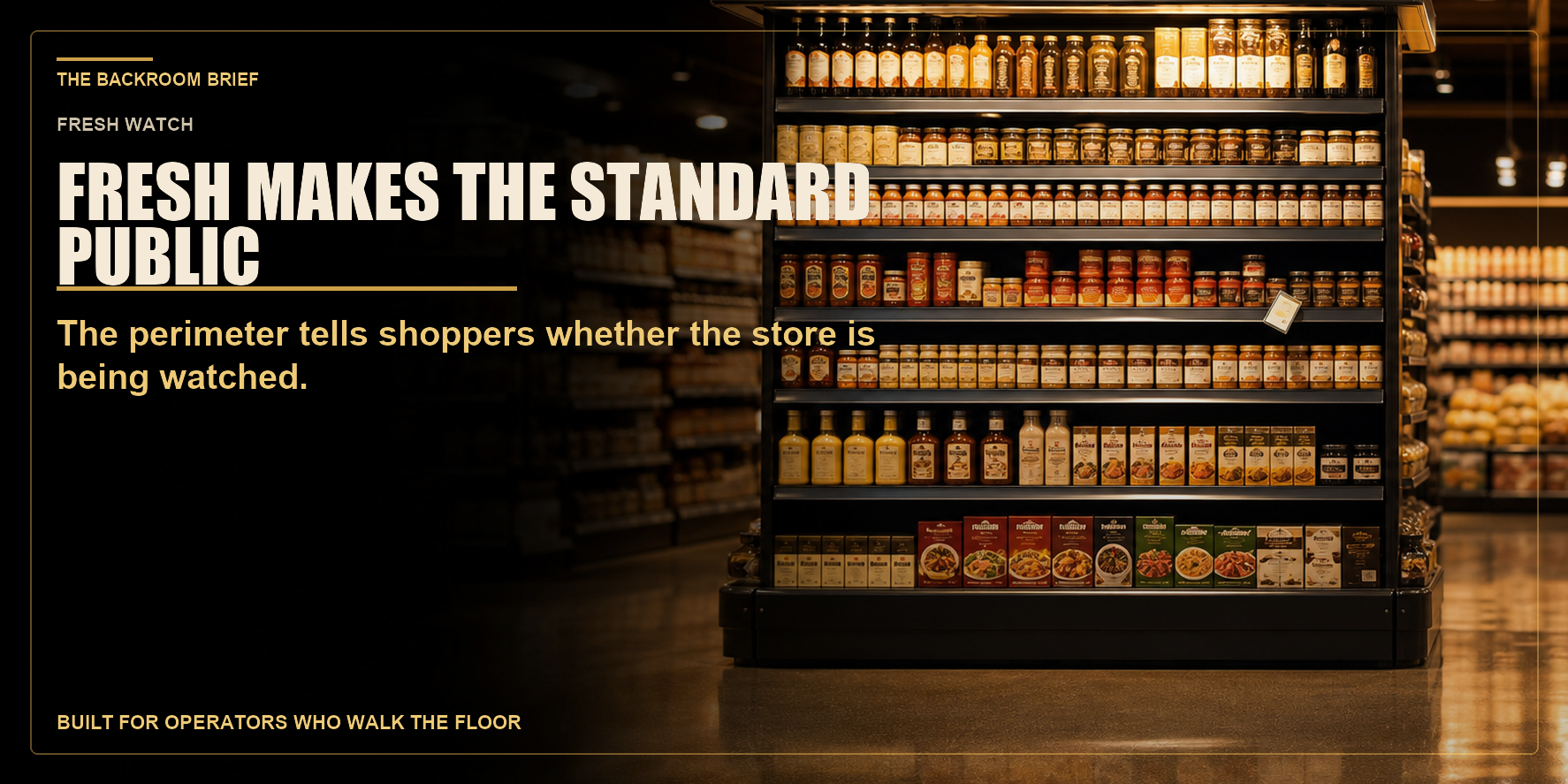
Fresh is where customers decide whether the store is being cared for by people who notice. Produce, meat, deli, bakery, and prepared foods do more than sell product. They create confidence that somebody is watching the details that matter.
A strong fresh department gives the customer a reason to believe in the trip. A full table, a clean case, a sharp cut, a warm bakery smell, or a deli counter that still looks ready at 5 p.m. tells the shopper the store has pride in the work. The customer may still watch price, but they leave feeling like the store kept its promise.
What shows up when you actually walk the store
Can the customer buy it now?
Walk one aisle with no report in your hand. Look for the customer version of truth: holes, blocked items, poor facings, unclear promotions, wrong tags, and anything the system thinks is fine but the shopper cannot buy cleanly.
Does the display still earn the space?
A display is not decoration. It is a promise that this item, this price, and this location deserve the shopper's attention. Half-built, poorly signed, or irrelevant displays make the store feel less intentional.
Would the department make you trust dinner?
The produce table, meat case, deli counter, and bakery wall do more than sell product. They set the emotional temperature of the trip. Customers read care before they read strategy.
Who owns correction before the next walk?
A walk is not execution until it creates ownership. The miss needs a name, an owner, a time, and a recheck. Otherwise the store just documented drift.
Pick one visible standard customers can judge today and restore it before the next peak shopping window.
Choose one visible condition customers can judge before lunch. Name the owner, fix it, and make the next walk prove the store got sharper.
- Walk the first five price signs customers see and fix any uncertainty before it reaches checkout.
- Choose one display and decide whether it still earns the space, the sign, and the shopper's attention.
- Trace one shelf miss from discovery to correction and time how long the store left it public.
- Ask one department leader what visible condition they want customers to notice tomorrow.
This store is under control.
“The standard is what the customer can see.”
