Frozen at Five
Frozen is becoming meal-planning infrastructure. The freezer aisle should help the customer finish a decision, not feel like storage.
Shoppers are coming to the freezer aisle with dinner, breakfast, and the week ahead already in mind. At five o'clock, that changes what ready looks like.
Dinner was already in the cart
It is 4:38, and the store manager cuts through frozen before the dinner rush. The morning load is worked, but the aisle does not feel ready. Pizza has been picked over. An ad tag hangs under an empty slot. The glass needs attention. A seasonal display has plenty of product but no clear reason to stop.
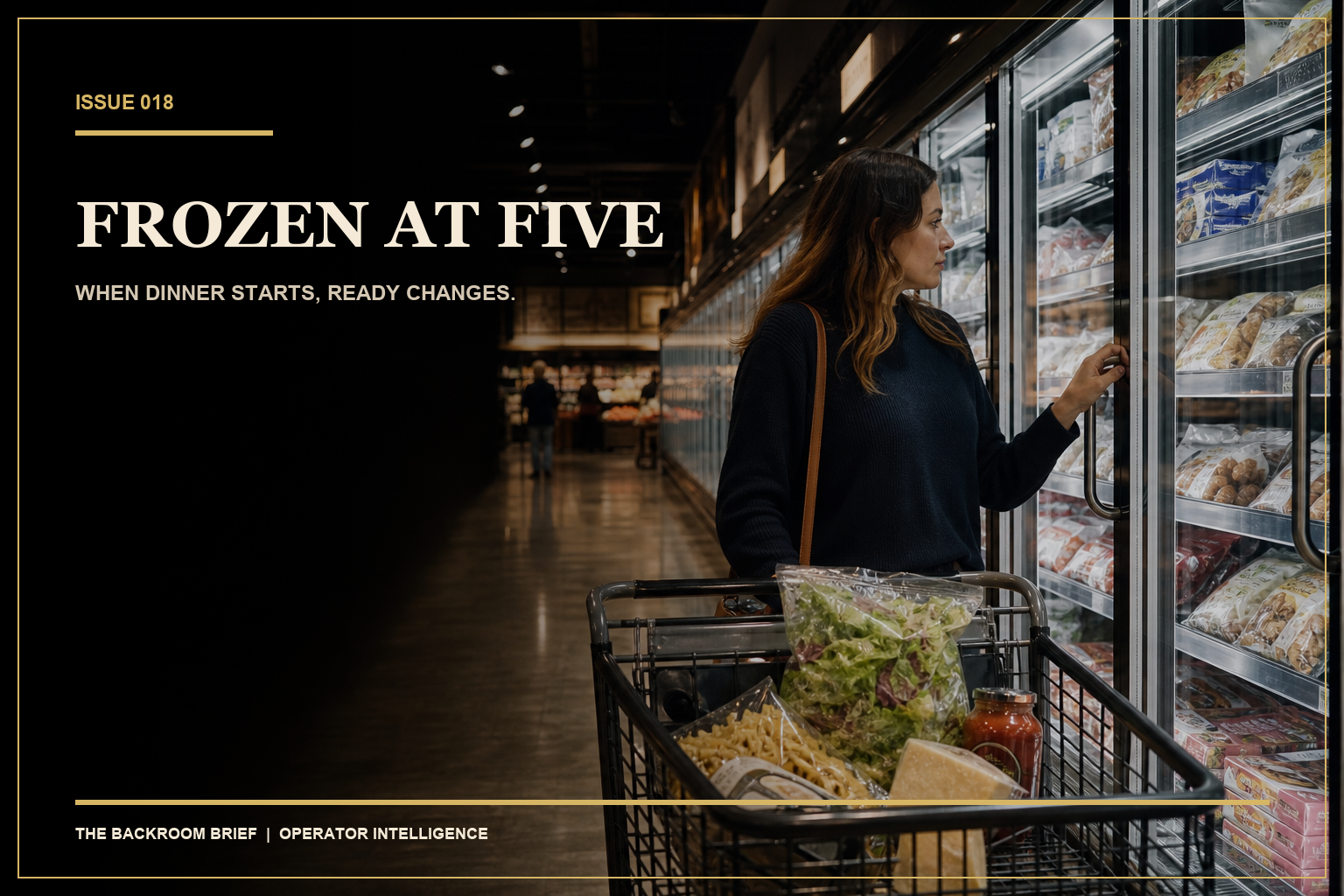
Then a shopper turns into the aisle with pasta, sauce, a salad kit, and Parmesan already in the cart. The only thing missing is meatballs.
The shopper opens the door at the advertised slot, crouches, moves two bags aside, and closes it. Two doors down, another package comes out, gets turned over, then goes back. The shopper returns to the first door and looks again.
The manager watches the whole thing. The load got worked. The customer still cannot finish dinner.
More shoppers now arrive with a specific meal or day in mind. At five o'clock, they are looking for the last piece of a plan.
The numbers are showing it too
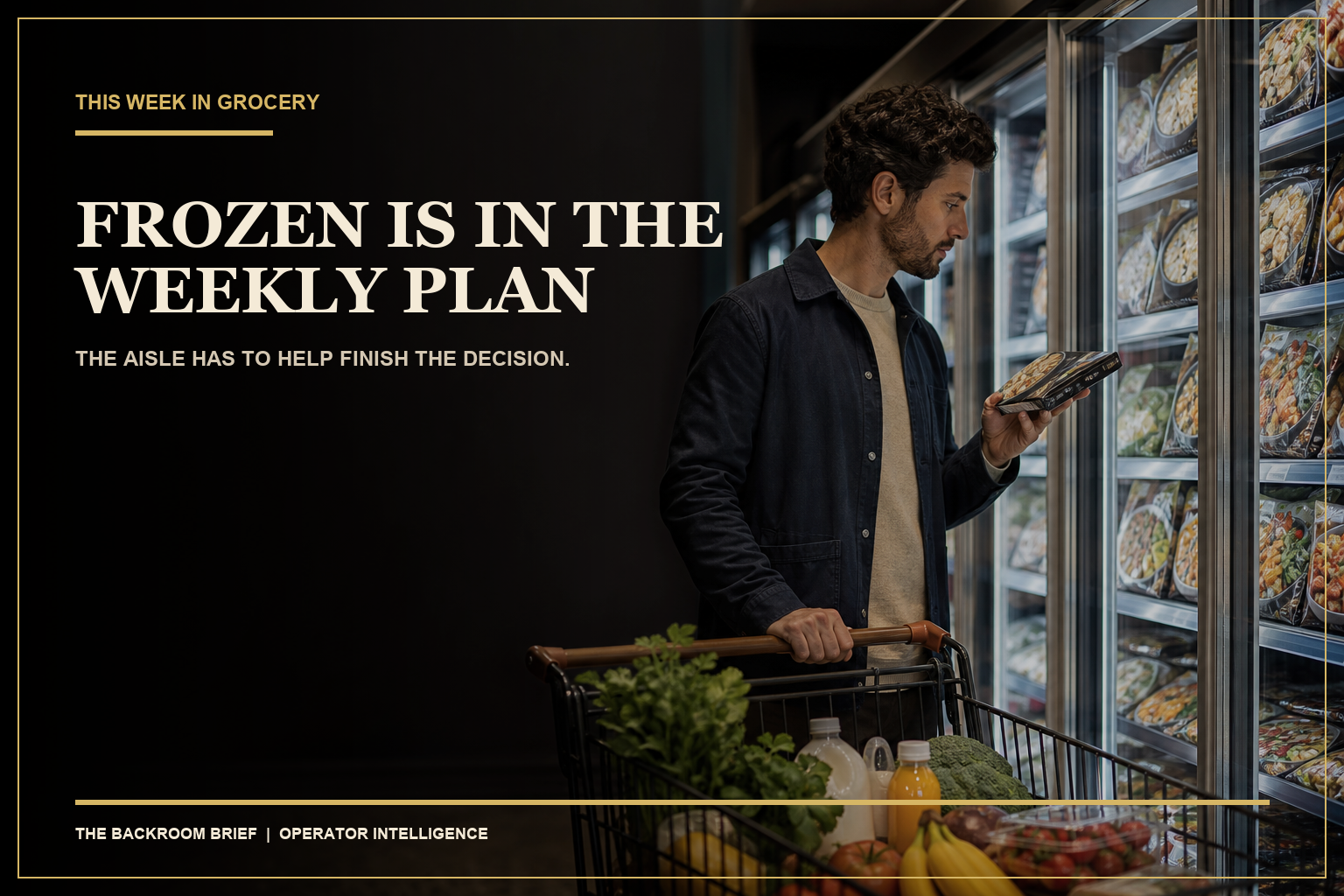
That five o'clock moment is showing up in the research. FMI and the American Frozen Food Institute report that 40% of shoppers use frozen food every few days or daily, up from 35% in 2019. Thirty percent say they plan to buy more.[1]
That does not mean every store needs another door or a wider assortment. Frozen is too regular a part of the week to get whatever attention is left.
The same study found that 76% of shoppers combine frozen and fresh ingredients in the same meal.[1] We sort the store into frozen, produce, dairy, and grocery. The shopper is putting together pizza and salad, waffles and fruit, or meatballs with pasta, sauce, bread, and Parmesan.
This is not a call to drag half the store into frozen. It is a reason to walk the whole trip once in a while. Can frozen carry its part without making the shopper hunt through doors? If the first choice is gone, is the next one easy to see?
A worked load is not the same as a ready aisle
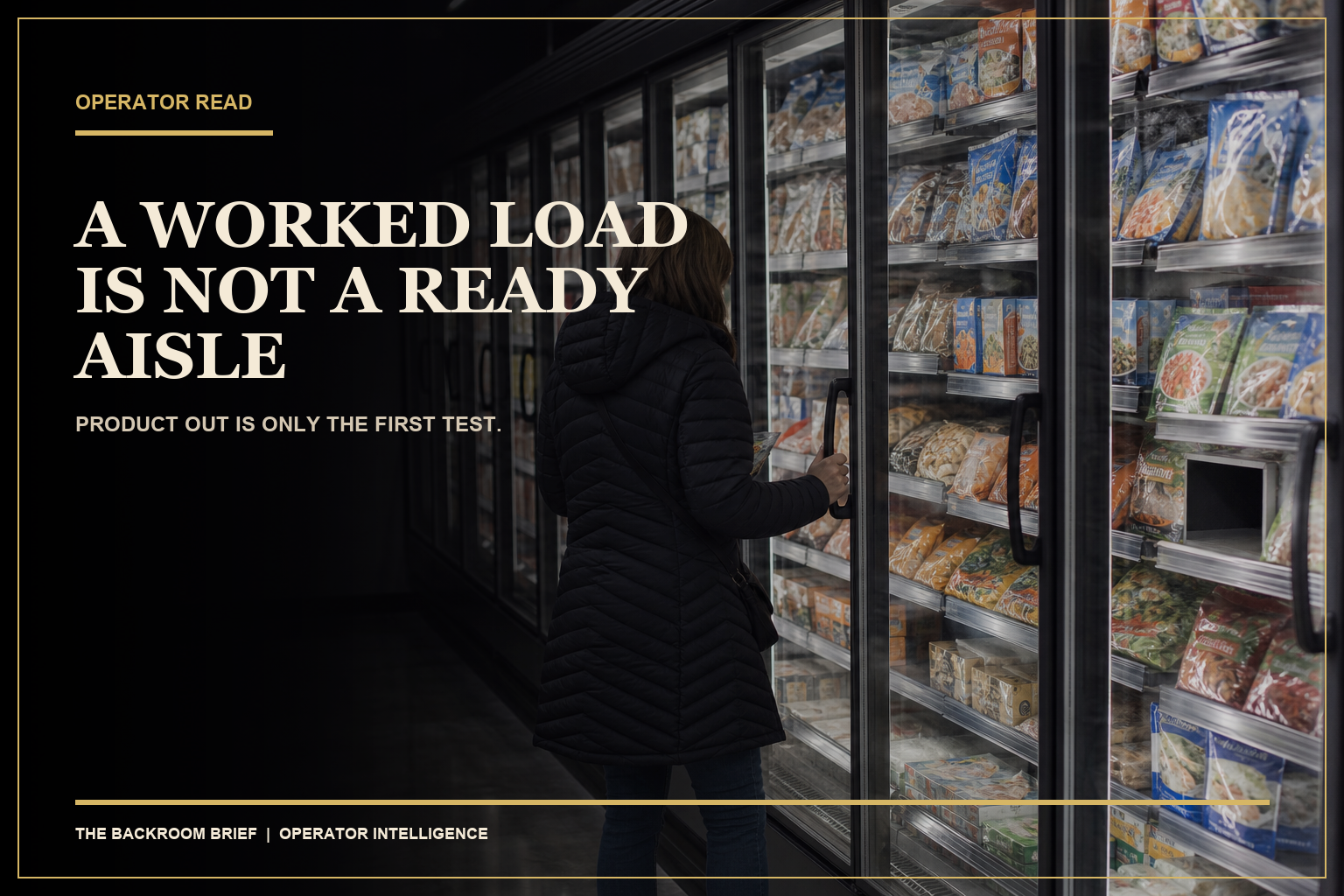
A worked load means the cases made it out of the back room. A ready aisle lets the shopper find the advertised item, read the price, choose the right pack, and spot a sensible second choice.
Behind glass, a rough section makes the customer work door by door. Poor facing can hide an item that is in stock. A hole in the wrong place can break a meal even when the rest of the aisle is full.
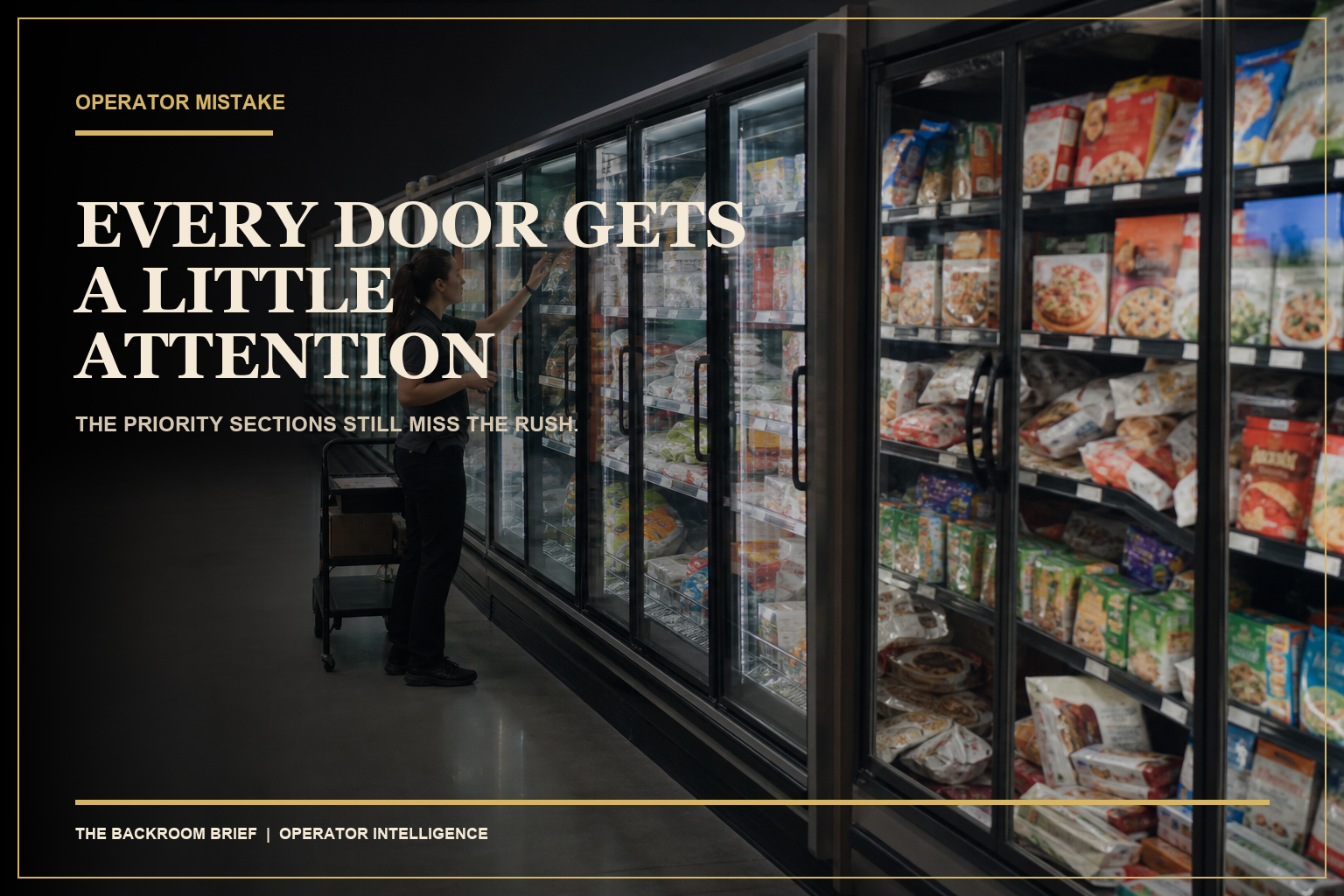
Giving every door a little attention
Frozen is behind and the available help is limited. Spread that time across the whole department and, an hour later, every section looks a little better while the seasonal need is still empty, the ad item is hard to find, and dinner sections are rough when the rush arrives.
A good frozen manager does not give every section equal attention when the whole department cannot be recovered. Start with what matters most that day.
Begin with the strongest seasonal need. Protect what the store advertised next. Then put the remaining time into the sections customers are using to solve dinner.
In midsummer, that can mean ice before frozen dinners. Before a holiday, it may mean appetizers or desserts. The order changes because the customer need changes.
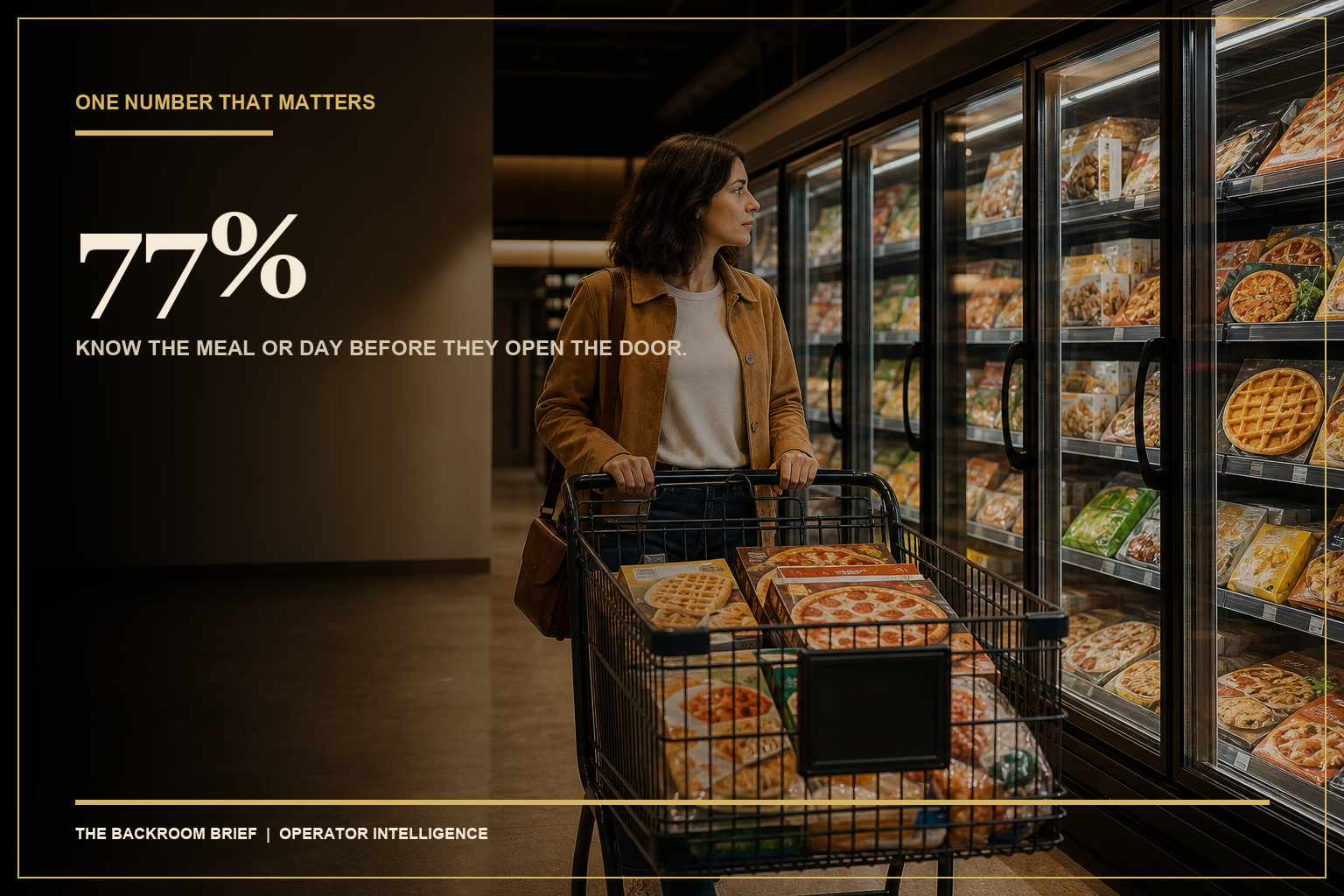
Many shoppers know the occasion before they open the door
FMI and AFFI report that 77% of frozen shoppers buy with a specific meal or day in mind, up from 71% in 2023.[1]
What matters in the store is the shopper's intent. Thursday dinner, Saturday breakfast, game-day food, and lunches for the week all put a different demand on the aisle.
The department is no longer just holding product for later. It is helping the customer finish something that has already started.
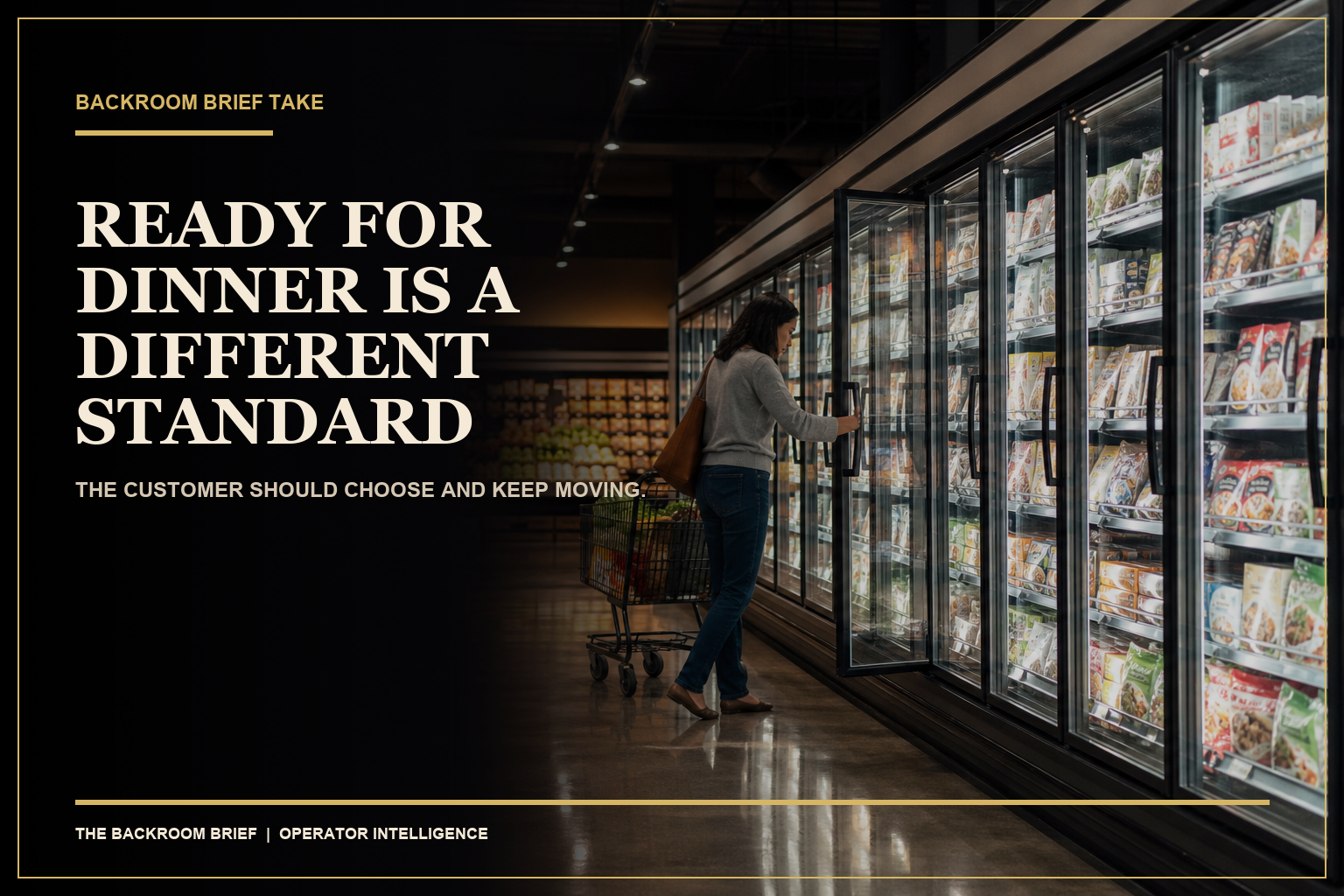
Ready for dinner is a different standard
A completed load can still fail at five. A strong frozen aisle has upright packages, clean glass, visible prices, ad items where customers expect them, and displays with one clear reason to stop. The shopper reads the section, makes the choice, and keeps moving.
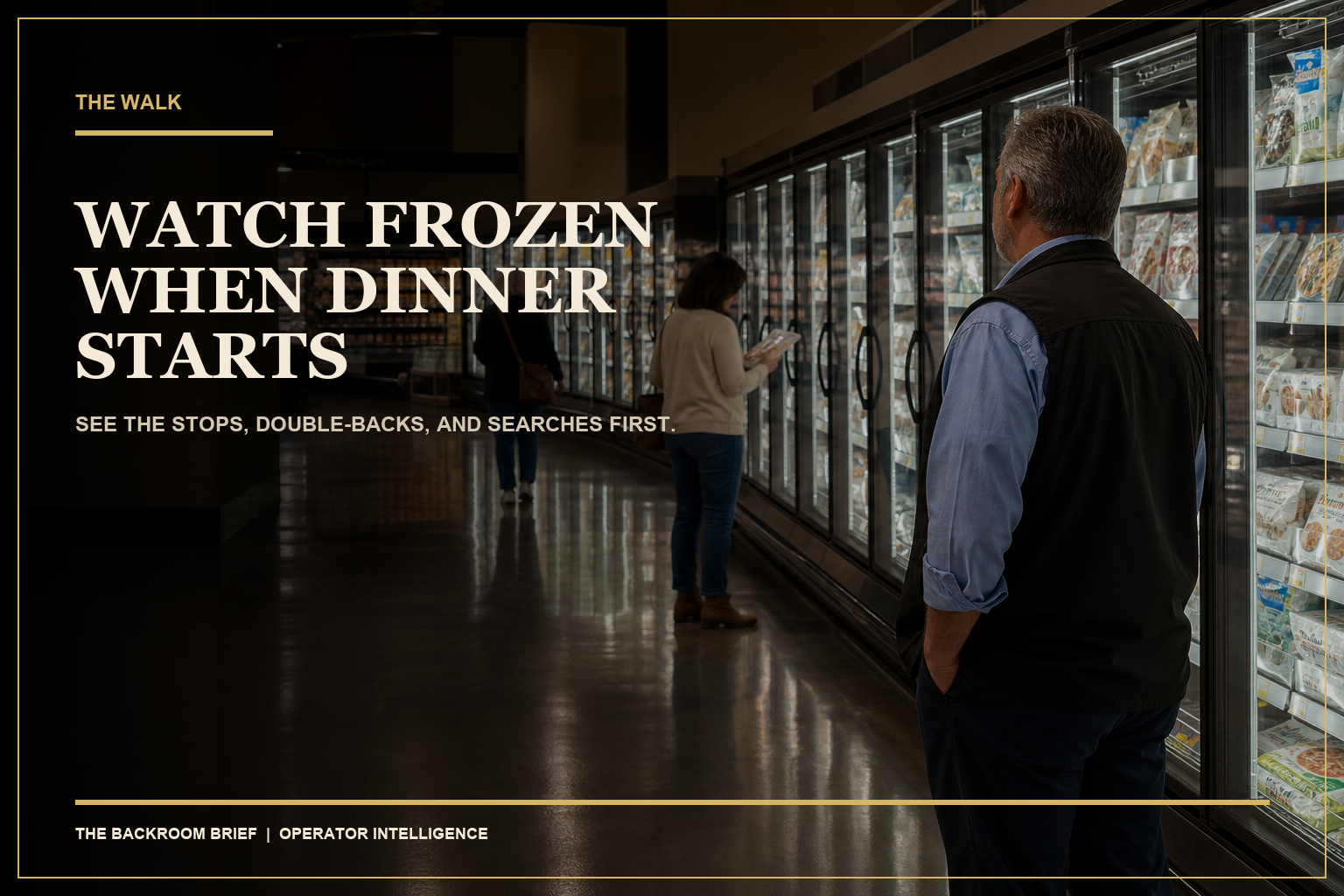
Watch frozen when people are trying to solve dinner
Walk the department at 4:30 or 5:00, not only after the morning load.
For ten minutes, resist the urge to fix anything. Watch where shoppers stop, double back, open more than one door, search behind a facing, ask for help, or leave without an item.
Then shop three real uses yourself: one seasonal need, one advertised item, and one dinner that starts or ends in frozen. Follow that dinner beyond the aisle. Do not build a display for every meal. See whether frozen helps or slows down the trip.
Set the dinner-rush priorities early
Before the next dinner rush, choose the frozen sections that matter most that day:
- The live seasonal need.
- The item or section the store advertised.
- The sections most likely to help customers solve dinner.
Put the available time there instead of touching every door once. Make those priorities clean, faced, priced, and easy to understand.
Then stand at the end of the aisle when the rush begins. Are shoppers finding what they need and moving on, or are they still stopping, doubling back, and searching?
Operator Question: At five o'clock, which part of your frozen department helps a shopper finish dinner fastest, and which part makes them start over?
The Idea
If telling you the truth feels like punishment, people will wait.
Why It Matters
People remember your face when they bring you a problem. If your first response is anger or embarrassment, the next problem may stay quiet. Calm does not lower the standard. It keeps the truth coming while there is still time to help.
This Week
When someone brings you a problem, pause. Say, "I'm glad you told me. What happened?" Let them finish. Then address the mistake without making honesty the part they regret.
