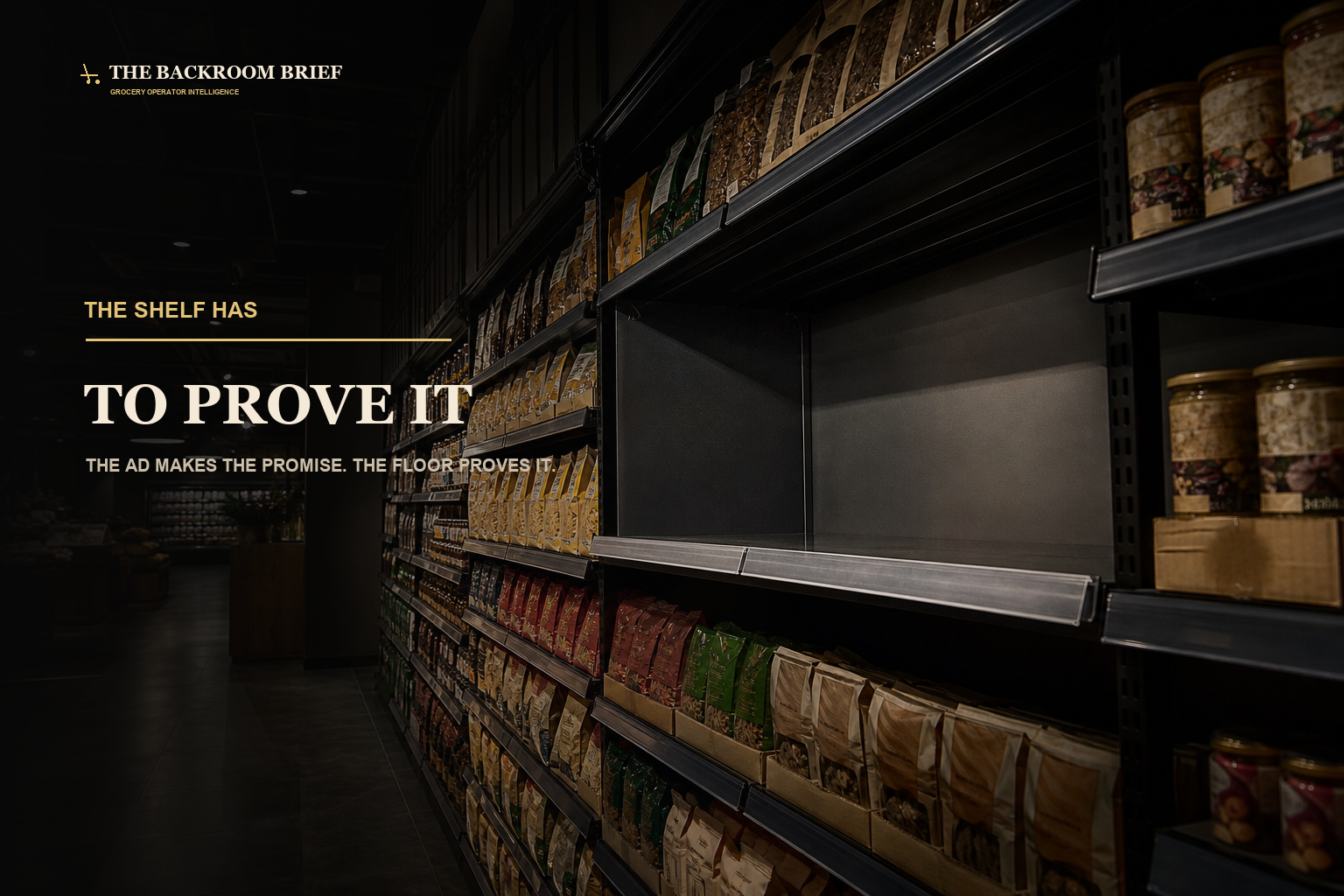
The Ad Says Value. The Shelf Has to Prove It.
The ad makes the promise. Availability, a visible price, and the store's reaction decide whether customers believe it.
The operator judgment behind the signal
A front-page price can earn the trip. The shelf has to earn the trust.
This issue follows one advertised item from setup to the selling position, through actual movement, and back to the next order. Once the ad starts, who keeps walking the promise?
A customer turns into the aisle with the offer already in mind.
At the position, there are two versions of the same failure. In one, the shelf is empty. In the other, the product is there but the price is not.
The ad may be correct. The customer experience is still wrong.
The shopper does not see the promotional calendar, order history, or explanation. They see a promise the store did not finish on the floor.
That is where value stops being a message and becomes an operating standard.
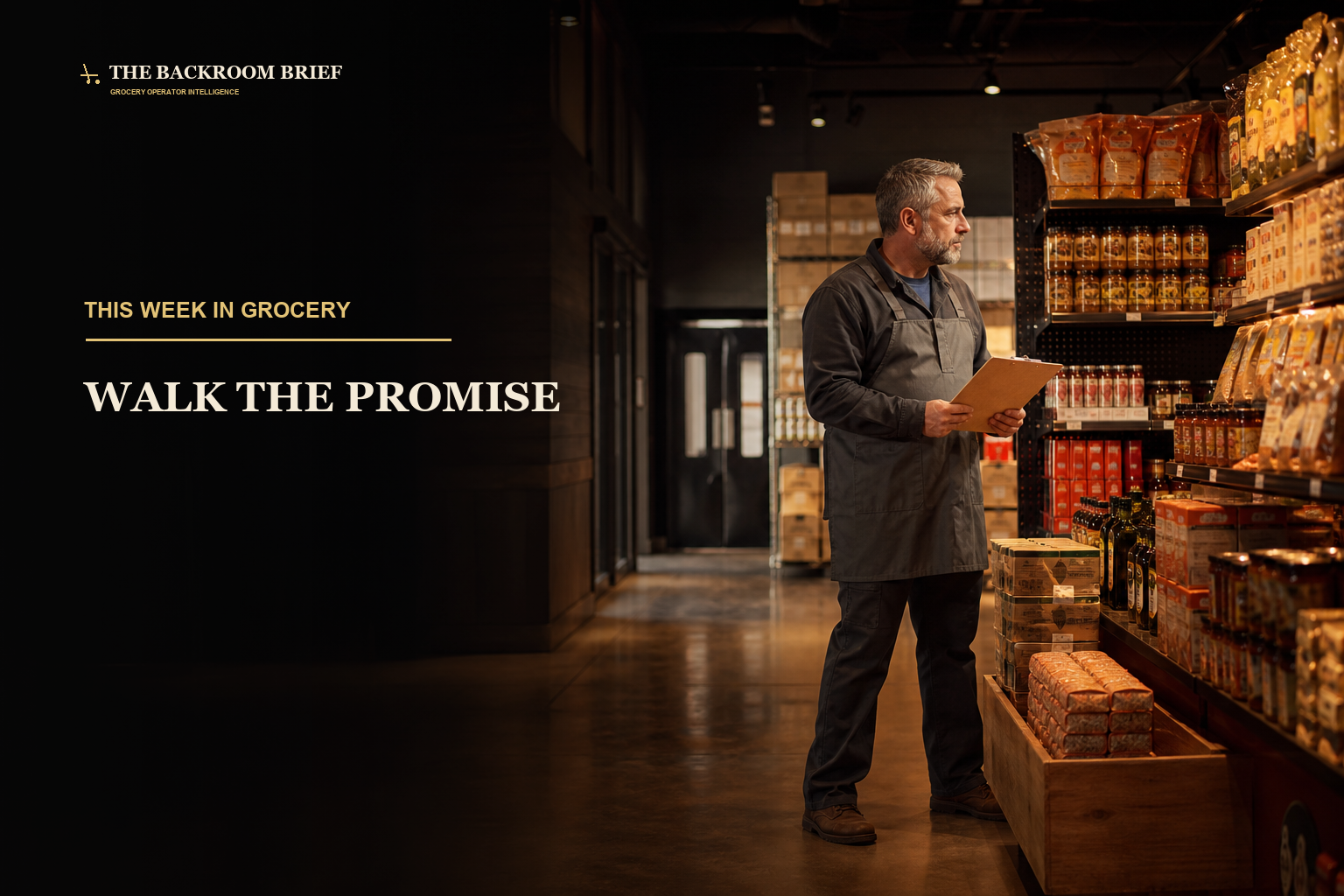
An advertised deal can disappear before the customer gets there
A current report from News 5 Cleveland reviewed complaints involving advertised grocery sale items that shoppers said were unavailable. In one reported example, a customer visited within two days of seeing an offer and found the cooler empty.
The retailer's response named the useful mechanism: forecast from prior sales and trends, then reorder and replenish when demand exceeds expectations.
Why it matters: A reasonable opening order can still be wrong once real demand begins.
What changes on the floor: At ad break, walk the selling position and backstock. Ask how the item is moving, what was ordered, and what is being ordered next. Fill or order up before the customer finds the gap.
Food stockouts are better. They are not gone.
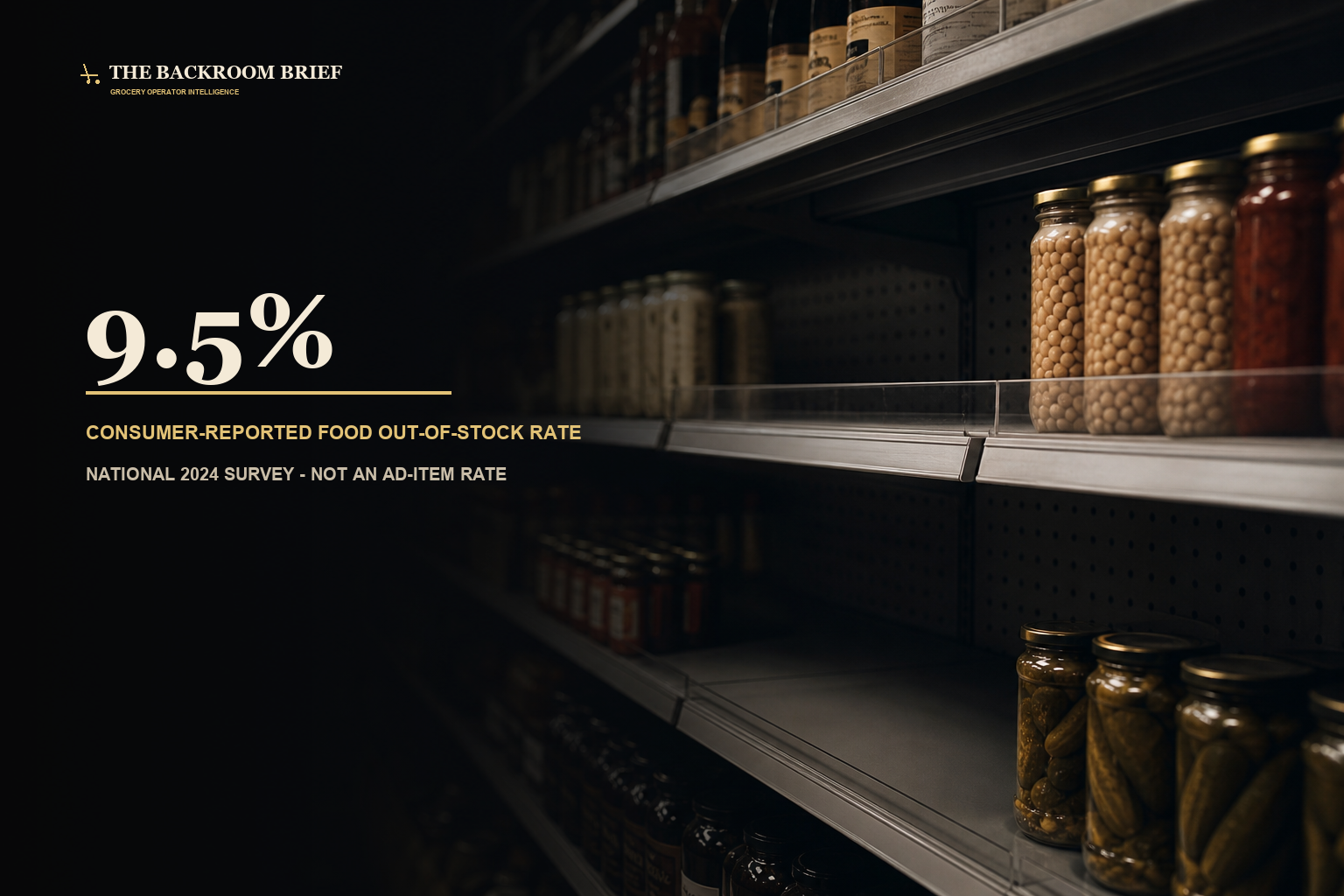
Purdue University's national Consumer Food Insights survey reported a 9.5% consumer-reported food out-of-stock rate for 2024. That was an improvement from 12.3% in 2023, but shoppers still regularly reached for food that was not there.
Why it matters: This is not an advertised-item rate. It is neutral evidence that availability failures remain part of the grocery trip even after supply conditions improved.
What changes on the floor: An advertised item is a promise the store chose to make. Walk it more tightly than an ordinary shelf position.
A smarter tag strengthens the price signal, not the whole promise
Walmart says roughly 2,300 U.S. locations were using digital shelf labels in March. RILA says the labels draw from the same system that sets register prices. That can mean faster updates and fewer missing or stale paper tags.
A correct tag beside an empty position still leaves the customer without the item.
Why it matters: Electronic labels can remove one visible failure point without solving quantity, fill, display, or reaction time.
What changes on the floor: Use the time they release for price checks, fill, display recovery, and verification. People still own availability and the return check.
An ad item out of stock does more than lose the sale. It teaches the customer not to trust the next promise.
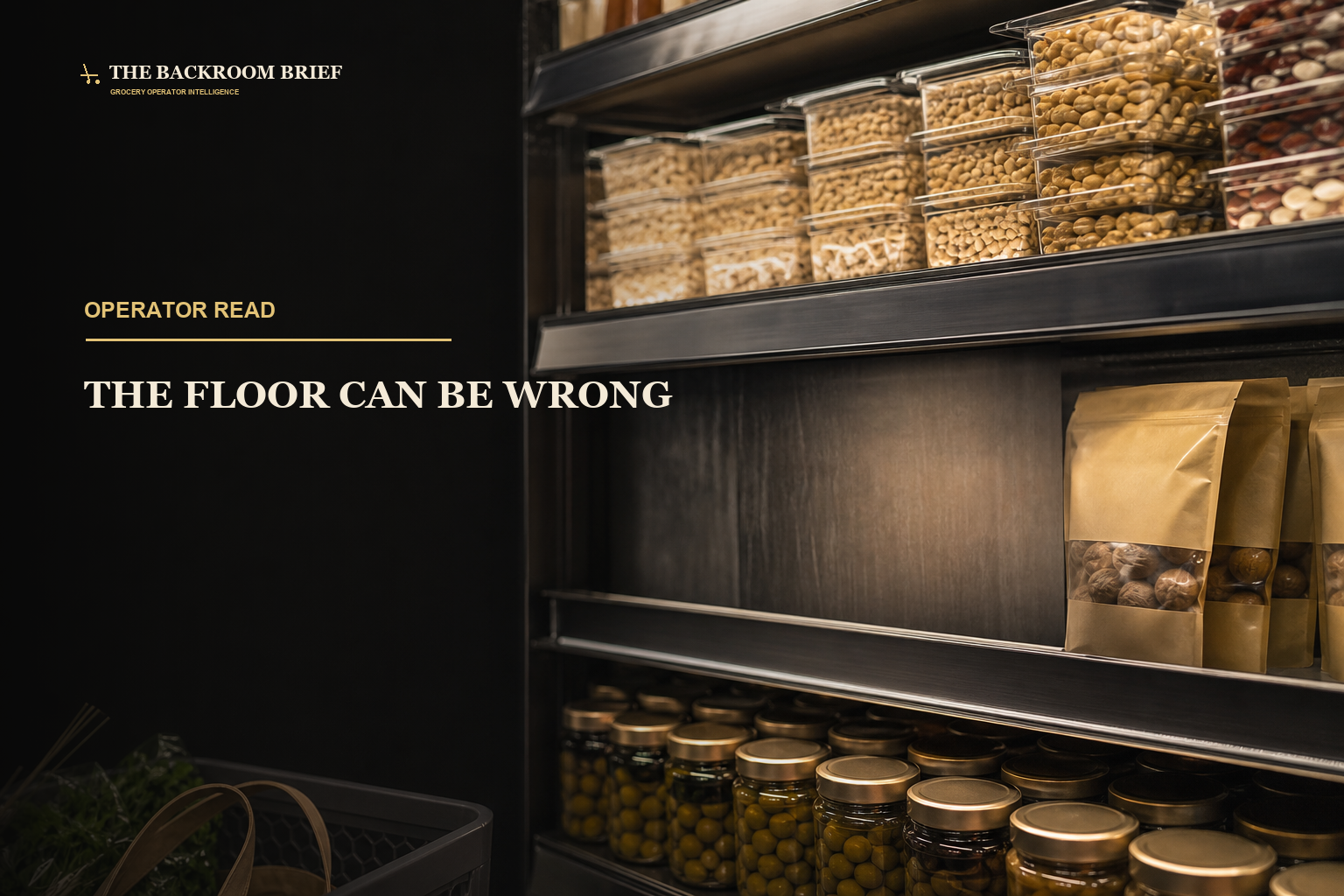
The Ad Can Be Right While the Floor Is Wrong
Promotional work can feel finished before the customer sees it. The price was approved. The order was placed. The display and tags were set.
Then the ad breaks, and the floor starts rewriting the plan.
A display thins. Cases sit in backstock. A missing tag turns a strong price into a question.
Before the ad, the department owns quantity, display, and price setup. Once it is live, keeping the promise becomes a store effort: see the miss, act, and come back.
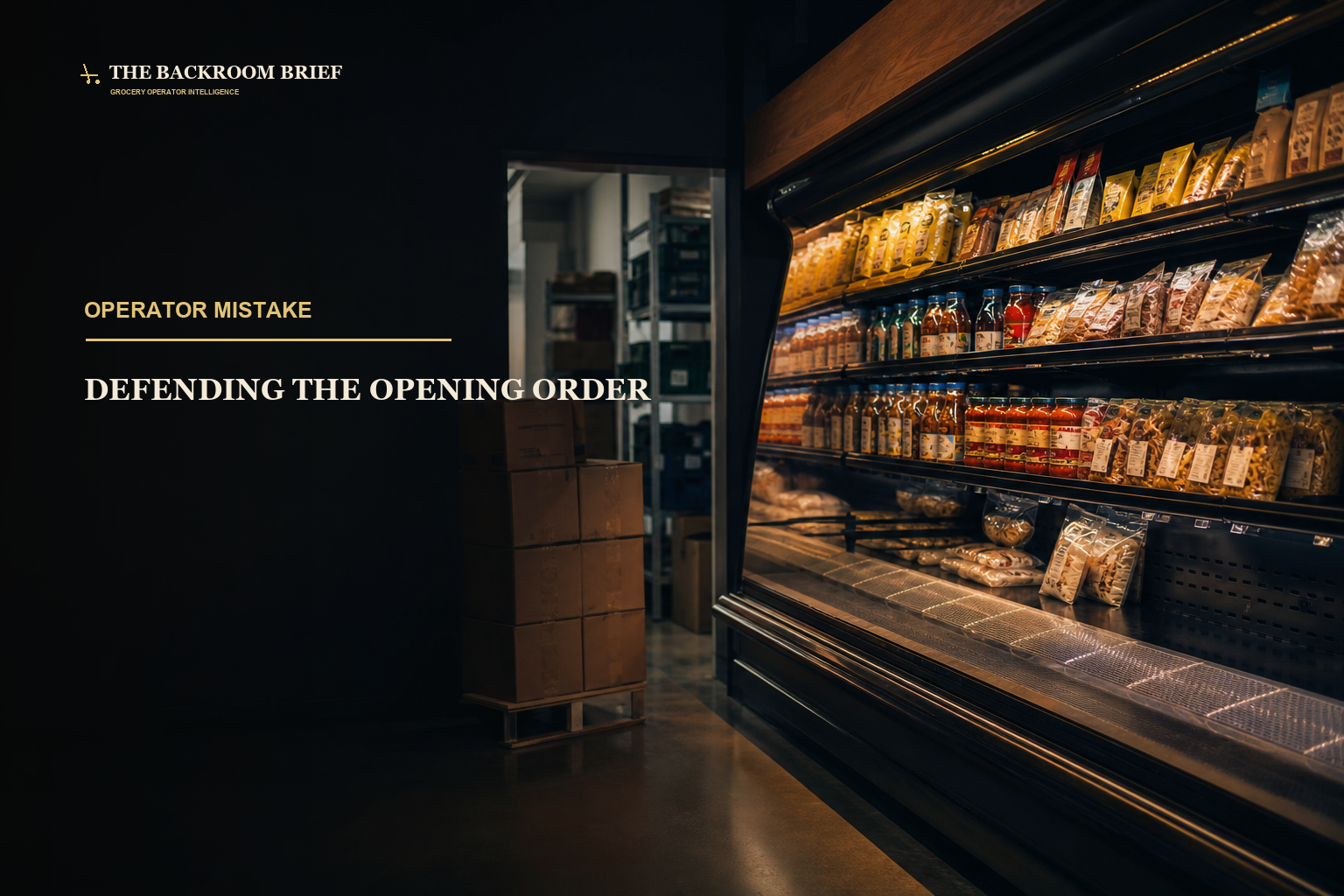
Defending the Opening Order
A department head makes a reasonable buy. The history supports it. The first day looks fine.
Then movement changes.
The shelf starts thinning faster than expected, but the conversation stays stuck on the original quantity: We ordered what the plan called for.
That may explain the first hole. It does not excuse the second one.
The deeper mistake is treating the opening order as finished after the floor delivers better evidence. Strong operators ask, "How is it moving, and how many are we ordering next?"
The first order is a forecast. The sale is the evidence.
Better Than the Crisis. Still Visible to the Customer.
That was Purdue University's average consumer-reported food out-of-stock rate for 2024, based on its national monthly survey of 1,200 U.S. consumers.
The rate improved from 12.3% in 2023 and 19.3% in 2022. The food system became more resilient. The customer can still find the miss.
This is not a rate for advertised items, and it should not be read as one. When the store chooses to advertise an item, an ordinary shelf routine is not enough. That promise deserves a tighter walk, a faster reaction, and a return check.
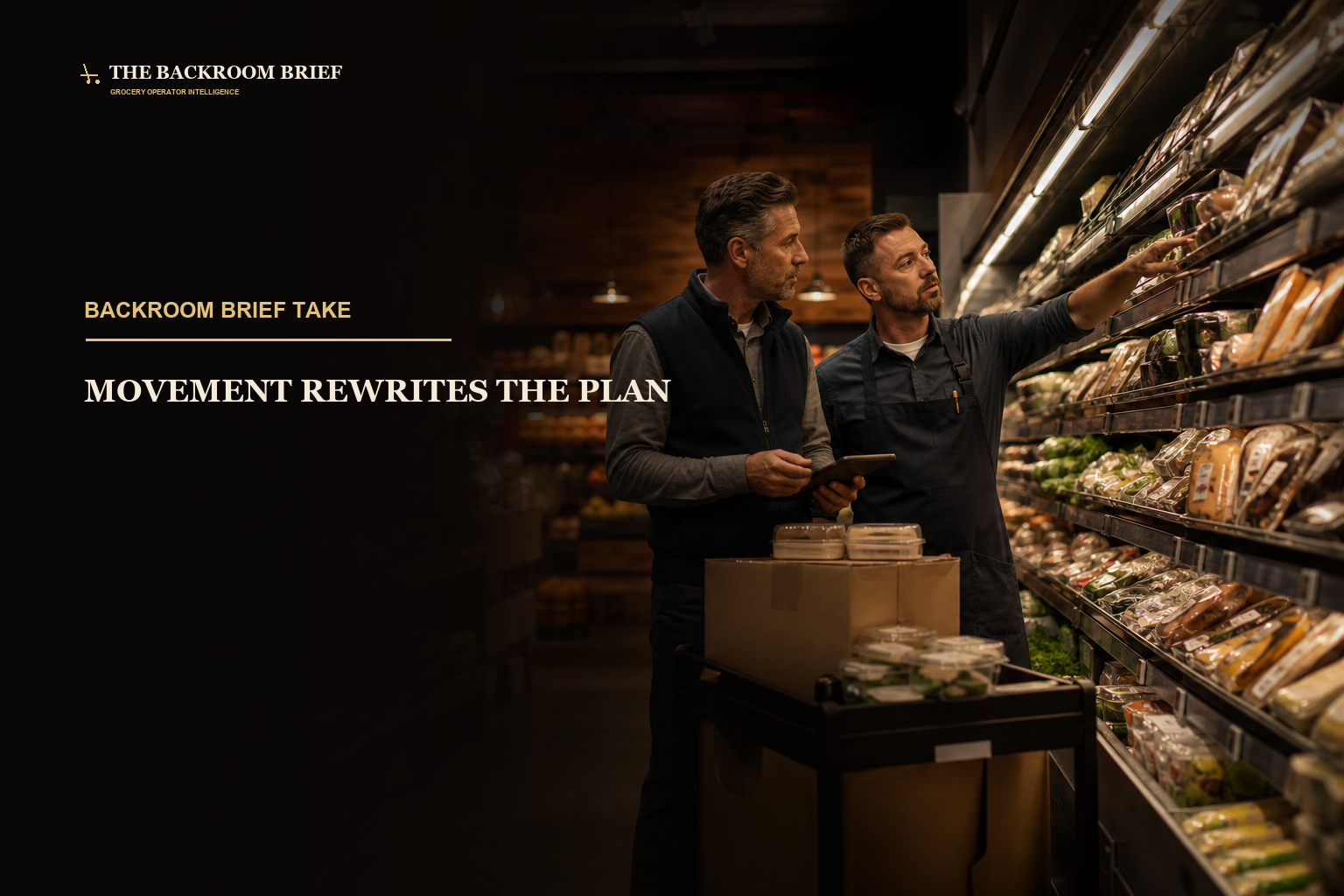
Movement Rewrites the Plan
The ad is not finished when it goes live. That is when the original assumptions meet the customer.
If sales run ahead, respond while there is still something to protect: fill, correct the tag, order up, then return.
A correction without a return is not control. It is a hopeful moment.
Keep the loop short enough that the customer is not the first person to report the miss.
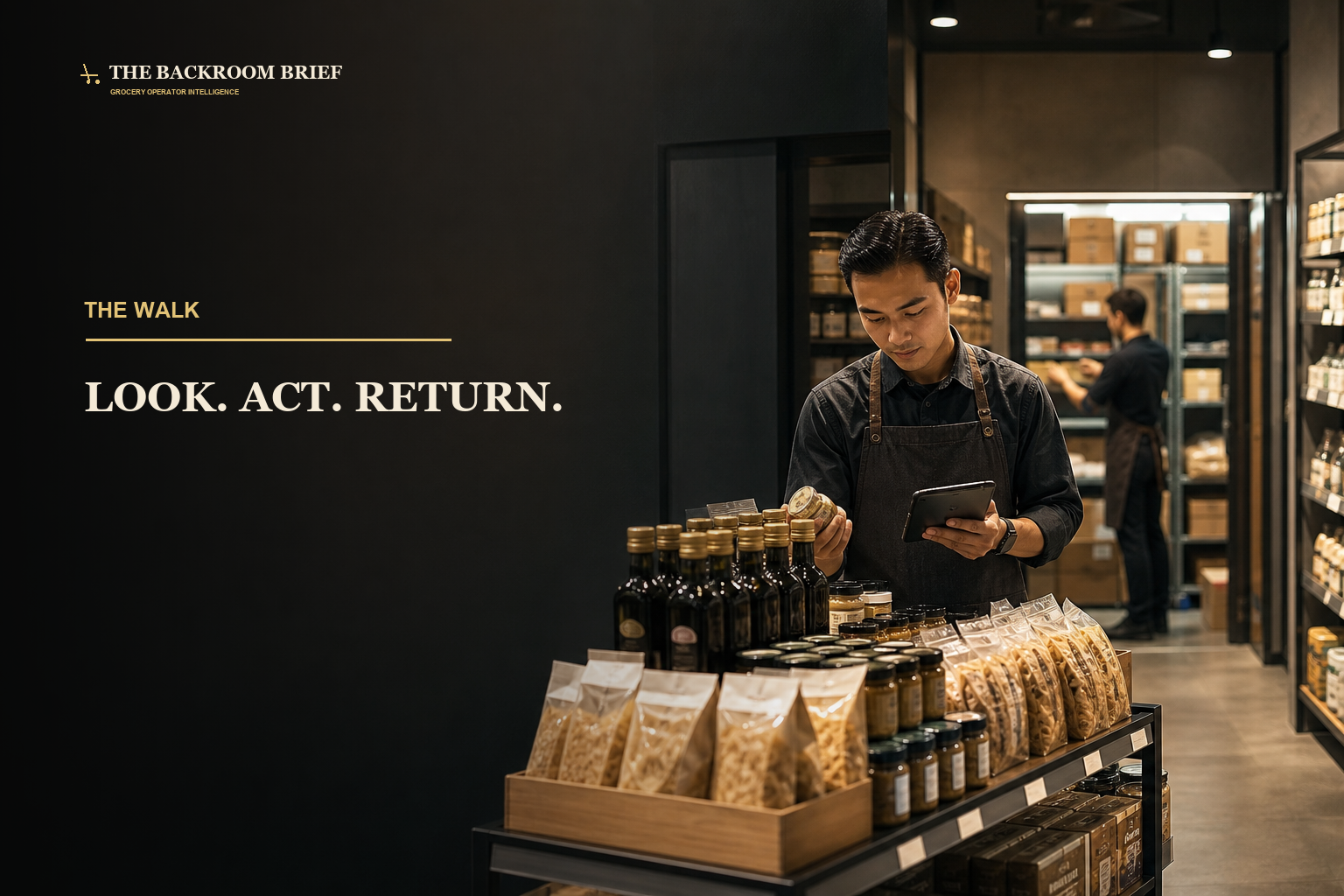
Walk the Promise
Walk each front-page item through the store:
- Look at the shelf and display. Is the item there in a condition that can survive the next selling window?
- Confirm the price is visible and correct.
- Look at backstock, not only the selling face.
- Ask the department head: How is it moving?
- Ask: How many did we order?
- Ask: How many are we ordering next?
- Act now: fill, refill, correct the tag, or order up.
- Return on the next daily walk and verify that the position, backstock, and next order now match movement.
The floor gives the warning before the final unit sells. The question is whether someone is looking.
One Promise. One Owner. One Return.
At Monday's first ad walk, choose one front-page item and put one leader's name beside it.
That leader records the selling position, visible price, backstock, current movement, opening order, and next order. If the promise is weak, act before leaving the aisle.
Then set the return: the next day, after a meaningful selling window.
On the return, do not ask whether someone handled it. Look at the department. Is the product available? Is the price visible? Did backstock come forward? Did the next order change? Will the condition hold through the next rush?
Setup proves intention. The return proves ownership.
Technology Can Fix the Tag. It Cannot Feel the Urgency.
Electronic labels can improve accuracy. Better forecasting can improve the opening order. Neither decides that an empty ad position deserves an immediate response.
That is still an operating choice.
Operator question: Which front-page promise in your store is most likely to fail after setup is complete?
Get the Friday Brief - one sharp grocery operator read and one practical move every week.
Subscribe free and receive the Store Walk Standard in the welcome email:
Forward this to one operator who knows the shelf tag is only the opening argument.
Get the Friday Brief