The Store Has to Sell the Cookout
Holiday weeks reveal whether the store is merely stocked — or whether every department is helping the customer build the trip.
A holiday-ready store has a feeling before the first customer says a word.
You can feel it at the entrance. The produce table looks like summer. The meat case feels awake. The first endcap does not just hold product; it tells the customer what kind of week this is. Drinks, chips, buns, condiments, paper goods, desserts, and ice do not feel scattered across a building. They feel connected.
The store is quiet for a moment, but the weekend is already in motion.
The Fourth of July does not begin when the rush hits. It begins when the customer starts picturing the cookout: who is coming over, what needs to be on the grill, what the kids will drink, what they forgot last year, and whether there will be enough ice when the cooler gets packed.
The customer walks in carrying that picture.
The store either meets it, or makes them build it alone.
If the trip does not come together, the customer feels the work.
The customer does not shop the org chart.
They shop the cookout.
The Customer Doesn't Shop the Org Chart
This issue is about the difference between inventory and intention.
Inventory buys the holiday.
Intention sells it.
That difference shows up quietly: whether the first produce table creates the emotional read, whether the meat case looks like confidence instead of caution, whether the endcaps solve the week, whether the ice is protected like a holiday item instead of treated like an afterthought until somebody realizes the freezer doors are empty.
The last thing any operator wants is to be out of ice on the Fourth of July.
But the ice is not really the whole point. It is the signal. If the store can miss something that obvious, what else did it ask the customer to hunt for? What else had no owner once traffic got loud?
Holiday weeks test whether the store planned the trip, staffed the refill, coached the department heads, and decided who owns the moment when the easy morning plan meets the actual rush.
Hope is not a plan.
And the customer can feel when hope is running the store.
This Week in Grocery
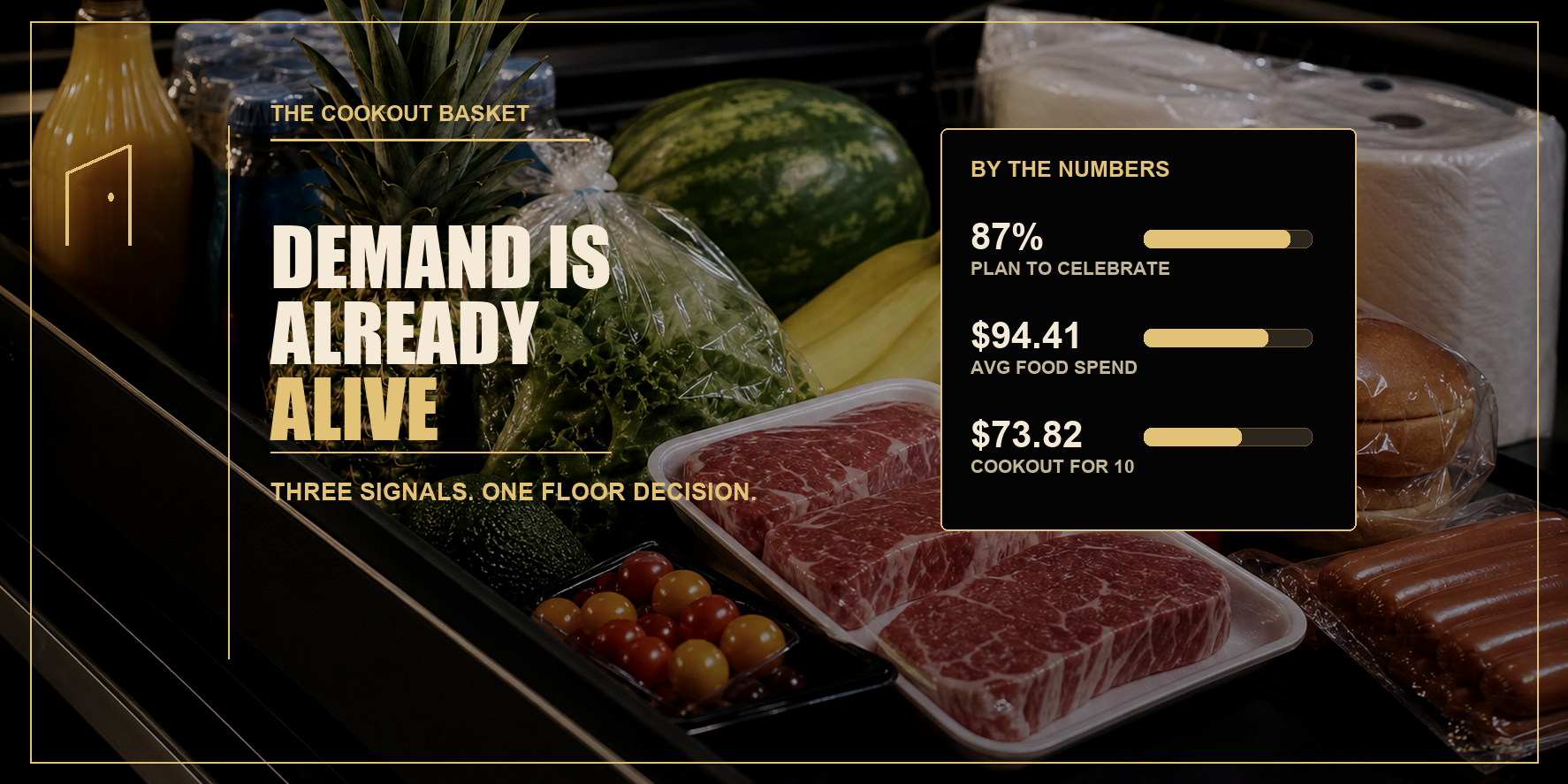
Three signals matter this week because they all point to the same operating truth: the cookout basket is already forming before the customer reaches the store.
01 — Celebration traffic is not optional
NRF says 87% of consumers plan to celebrate Independence Day.
Why operators should care: that is not casual traffic. It is a national meal occasion with a deadline. Customers are not browsing the holiday; they are trying to complete it.
What it changes on the floor: the entrance, produce, meat, grocery, deli, bakery, beverages, paper goods, and ice all need to behave like one trip. If the store waits for customers to connect the dots, it gives up basket before the first scan.
02 — The customer already expects to spend
NRF projects a record average food spend of $94.41 for 2026 Fourth of July celebrants.
Why operators should care: the store is not trying to invent demand from scratch. The money is already mentally assigned to the meal.
What it changes on the floor: the operator walk should shift from "Do we have it?" to "Did we make the basket obvious?" The miss is not always an out. Sometimes it is the side, dessert, drink pack, paper plate, fresh item, or bag of ice the customer never noticed.
03 — Space has to earn attention
Recent buyer commentary in The Shelby Report carried a simple message: space has to earn attention.
Why operators should care: holiday displays are not decorations, and they are not storage. They are decisions. Every endcap is either helping the customer finish the trip or asking for space without earning it.
What it changes on the floor: display location, adjacencies, signage, refill ownership, and department timing matter more than stack height. The best holiday stores do not just look full. They make the cookout easier to buy.
Operator Mistake of the Week
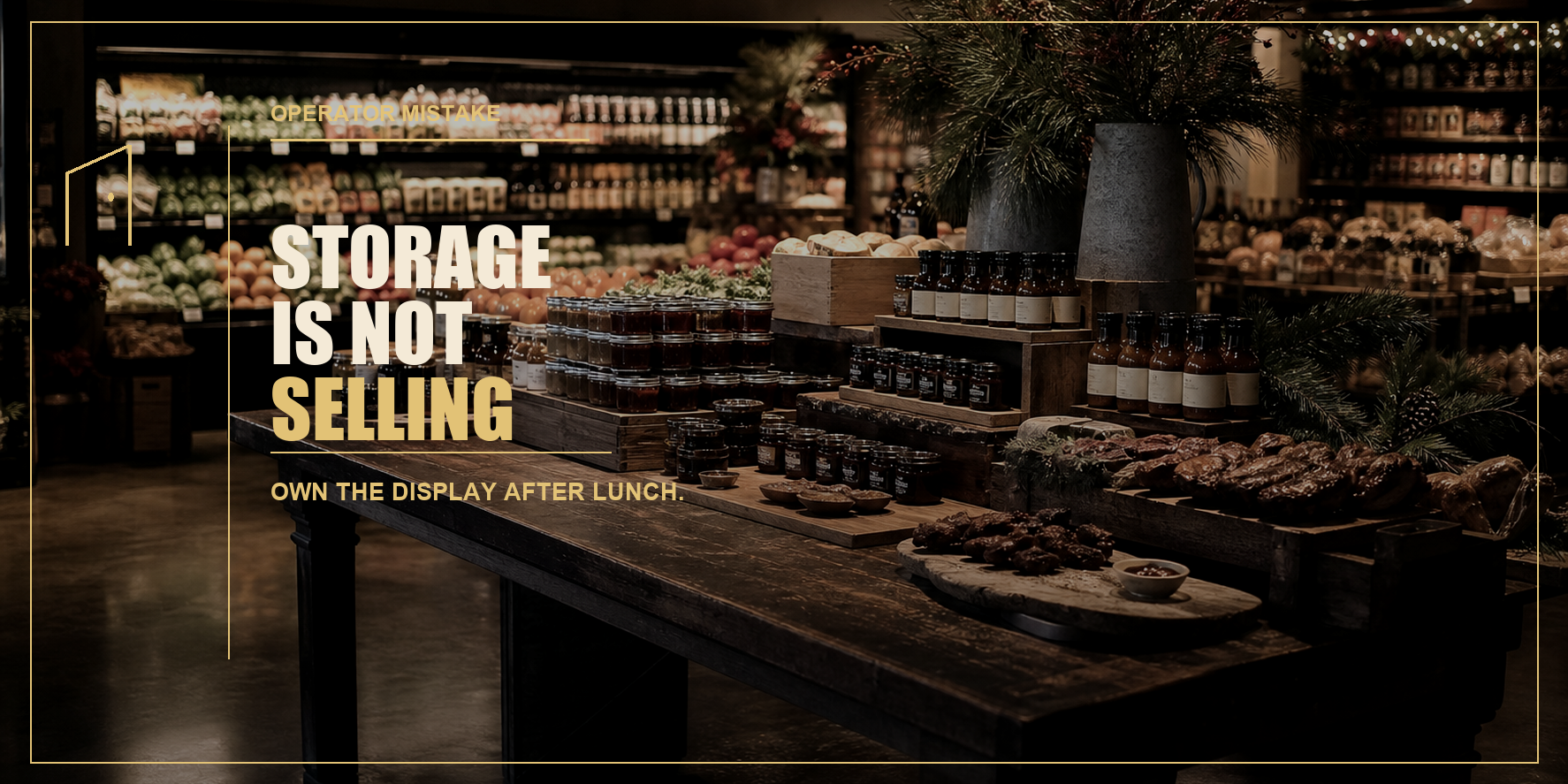
Treating a Holiday Display Like Storage
At 9:00, the display looked great.
Cases were stacked. The seasonal color was there. From the aisle, it looked like the store had made a statement.
By 2:30, the story had changed.
The front edge was picked over. The companion item was gone. The sign still promised a holiday solution, but the display had stopped solving anything. Customers walked past it, grabbed one item, and kept hunting for the rest of the trip somewhere else.
Nobody meant to let it happen.
The load came in heavy. Vendors wanted space. Managers protected in-stocks. The morning crew got the floor set. Then lunch hit, the departments got busy, and nobody owned the display after it stopped looking new.
That is the mistake.
A storage display says: we had extra product.
A merchandising display says: we know why you came in.
The difference is ownership after the first hour. A holiday display has to earn its location all day. It should solve a customer need, carry a clear reason to buy, and connect to the occasion. If the customer has to stop and figure out why that product is there, the display is making them work.
A holiday display is not there to hold product.
It is there to help customers solve their week.
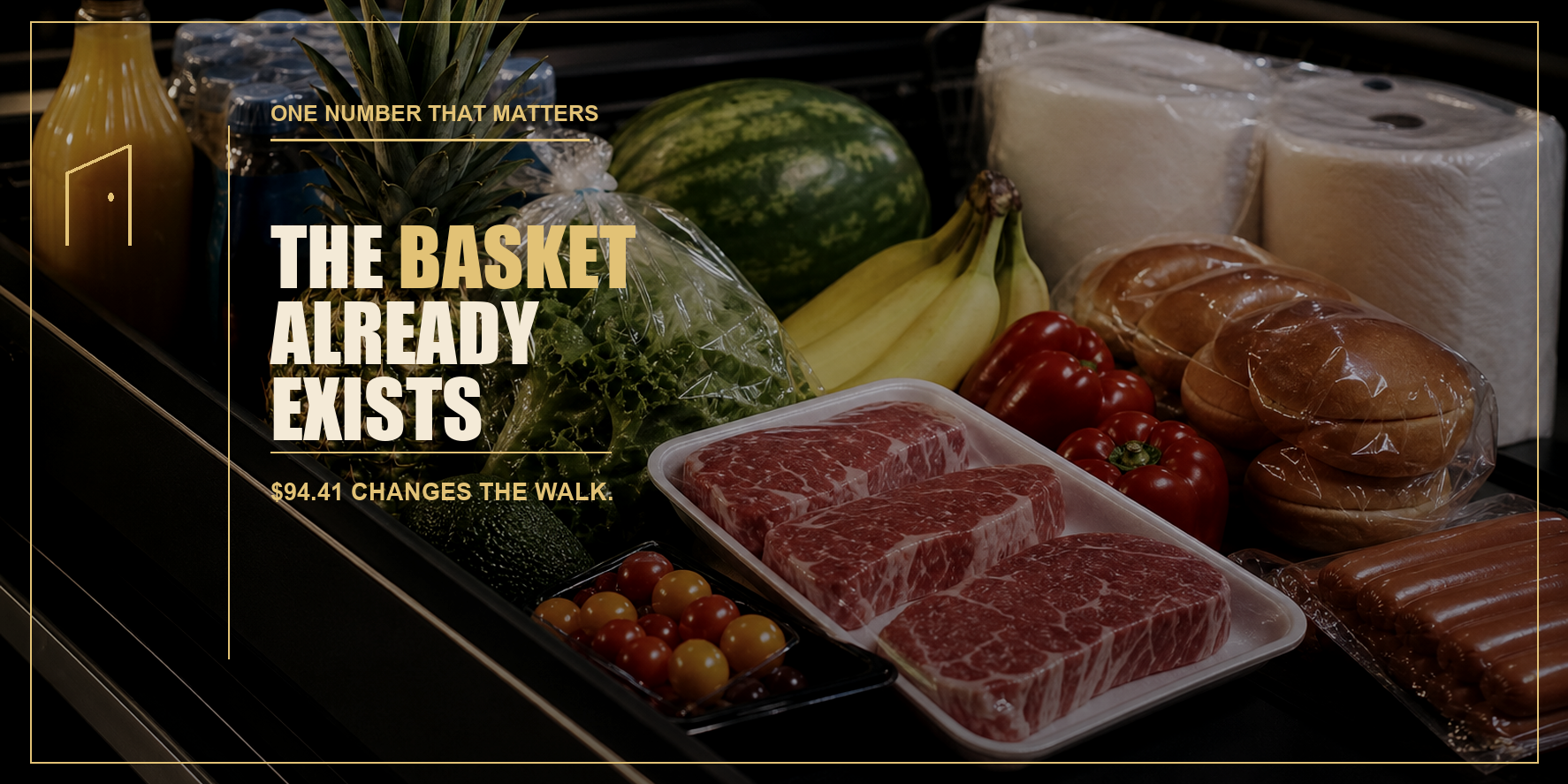
One Number That Matters
The Basket Already Exists
The customer has already planned to spend before the cart ever reaches produce.
NRF puts the average 2026 Fourth of July food spend at $94.41.
For operators, the number matters because it changes the walk. This is not an ordinary week where the store has to create the occasion. The occasion already exists. The demand is alive before the customer reaches the parking lot.
The store has to catch the basket already moving.
That is where weak merchandising gets expensive. The store may not lose the whole $94.41. It may only lose the forgotten item, the impulse side, the better meat purchase, the dessert, the second drink pack, the paper goods, the bag of ice, or the fresh item that did not look good enough.
Those misses do not always look dramatic.
They just make the basket smaller than it should have been.
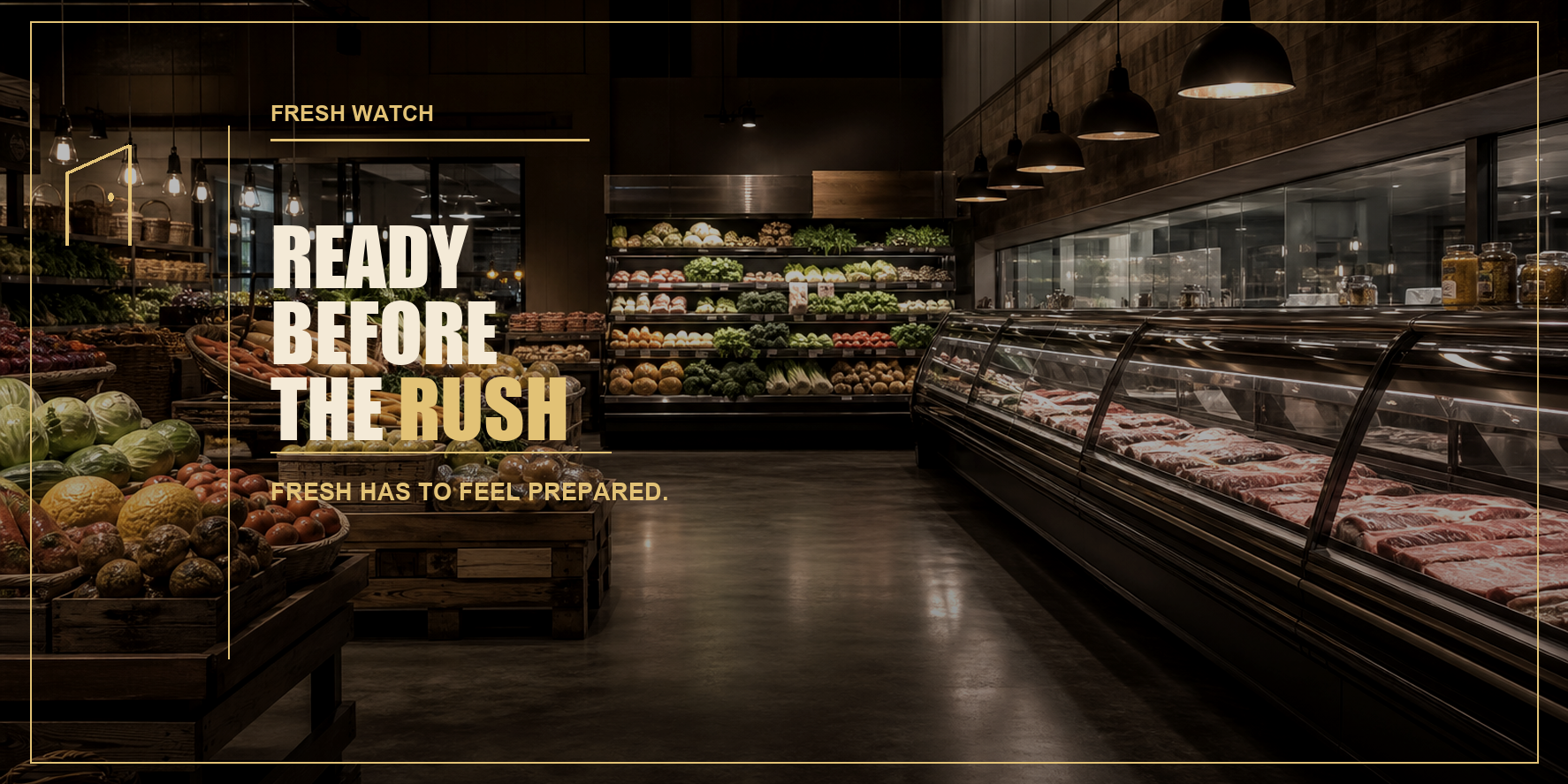
Fresh Watch
The case has to look ready before the rush arrives
Fresh is where the holiday either gains confidence or starts to feel thin.
A customer does not need a report to know whether the meat case feels ready. They can see it. Burgers, steaks, brats, hot dogs, chicken, kabobs, and grill-ready items either look abundant, clean, priced, and intentional — or they look like the department is waiting to see what happens.
Waiting is dangerous on a holiday.
Produce carries the same weight. Watermelon, corn, berries, tomatoes, onions, lettuce, fruit trays, and summer fruit need to create the first emotional read of the store. Deli and bakery solve the last-minute problem: something to bring, something sweet, something easy, something that makes hosting feel less heavy.
Fresh readiness is not only about volume. It is about timing, quality, signs, service, and ownership.
Who knows what is supposed to sell? Who knows how much was ordered? Who knows the plan to sell it? Who owns the refill when traffic hits?
Those are not checklist questions. Those are operator questions.
When you fail to plan, you plan to fail.
Holiday customers feel that before the numbers do.
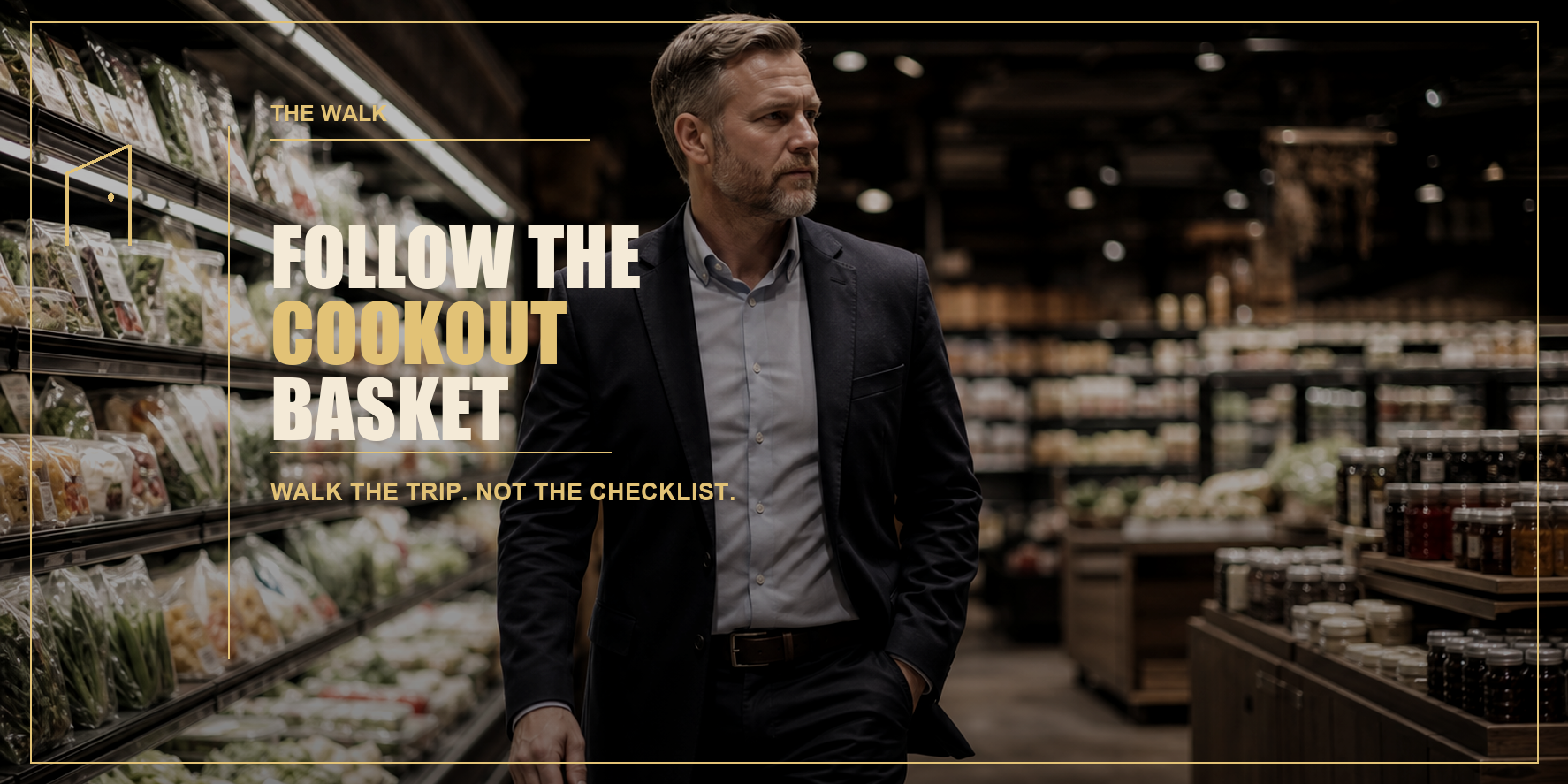
The Walk
Walk the store like the customer is building a weekend
Do not walk the store like a manager checking whether the Fourth of July tasks got done.
Walk it like a customer trying to build the weekend without forgetting anything.
Start at the entrance. In the first thirty seconds, does the store tell the customer what week it is? Does produce feel full, fresh, signed, and seasonal?
Then follow the basket. Meat, buns, cheese, pickles, condiments, chips, dips, drinks, paper goods, ice, sides, dessert. Are those pieces connected by merchandising, signs, and common sense — or scattered across the store like a scavenger hunt?
Look at the endcaps. Are they solving the holiday, or just holding cases? Do they make the basket bigger? Do they remind the customer what they forgot?
Then talk to the department heads like operators.
What are you expecting to sell? How many did you order? What did you sell last year? What is the plan if the rush hits early? Who owns the refill? What item can we not afford to be out of today?
The better question is not, "Do we have it?"
The better question is, "Did we make it easy to buy?"
The Monday Morning Test
Before the next big holiday, ask one question earlier than feels necessary:
Where are we assuming the customer will figure it out?
The customer will figure out where the ice is. The customer will remember plates. The customer will go find the buns. The customer will accept a case that looks thin because the product is technically there.
Maybe.
But strong operators do not build holiday weeks on maybe.
They build the trip before the customer arrives. They assign ownership. They protect the obvious items. They ask department heads to know their numbers. They refill before the store looks tired. They make sure every department is telling the same story.
That is not a longer checklist.
That is leadership before the rush.
Reality Check
Product is not the same as readiness.
A store can have the meat, the buns, the chips, the drinks, the watermelon, the paper plates, the desserts, the charcoal, and the ice — and still make the customer work too hard.
The best holiday stores do not win because they have the most complicated strategy.
They win because buying feels effortless before the customer notices why.
Merchandising is leadership customers can see.
A basket planned at home can still be lost on the floor.
