The Margin Leak Starts Small
Shrink has a feeling every operator knows. It is not just the number on the report; it is the cart rolled quietly to the back, the case that should have been cut two hours earlier, the display that still looked fine until you stood in front of it long enough to feel what it was costing. Good operators carry that weight differently. They do not treat shrink like an accounting problem after the week is over. They feel it as a store problem while there is still time to save the product, the sale, the labor, and the pride. This issue is about those small moments before loss becomes official — the decisions, handoffs, and second looks that decide whether the week holds.
This Week in Grocery
Three signals matter this week: there is little financial cushion, perishables punish hesitation, and recovery passes are where strong stores protect the day. The common thread is not accounting. It is judgment while there is still time to act.
Small losses feel small until the week has no room left
FMS/NGA’s 2025 independent grocer benchmark puts net profit around 1.9%, with single-store EBITDA at 1.52% versus 3.28% for multi-store and higher-volume operators. That is the part operators feel in their stomach. There is not much cushion between a good week and a week that quietly got away. A late markdown, an overbuilt case, a display that never got its second touch, or a run of tag mistakes does not have to look dramatic to matter.
Perishables turn hesitation into cost
The Pacific Coast Food Waste Commitment’s public retail food-waste report shows unsold-food rates of 8.38% in prepared foods, 8.06% in breads and bakery, 5.39% in produce, and 3.76% in fresh meat and seafood. Fresh is unforgiving because the decision window is short. Trim, cull, rotation, production timing, and markdown judgment are not cleanup work. They are the moment where pride, sales, shrink, and customer trust all meet in the same case.
The recovery pass is where operators earn the week
University of Florida research found smarter display and pricing strategies could cut food waste by more than 20% while increasing profits by 6% on average. The first pass builds the display, fills the table, or writes the production plan. The return pass decides whether the store adjusts to reality. Strong operators do not admire the build; they come back while there is still time to protect the day.
Shrink feels like disappointment before it feels like math
The number comes later. First comes the feeling: why didn’t we catch that? I thought that item would do well. Why did the case look safe to us but not worth buying to the customer? Operators feel shrink as missed judgment, missed timing, missed coaching, and missed sales before it becomes a line on a report.
The meat manager knew beef costs had increased. He also knew that raising retails meant customers would pay more. He cared about those customers, so he waited. Maybe the market would settle down. Maybe next week’s invoice would look better. Maybe he could avoid passing the increase along. The instinct was admirable. The outcome was not. Every day the retail stayed behind the cost, margin quietly leaked away. Nothing dramatic happened. No alarms went off. The meat case still looked great. Customers kept buying. But every pound sold was worth less than it should have been. Eventually the prices had to move anyway. The only difference was that the store had already given away days — or weeks — of margin that could never be recovered.
The Backroom Brief take: shrink is part of grocery, but being satisfied with shrink is not. The stronger operator does not protect the number by accepting poor conditions. They protect the store by knowing movement, reading the department like a customer, and making the adjustment before the product loses its chance to sell. Margin is not saved by starving the case. It is saved by operating the case better.
Three Cents Is All You Get
A useful operator rule of thumb: If your store keeps about 3¢ of profit for every $1.00 in sales, every dollar lost requires roughly $33 in additional sales just to earn it back. That’s why a delayed retail move, a tired case, a missed sale, an ordering mistake, or an item that should have moved but didn’t all matter. Thin margins turn small misses into real work for the rest of the store. Great operators do not think only in terms of dollars lost. They think in terms of how much business they will have to earn just to get back where they started.
Letting good intentions delay a necessary price change
The meat manager knew beef costs had increased. He also knew raising retails meant asking customers to pay more. He cared about those customers, so he waited. Maybe costs would come back down. Maybe next week’s invoice would be better. Maybe he could avoid another price increase. The instinct was admirable. The outcome was not. Every day the retail stayed behind cost, the department quietly gave away margin that could never be recovered. The lesson is not that caring about customers is wrong. The lesson is that delaying necessary decisions often creates bigger problems later. Good intentions do not protect margin. Good leadership does.
Fresh Watch
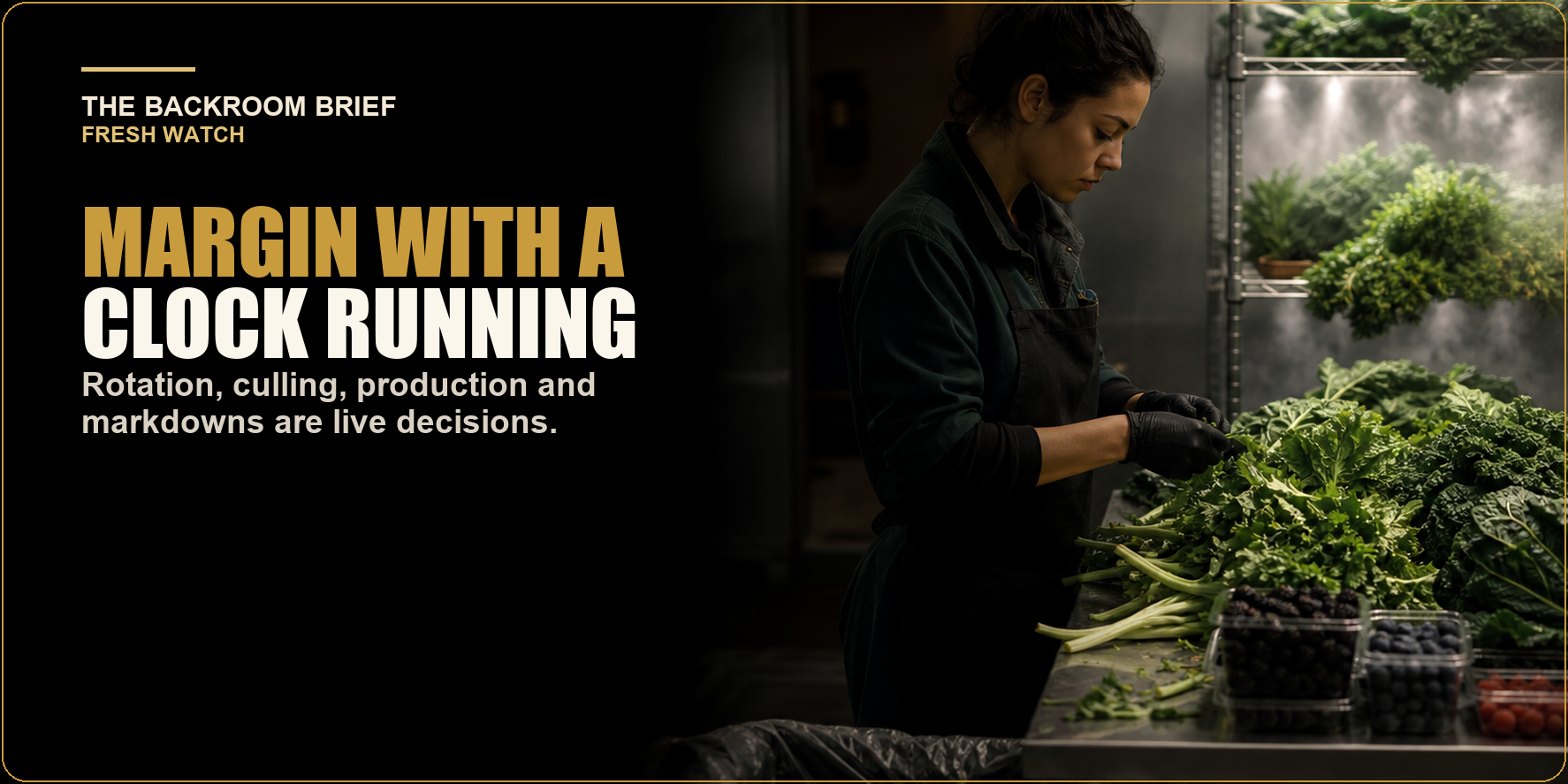
In fresh, margin can leak through trim loss, poor yield, production too early, markdowns that wait too long, rotation that lets good product age out, and rework that never happens. The department may not look broken, but every small miss changes what the product is worth by the time a customer sees it.
The discipline is not guesswork. Know how many of an item you sell daily. Know when it sells. Know what weather, ad pressure, daypart, and case condition do to movement. Then produce to the read in front of you, not to fear and not to habit.
What feels different is how quiet the leak is. Nobody calls a meeting because a display missed its second touch, a markdown waited two hours, or a tag made one customer pause. But those are the moments where the week starts giving money back.
What shows up when you actually walk the store
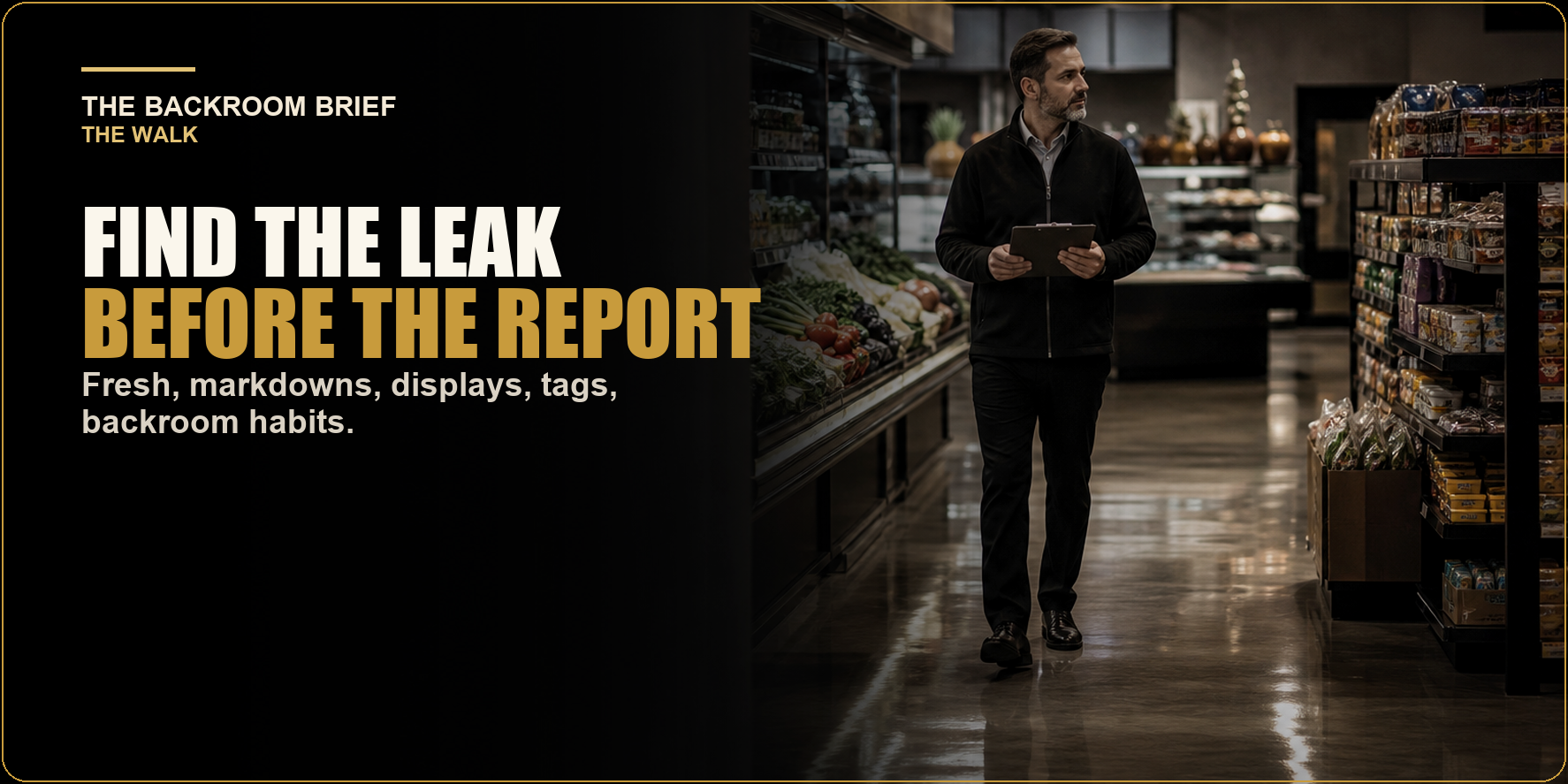
Would you buy this, or would you walk past it?
Do not walk the department like a manager checking whether a task was completed. Walk it like a customer deciding whether dinner is coming from here. If something does not look good, it probably will not sell. And when it does not sell, the store will eventually call it shrink even though the first problem was condition.
Why didn’t this move?
Pick one item that should have sold and did not. Do not accept ‘slow day’ as the answer. Was it priced wrong? Built too late? Merchandised weakly? Left looking like the final one? Produced from habit? Ignored after the first pass? The lesson is hiding inside the item that did not move.
Are we protecting margin or protecting ourselves from shrink?
Underproduction can feel safe because there is less to throw away. But if the case looks weak, customers stop shopping it. That cost is harder to see because it shows up as missing sales, not a cart of waste. The operator has to ask whether the store reduced shrink or simply reduced opportunity.
Do we know the movement, or are we guessing?
Ask the department head how many of the item sells daily. If the answer is vague, the department is guessing. If the department is guessing, the store will swing between holes and waste. Knowing the number is not a report exercise. It is how a manager earns the right to produce confidently.
Walk one department as a customer before the week gets loud.
Do the margin walk before the day gets loud. For each miss, name where it showed up, why it happened, what it cost, who owns the next move, and when the recheck happens.
- Find one product that should have sold and did not.
- Ask why it missed: price, condition, timing, display, production, or ownership.
- Ask the department head how many of that item sells daily.
- Fix one place where shrink protection is creating poor conditions.
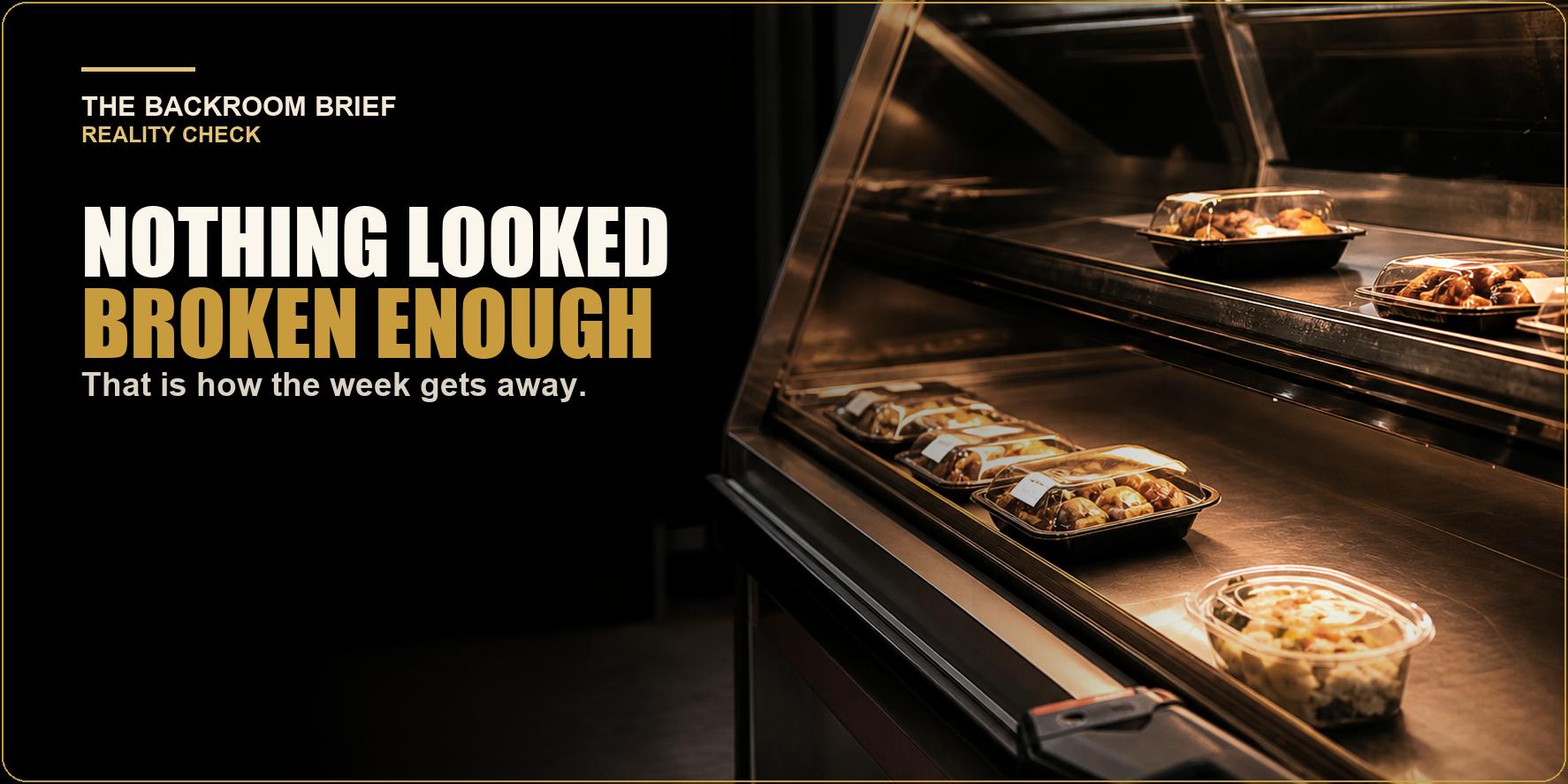
Where is your store protecting shrink so hard that it may be teaching customers not to buy?

Small decisions build great stores. Small delays quietly tear them apart.
