Value Is No Longer a Sign — It’s a System
Grocery value has moved from a shelf-tag claim to a whole-store credibility test. The shopper is asking one question: did this store make the money feel explainable?
The value promise is getting audited in real time
The headline is not that grocers are talking about value again. They never stopped. The shift is that shoppers are no longer grading value from one rollback, one circular item, or one loyalty offer. They are grading the entire trip: the price they noticed, the sign they understood, the private label they trusted, the fresh item they believed, the ad item they actually found, and the checkout total they could explain to themselves on the way home.
That is why the value fight is more operational than promotional. A lower price can get the shopper to pause. It cannot, by itself, make a tired department, a confusing tag, a thin basket, or a rough checkout feel fair.
This Week in Grocery
Three things worth reading together: grocery inflation looks manageable in the average, fresh pressure is louder in the basket, and discount is winning more of the mission. The story is not inflation. The story is what shoppers now require before they trust a store with the full trip.
The shopper feels the loud categories, not the headline number
Food-at-home inflation was up 2.9% year over year in April, which can sound manageable in a headline. But the store is judged closer to dinner: fruits and vegetables were up 6.1%, fresh vegetables were up 11.5%, beef and veal were up 14.8%, and coffee was up 18.5%. That is why value pressure shows up emotionally in produce, meat, coffee, and meal-building basics before it shows up as a neat average in a report.
Fresh is too big to be treated like a side note
Fresh departments accounted for 42% of grocery sales in 2024, and meat and produce each sat around 11% of total store sales. That makes fresh one of the clearest places where value becomes visible. A sharp price in center store helps, but a tired wet rack, thin meat case, or weak dinner solution can make the whole trip feel less credible.
The lost basket may still walk through the door
Dollar Tree reported first-quarter net sales up 7.2% and comparable sales up 3.5%, driven by a 4.5% increase in average ticket even as traffic declined 1.0%. That is the warning for conventional operators: value players can win more of the mission from fewer trips. The visit alone does not prove belief. The basket tells the truth.
The customer is not asking for a cheaper store. The customer is asking for less doubt.
That is the miss. Value is not only a price communication problem. In the store, value is usually a confidence problem. Can I understand the deal? Can I trust the fresh item? Can I finish dinner here? Will the register match the sign?
A manager walking tomorrow should not only ask, “Are the prices right?” The better question is: where does this trip make the shopper hesitate?
What customers and operators are actually saying
The useful pattern is not “customers are cheap.” That is lazy. The pattern is that customers are tired of decoding the store. The repeated friction is too consistent to ignore: shoppers are doing more math, editing baskets more deliberately, and treating confusing value claims as another form of work.
From the shopper side, the irritation is less about one price and more about uncertainty: loyalty-only savings, unclear multiples, shelf/register mismatch, private-label risk, and the cheap trip that still feels expensive.
Late signs, missing ad items, weak recovery, rough fresh condition, thin labor coverage, and checkout surprises can undo a whole week of value messaging in five seconds.
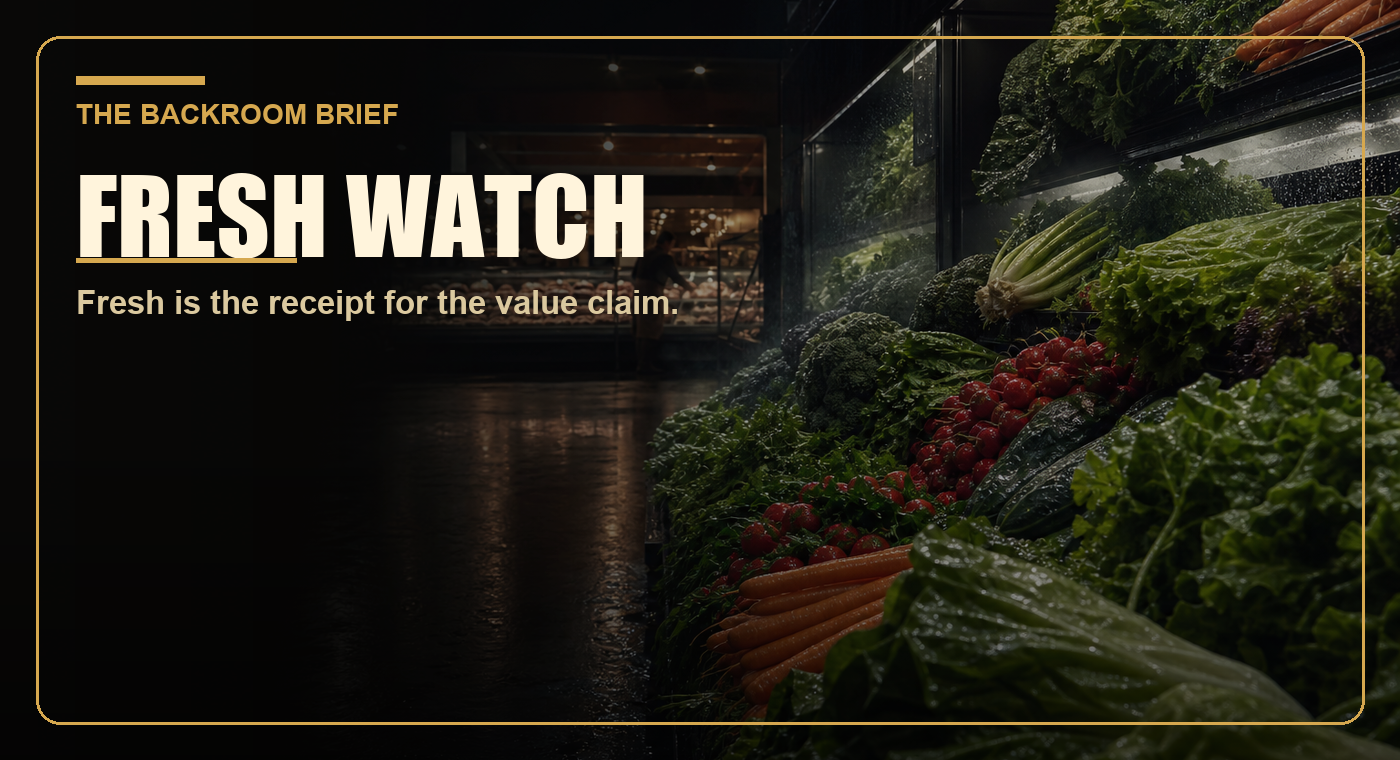
Fresh Watch
Customers may shop for price, but they judge fairness with their eyes. Produce condition, meat case discipline, deli energy, bakery freshness, prepared-food credibility, and the first twenty feet of the store all tell the shopper whether the money is respected.
If the cheaper choice sits in a tired case, next to weak rotation, under a vague sign, the shopper does not see savings. The shopper sees risk. The operator move is to manage confidence cues as tightly as price cues.
A strong wet rack can make a price feel fair. A tired one makes even a discount feel suspect. Fresh is where the shopper decides whether the store cared before the shopper arrived.
The quiet shift is not that shoppers stopped caring about price. It is that more shoppers now treat confusion as part of the cost. Every unclear offer, weak fresh cue, missing companion item, and checkout surprise makes the store feel more expensive.
Run a Basket Credibility Walk
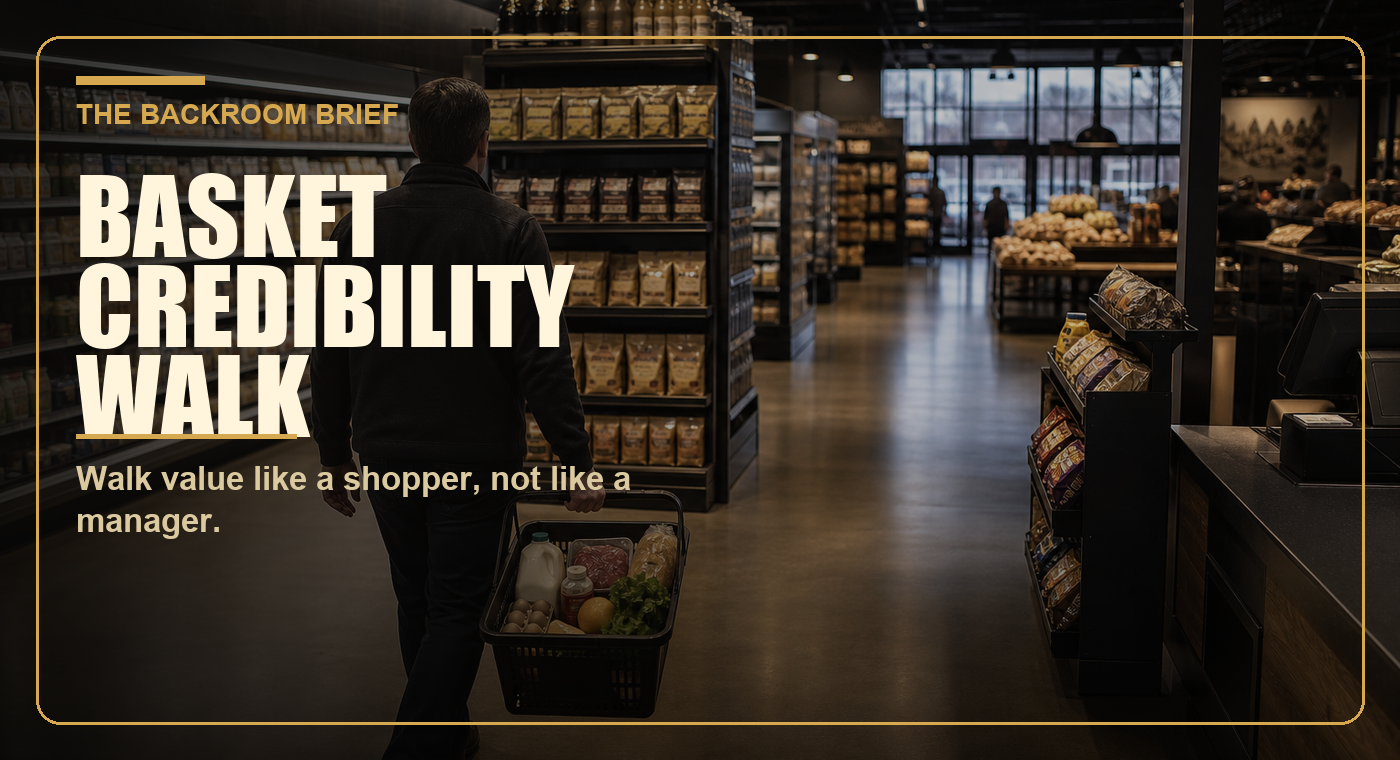
Pick ten items shoppers use to judge the store: coffee, eggs, milk, beef, a produce basic, bread, one private-label staple, one advertised item, one meal solution, and one checkout impulse item. Walk them like a shopper with a budget, not like a manager checking a list.
Find the hesitation before the shopper does
Is the price visible? Is the promo easy to understand? Is the item in stock? Does the surrounding department make it feel credible? Does the basket still make sense when those items reach the front end?
The deal can stop at the deal
Look for ad holes, weak adjacencies, loyalty-only confusion, and promoted items that do not naturally build the rest of the meal. If the deal does not create the next department, the store rented attention but failed to earn the basket.
Walk fresh when value and dinner collide
The 4 p.m. to 6 p.m. read matters. Thin recovery, tired color, and checkout friction hit harder when the shopper is trying to solve dinner with a budget and a clock.
Audit the first place your value message creates doubt.
Not everything needs a pricing meeting. Some weeks the smartest move is picking one visible friction point and cleaning it up before customers explain it to you with their baskets.
- Check loyalty-only offers before the customer reaches the register.
- Trace the lead ad item into companion departments.
- Fix one fresh cue that makes a cheaper item feel risky.
- Compare the expected basket total to what the customer actually feels at checkout.
“Price gets attention. The store has to earn belief.”
