The Shelf Is Full. The Cash Is Stuck.
A full shelf can look healthy while slow inventory quietly consumes cash, labor, space, and margin.
The full display that should make you stop
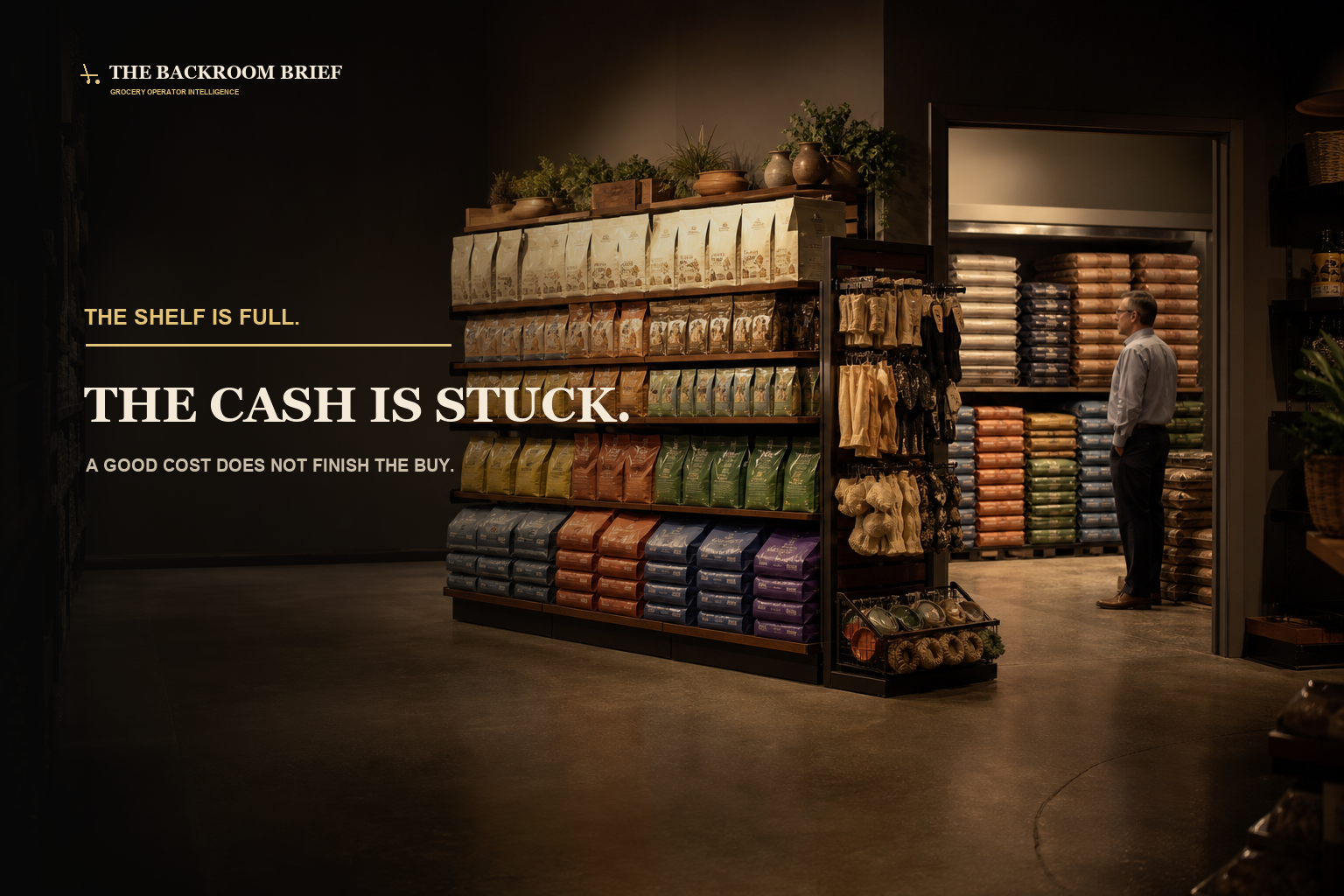
Nothing looks broken. The display is full. The cases are stacked. But the product has stopped moving, and the store is still protecting a deal the customer has already declined.
Operators are trained to notice empty displays. This week's Brief is about the dangerous inventory that stays perfectly full - and the early movement check that can stop a good purchase from becoming stuck cash.
Nothing looks urgent because nothing is empty
The pet-food display looked fine.
It was full, faced, and supported by more cases in the backroom. The purchase cost had been favorable. Across the group, buying into the opportunity had made sense.
But the product did not behave the same way in every store.
At the faster locations, the stack came down. At slower ones, the same cases remained in backstock. Nothing looked urgent because nothing was empty.
That is how a good buy quietly stops being a deal.
Operators react to holes. A full shelf feels safer. Fullness is a condition. Movement is the proof.
Online demand is real. The order still has to pay for the pick
Three signals matter together this week.
01 - Availability improved while inventory moved more slowly
The 2026 FMS/NGA independent-grocer study reports total-store inventory turns falling from 17.8 to 16.1 while out-of-stocks improved to 6.6% and wholesaler service remained above 90%.
Why operators should care: A fuller shelf can coexist with weaker inventory productivity. Availability matters, but it does not tell the operator whether the inventory is earning its space and cash.
What changes on the floor: Pair the in-stock walk with movement. Which displays changed? Which cases came forward? Which items are full because customers want them - and which are full because nobody has made the next decision?
02 - Shrink reached 3.9%, but the loss starts earlier
The same study reports shrink at 3.9% of sales and says profit leaders separated themselves through lower shrink and stronger inventory management.
Why operators should care: The write-off is often the last chapter. Before that, slow inventory takes handling, space, markdown room, and cash for the next productive buy.
What changes on the floor: Do not wait for the shrink report to make the problem official. Look for inventory that is physically present but no longer changing.
03 - The right inventory can still be in the wrong store
In the 2023 European Journal of Operational Research study Clustering retail stores for inventory transshipment, Emily Griffin, Burcu Keskin, and Arthur Allaway tested store-transfer methods using three years of IRI grocery sales data from Houston and Dallas. Their work supports a practical truth: location demand and distance matter when retailers rebalance inventory between stores.
Why operators should care: A group can own the right total quantity and still have the wrong quantity by store.
What changes on the floor: Compare movement before applying the same allocation, price, or exit everywhere. A transfer is useful only when the destination has stronger demand and the move does not simply relocate the problem.

The deal is not done at receiving
The person who buys or allocates the product may not be the person who has to move it. The dangerous part is leaving that handoff unnamed.
The buying or allocation owner decides how much each store receives. The store-level movement owner watches what happens after arrival: whether the display changes, whether backstock comes forward, whether awareness is building, and whether the product needs a different price, display, location, or store.
A purchase can be complete in the system and unfinished in the operation.
The invoice opens the buy. Store-level movement closes it.
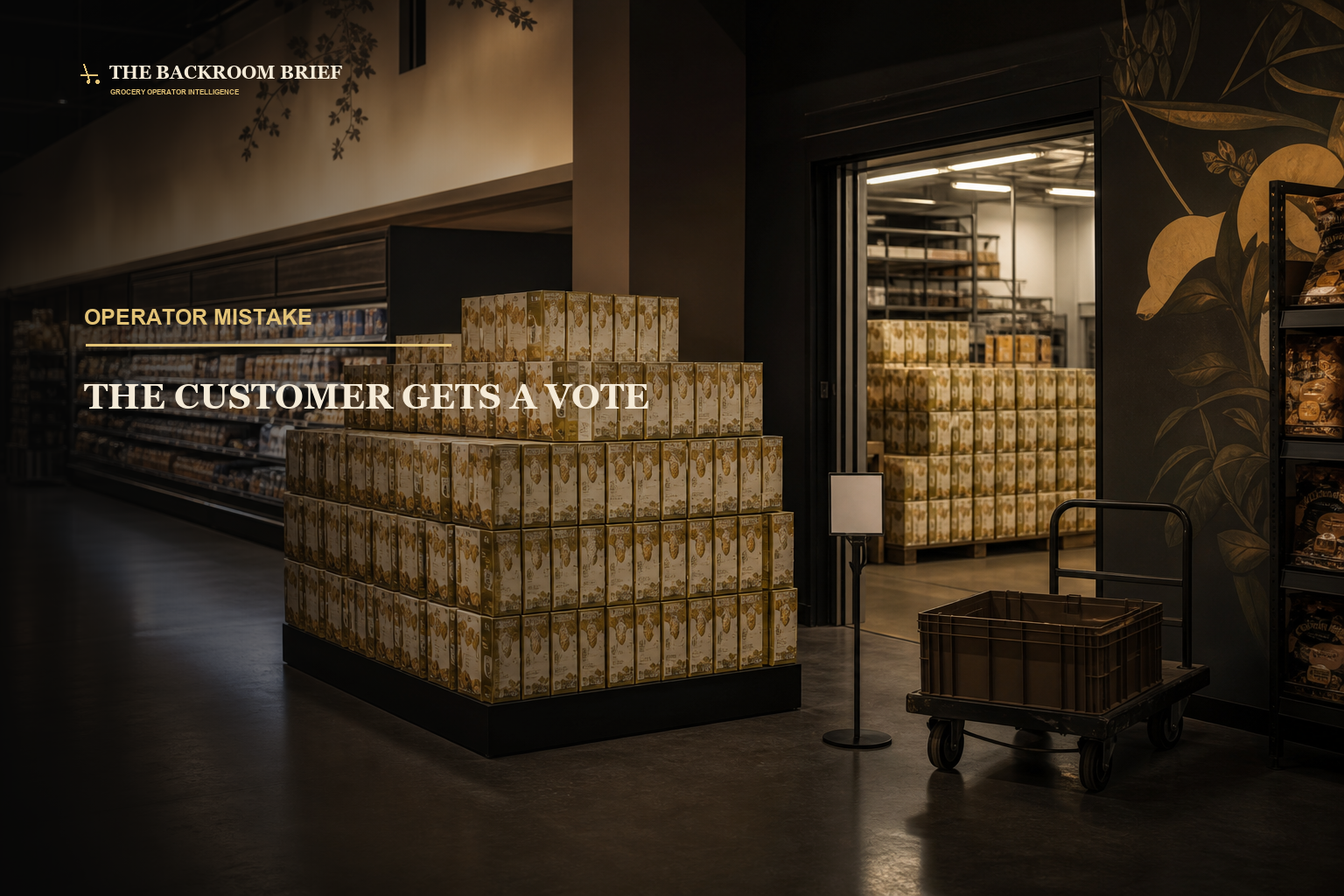
The display never changed
The cost was good. The group supported the opportunity. Then slower stores were given more time because the original gross still looked worth protecting.
The buy may have been absolutely right when you made it. But the customer gets a vote afterward. When movement does not support the original plan, protecting the original decision can become more expensive than changing it.
That is where planned margin becomes a trap. A price change feels like giving something away. A transfer creates work. Waiting feels easier because the shelf still looks healthy.
But waiting is a decision. The product keeps spending cash, space, and labor while the store protects gross it may never collect.
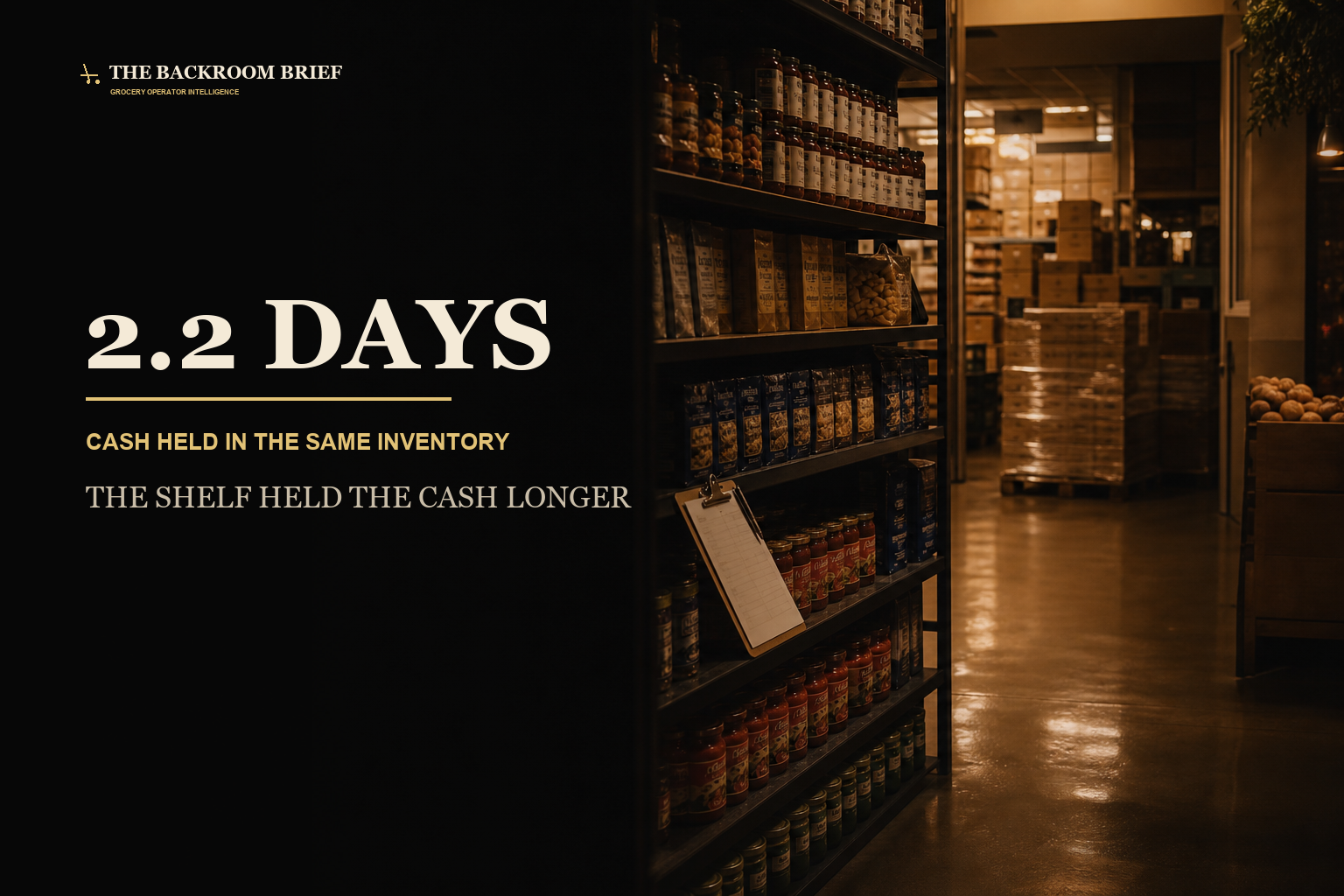
The shelf held the cash two days longer
At 17.8 turns, average inventory time is about 20.5 days. At 16.1 turns, it is about 22.7 days - roughly 2.2 more days by a transparent TBB calculation.
That does not mean every item sat exactly two days longer. It means a modest-looking move in the total-store turn number can represent more cash sitting across shelves and backrooms.
Use the turn number as the alarm. Then find where the days are accumulating: the item, the store, the display, and the backstock.
Low cost is not the finish line
A strong special buy needs three decisions: How much can each store move? Who comes back after it lands? What happens next while there is still margin and demand to protect?
The answer is not reckless inventory cutting. Safety stock and strong in-stocks still matter. Productive protection has a reason. Slow inventory needs a decision.
A special buy is complete when the inventory moves at an acceptable return - or when the operator changes the plan early enough to recover the cash.

Walk the inventory that looks safest
Choose one current special buy in center store. Compare the quantity with the item's history or the closest comparable item.
- Look for display change, not only display fullness.
- Check whether backstock is actually coming forward.
- Decide what comes next if movement stays weak: awareness, display, price, transfer, or another item-specific exit.
Walk the inventory that looks safest. Look for change, not fullness.
Finish one buy
Before noon Monday, assign one leader to one current special buy. Name who controlled the allocation, who owns movement now, and when that leader returns.
That leader returns at the end of week one with three pieces of evidence: sales movement, display change, and backroom reduction.
If movement remains weak, choose an item-specific response by week two. Then return again and verify that the inventory moved.
One observation. One owner. One return time. One decision. One second look.
Operator question: Which full display in your store has not changed enough to deserve the cash sitting behind it?
Get the Friday Brief - one sharp grocery operator read and one practical move every week. Subscribe free and receive the Store Walk Standard in the welcome email.
Forward this to one operator who knows the shelf tag is only the opening argument.
Get the Friday Brief