The Store Has Two Shelves - and the Customer Expects One Promise
The customer sees one store, even when the item, price, availability, substitution, and handoff live in different systems.
This issue gives an independent a practical way to test the service promise and the order economics before turning on pickup.
The deli case says otherwise
Picture the first controlled pickup test.
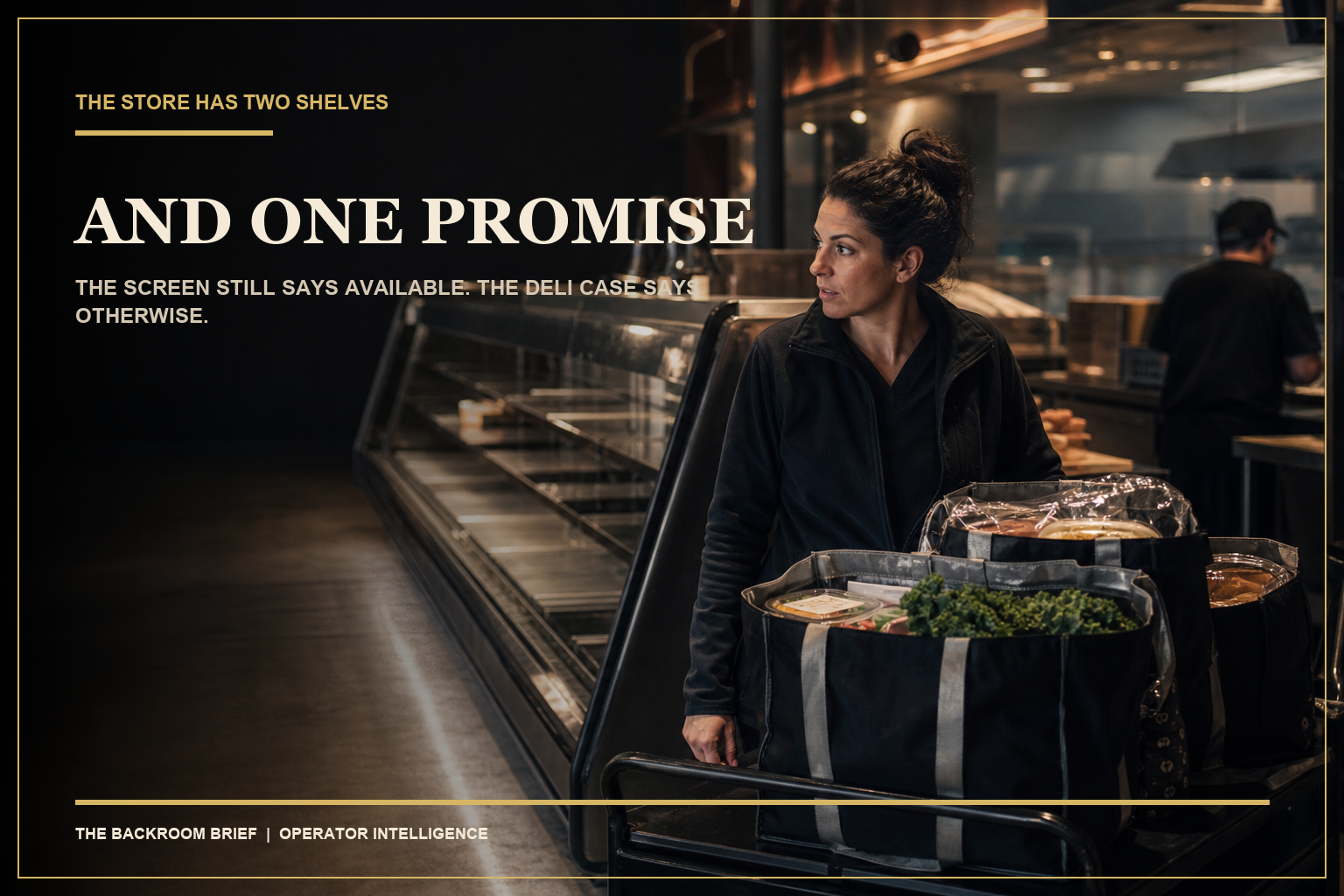
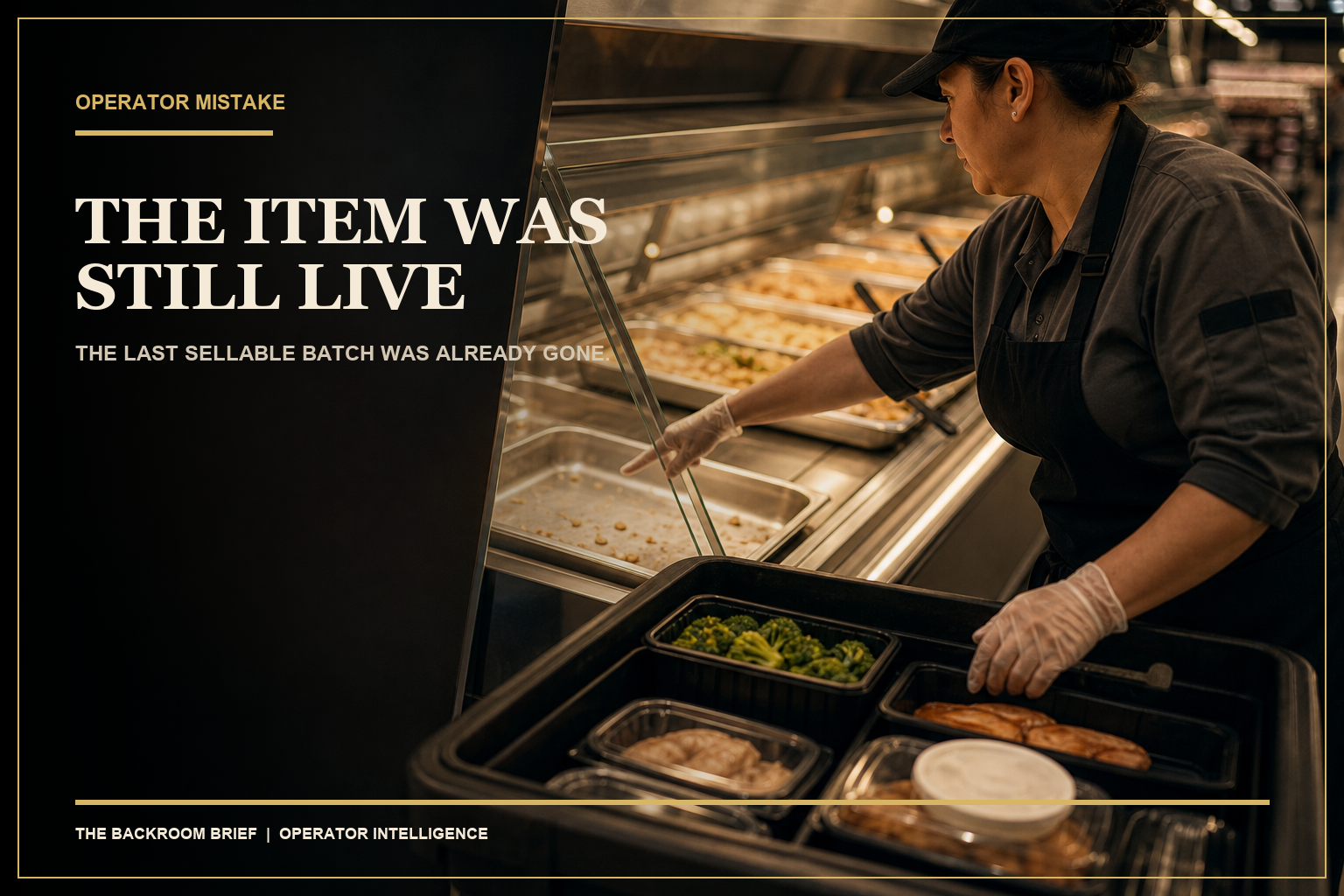
Most of the order is packed. Refrigerated bags are staged. The pickup window is getting close. Then the picker reaches a prepared-food item the screen still calls available, but the last sellable batch is gone.
The deli case says one thing. The online order says another. The customer finds out after dinner is already underway.
Online demand is real. The order still has to pay for the pick
- Online ordering is becoming repeat behavior. David Bishop / Brick Meets Click reports 22 consecutive months of year-over-year ordering growth and more than three orders per monthly active user for the first time. For an independent considering pickup, the question is no longer whether customers will order groceries online. It is whether enough of them will reorder to cover the people-hours required to pick and hand off the basket.
- Independent online sales remain small while the basket is large. FMS/NGA reports online at 1.1% of independent-grocer revenue and the average online basket at roughly three times the in-store transaction. A basket three times larger can still lose money after picking, platform charges, card fees, bags, refunds, and handoff. Cost one completed order before treating 1.1% as room to grow.
A $106 order still has to pay for the pick
The larger online basket gets attention for a reason.
Wharton reports that sales-floor curbside pickup added 32.6 minutes of employee labor in the operation it studied. The picker walks the aisles, finds the holes, contacts the customer, separates temperatures, stages the bags, and completes the handoff.
Now cost the order. Did pickup create a new sale, or did the store simply move the labor from the customer to the payroll? A fee, online markup, minimum, or membership has to cover that difference.
The item was still live
The last hot batch sells through, but the item stays online for a pickup window two hours away. The picker reaches deli after the customer has already built dinner around it.
A UPC can stay active after the food is no longer ready, hot, complete, or fit for that pickup time.
The deli PIC should update the online offer at opening and whenever production or sellable condition changes. The picker owns the recommendation, customer contact, approval, omission or refund, and handoff.
One picker can own the basket. The department still owns whether the item is truly available.
What is left after 32.6 minutes of picking?
That is FMI's reported average online supermarket transaction, compared with $49.06 in store. The useful number is not $106 at checkout. It is what remains after picking, contact, bags, payment, staging, refunds, and handoff.
A larger basket does not automatically mean a better basket. The question is whether enough contribution remains after the store performs the shopping itself.
The bigger basket still has to carry the work
Take a representative $106 order. The model below is a decision tool, not a forecast and not any store's actual economics.
Reported benchmarks: $106 basket; 27.9% total-store gross margin from FMS/NGA; 32.6 minutes of sales-floor curbside labor from Wharton, rounded to 33 minutes.
Illustrative inputs to replace locally: $21 loaded labor per hour; 24 minutes for scheduled/batched picking; 2.9% plus $0.30 online payment; 1%-1.5% platform cost; $0.65 bags and supplies; 0.4%-0.5% claims/refund leakage; $1-$2 technology allocation per order.
These are not recommended prices. They show why a small markup may recover less than expected and why batching the work can matter more than arguing over two percentage points.
A minimum order filters small baskets; it does not pay for picking. A markup that looks harmless in the model can still fail on promoted items and known-value staples customers can price from memory.
Online grocery is a promise-and-contribution decision
Before turning on pickup, the store should know what one order costs, who removes a sold-out deli item from the site, how long the picker waits for a substitution answer, where cold bags sit, and who checks the order at the car.
An independent does not need chain-sized software to succeed. It needs fewer pickup windows, a live deli offer, and a picker who can reach the customer before dinner is changed.
The picker recommends. The customer decides. No response means omit and refund.
The Online Promise and Cost Test
Before launch, follow one representative basket all the way through:
- Name the online pricing rule and any difference the customer will see.
- Verify one promoted item and one known-value item from online offer to shelf.
- Check whether each, pack, bunch, pound, and variable-weight units are unmistakable.
- Follow one deli item from production to online availability.
- Time picking, customer contact, staging, and handoff.
- Require approval before any substitute that changes the brand, size, price, dietary fit, or planned meal. If approval does not arrive by the cutoff, leave the item out and finish the order.
- Calculate what remains after picking labor, customer contact, platform and payment charges, supplies, refunds, staging, and handoff.
Pick the order before you open pickup
Give one picker a $106 test basket that includes a promoted item, bananas sold by each or bunch, one out-of-stock item, and one prepared-food item. Time the aisle walk, customer message, deli wait, bagging, cold hold, and handoff. Cost the order using the picker's wage and actual fees.
Run it again in the next pickup window. If deli availability is stale, the substitution answer arrives too late, or the order loses money, fix that before taking a customer's order.
Don't approve pickup because the demo worked. Approve it because the operation can repeat it on a busy Thursday at 5:30 p.m.
Get the Friday Brief - one sharp grocery operator read and one practical move every week. Subscribe free and receive the Store Walk Standard in the welcome email:
https://www.thebackroombrief.com/subscribe
Forward this to one operator deciding whether the store is ready to promise pickup.
Get the Friday Brief