The Store That Waits for the Manager
A store can look well led while quietly teaching every department to wait.
It sounds like support
A department calls. The manager answers. Another question comes. The manager clears that one too. The store keeps moving, and the manager looks exactly like what a strong manager is supposed to look like: useful, fast, in control.
Until the answer is not there.
One night, a PIC found a deli case running well above temperature. The check had done its job. The PIC had responsibility for the store. But protecting the product still felt like the manager's decision.
So the PIC called. And waited.
No protective action began before the PIC left. By morning, nearly $5,000 in deli product had to be thrown away.
The expensive part was not the bad reading. It was the lesson underneath it: in that store, waiting for the manager felt safer than making an appropriate call.
That is how dependency hides inside good intentions. A manager answers every question to help the team. The team slowly learns that the safest decision is the one they do not make without the manager.
This issue is about where that waiting lives, how to return appropriate judgment closer to the work, and how to do it without giving up the standard or the check-back.
Leadership is more than personal rescue
- Grocery's definition of store-manager excellence is broader than personal rescue. FMI's 2026 Store Manager Awards drew more than 110 nominations and recognized operational excellence, team leadership, customer service, innovation, and community impact. The stronger floor-level test is whether department leaders can keep the store moving inside clear standards when the manager is somewhere else.
- The manager is still the main human channel, but the message may not be landing as cleanly as managers think. Axonify's 2026 study of 1,594 frontline employees, managers, and corporate leaders found that 59% of frontline workers prefer updates directly from their manager. While 87% of managers said they communicate updates effectively, 56% of frontline workers agreed. This is communication research, not proof about decision authority. It still shows how easily one manager can become the update channel, coach, approver, and rescuer. Separate updates that need the manager from calls department leaders can make and report back.
- The people closest to the work often see the friction first. Current Harvard Business Review analysis says frontline employees spot operational friction early and bring judgment critical to change. In a grocery store, detection only matters when the person who sees the problem knows the appropriate first move, the limit, and when to call. A checklist can find the condition. Prepared judgment protects the business.
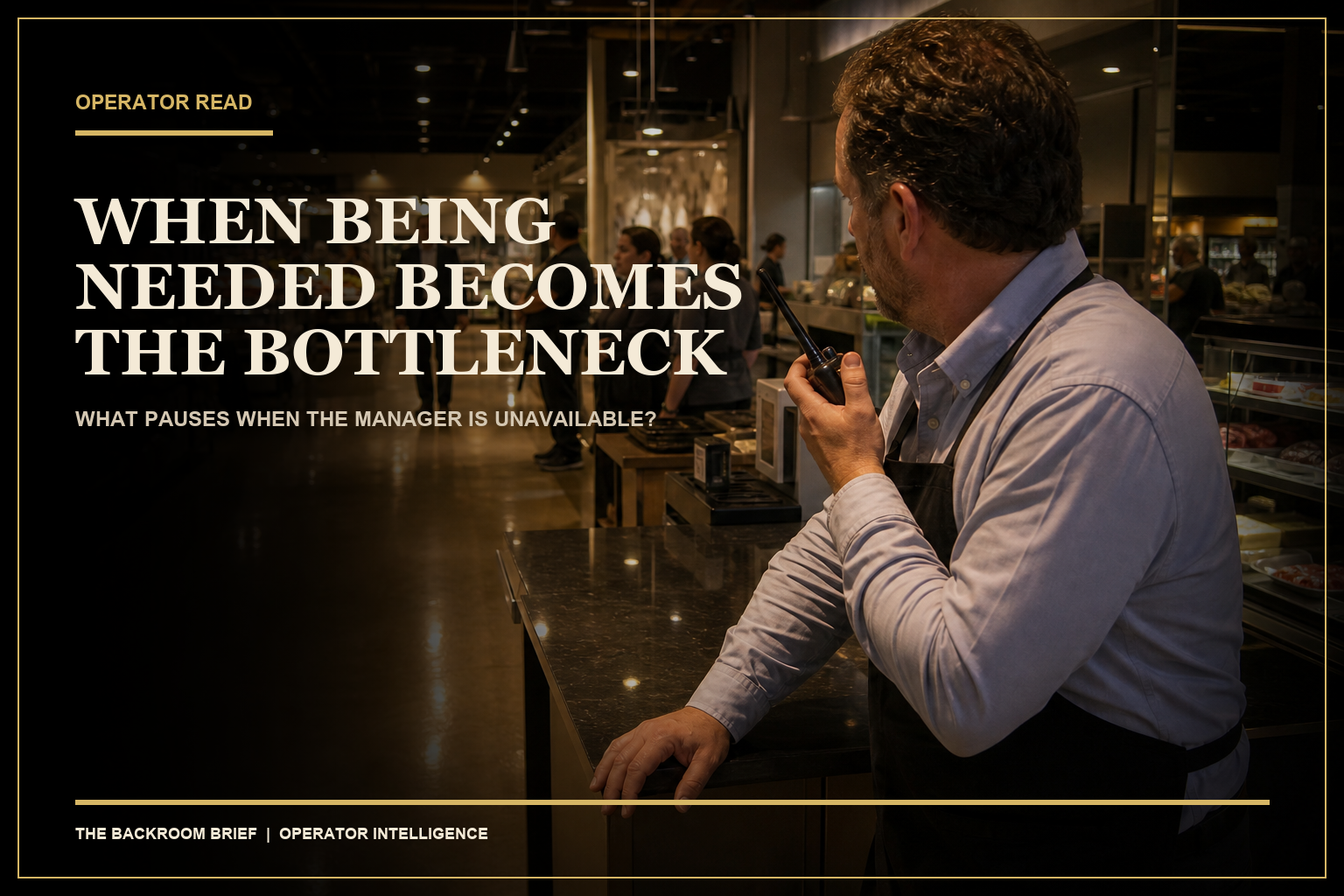
When Being Needed Becomes the Bottleneck
There is a kind of management that looks strong from ten feet away. The radio never stops. The manager moves from department to department. Questions get answered. The day holds together.
The same manager can become the store's operating reflex. Department leaders stop deciding and start forwarding. PICs learn that waiting is safer than making a reversible call. The leadership bench quietly stops growing.
The question is what pauses when that manager is unavailable. A strong store does not need every answer distributed equally. It needs decision ownership distributed clearly.
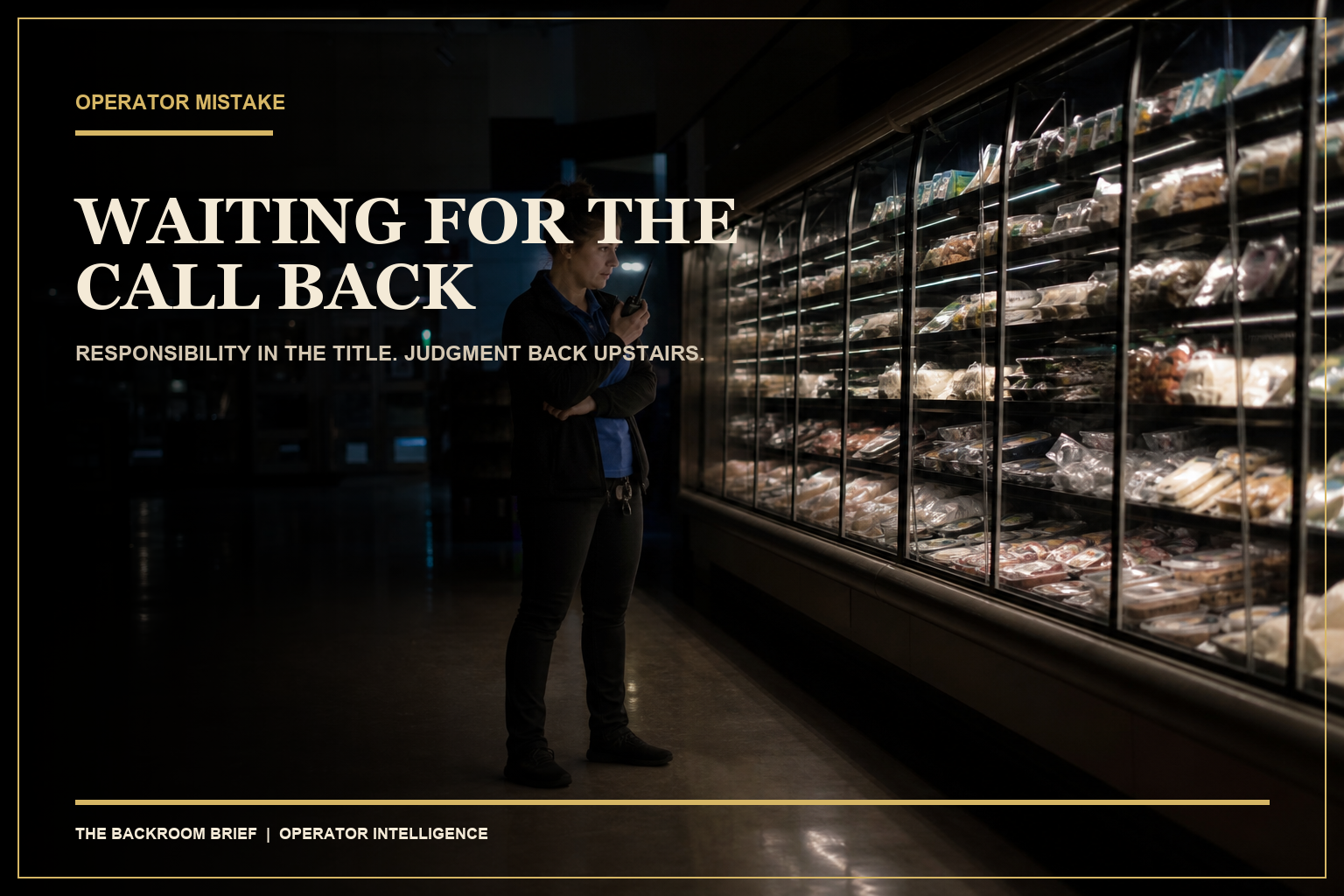
Waiting for the Call Back
The mistake is not calling the manager. Some decisions should climb immediately. The mistake is treating manager input as a prerequisite for every action, even when the person closest to the work understands the risk and the first move is reversible, appropriate, and inside policy.
Managers can teach this mistake without saying a word. If every independent call gets second-guessed but every delayed call gets excused, the team learns the safer personal move: wait. Responsibility stays in the job title. Judgment moves back upstairs.
The better coaching conversation is concrete: What can you decide? Where is the limit? When must you call? When will I check it again? That is an operating standard.
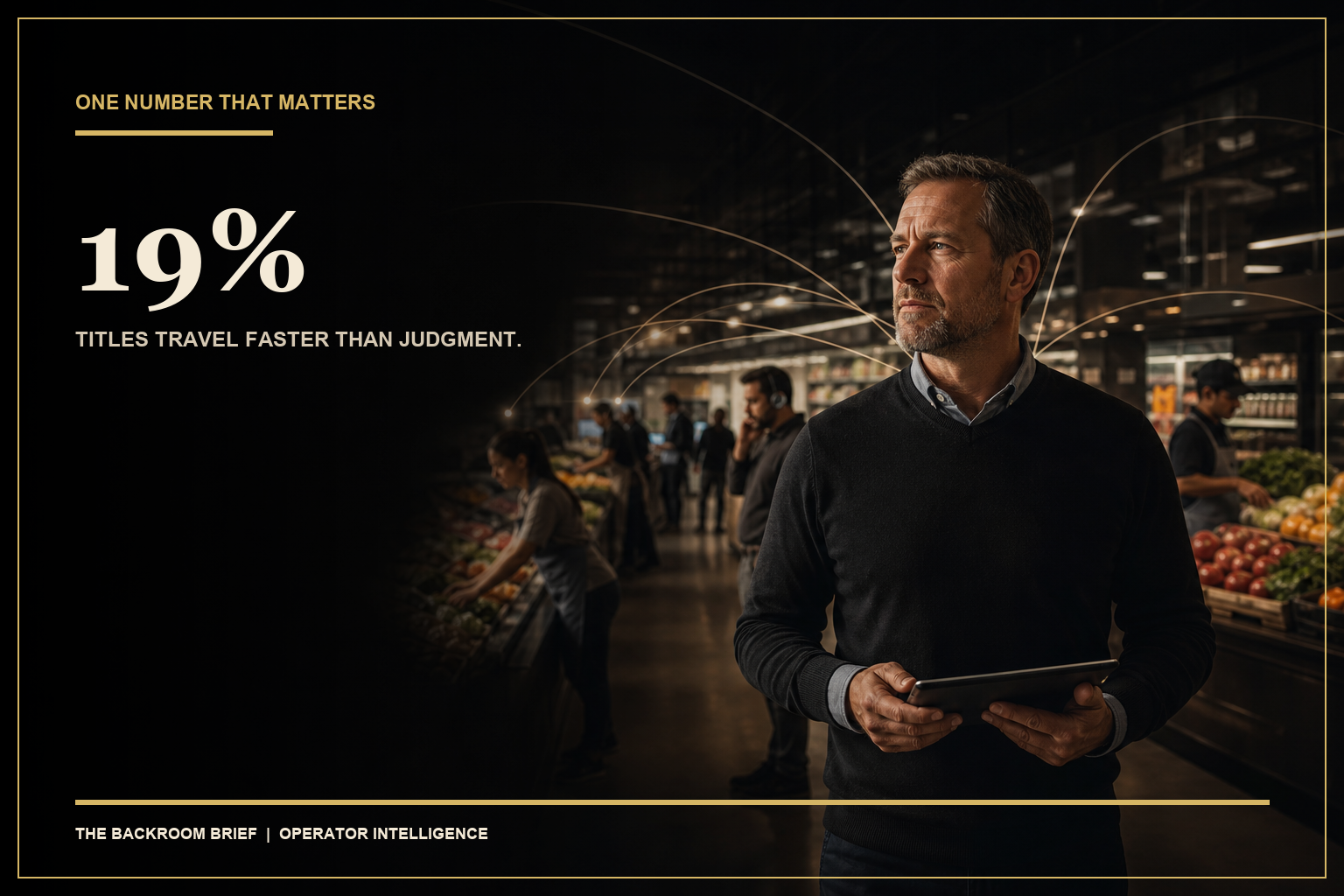
Titles Travel Faster Than Judgment
Only 19% of more than 70,000 manager candidates assessed by DDI demonstrated strong delegation ability.
That is cross-industry assessment data, not a grocery-manager census. Its value is the warning: titles travel faster than judgment.
In a store, do not delegate only the task. Name the decision that travels with it, the limit around it, the trigger that sends it back up, and the time you will return to inspect the result.
Guardrails Are Not Permission Slips
Not every decision belongs at the department level. The store manager still owns the standard, the coaching, the escalation design, and the verification. Food safety, life safety, legal requirements, company policy, serious associate matters, and irreversible financial decisions still demand the right level of authority.
But a guardrail cannot be a document nobody is trusted to use. Inside the boundary, the department leader must own the appropriate call. Otherwise responsibility has been assigned without room to protect the business.
Build a store that can decide
The strongest store manager is not the person who personally catches every problem. It is the leader who builds a store capable of making sound decisions before every problem reaches them.
That means accepting a hard tradeoff: a developing leader may not make the call exactly the way the store manager would. If it stays inside the guardrail, inspect the outcome, coach the judgment, and leave ownership where the work lives. Taking every decision back may improve today's answer while weakening tomorrow's leader.
A manager's real reach is not measured by the length of the call list. It is measured by the amount of good judgment still moving through the store when the manager is off the floor.
The One-Hour Dependency Audit
For one operating hour, record every decision that reaches the store manager:
- What was the decision?
- Who was closest to the work?
- Who should normally own it?
- What limit, priority, or standard was unclear?
- What truly required escalation?
- Did the department keep moving while it waited?
Do not answer faster just to clear the radio. Look for the pattern. Which department has responsibility without room to decide? Which leader is asking for permission when they really need a guardrail? Which question keeps returning because nobody has named where ownership lives?
Then choose one appropriate decision to return to the department.
Turn one observation into one ownership decision
Name one decision that no longer needs prior approval. Name the owner. Define the limit. Define the escalation trigger. Set the next check-back time. Then return and look at what happened.
The test passes only if the decision happened closer to the work and the manager verified the result without taking the decision back.
Operator question: What decision reaches you every week that should already belong to someone closer to the work?
Your reach isn't measured by how many decisions reach you. It's measured by how many good decisions don't have to.
Subscribe to The Backroom Brief for one sharp operator read and one practical move every Friday:
https://www.thebackroombrief.com/subscribe
Forward this issue to one leader building a store that can decide.
Forward this issue to one manager who's trying to build a store that can keep making good decisions even when they're off the floor.
Get the Friday Brief