The Trade-Down Trip
The first trade-down signal is not traffic. It is the quiet change inside the trip.
Today's operator read
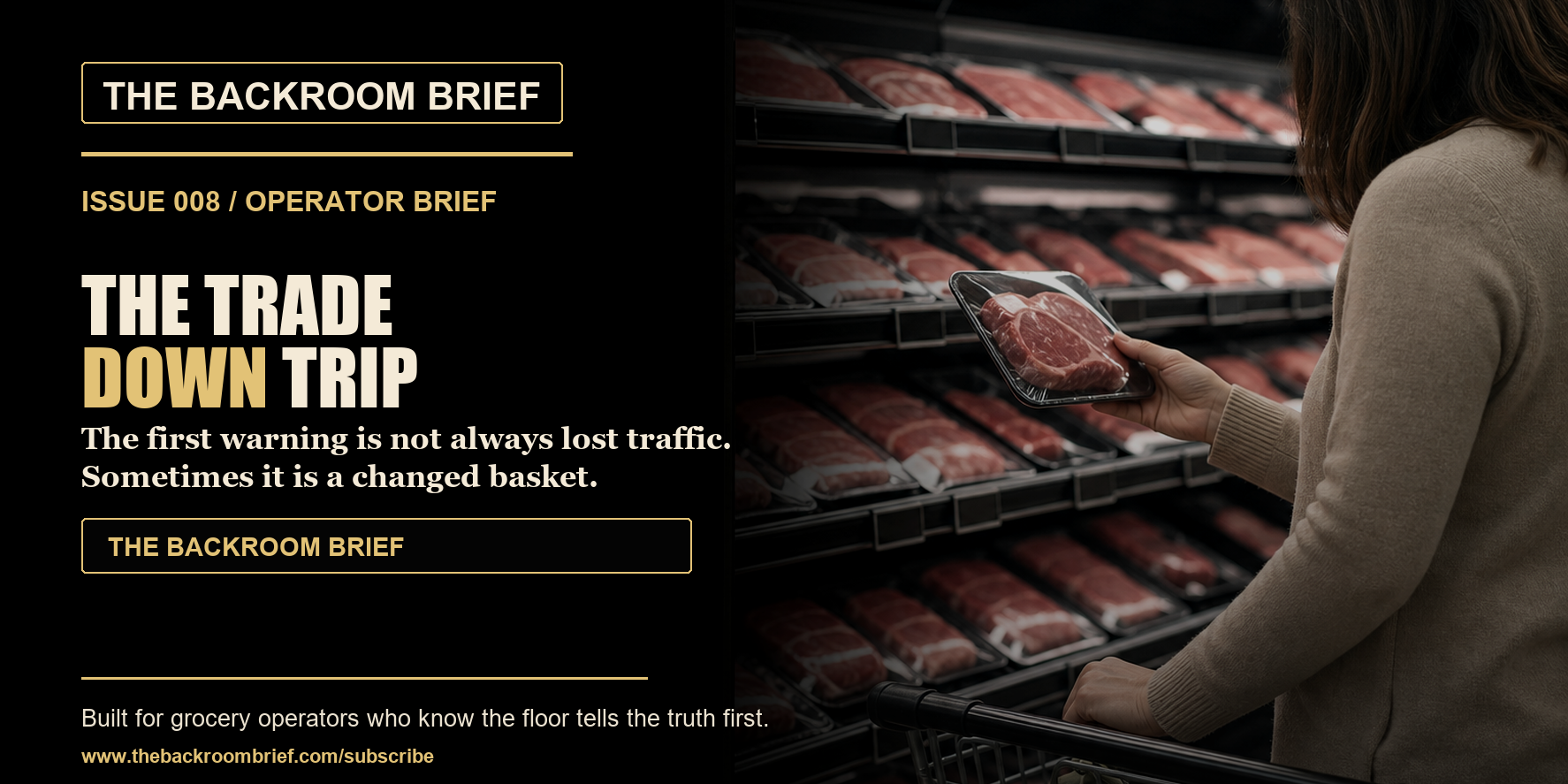
A customer stands at the meat case with one hand on the cart and the other on a package of beef. They pick it up. Turn it slightly. Study the label longer than they used to.
Then they put it back.
Maybe they reach for a smaller pack. Maybe chicken becomes dinner. Maybe the national brand gives way to private label two aisles later.
No one complains. No one asks for a manager. No one storms out.
The customer keeps shopping.
From the register, it still looks like a normal trip.
From the report, it may not look like anything yet.
That is why operators miss it.
The signal is not only whether the customer came in. It is what changed while they were inside.
The first trade-down signal is not traffic.
It is the quiet change inside the trip.
Stores rarely lose dinner all at once. They lose it one decision at a time, while the customer is still pushing the cart.
That is this week's Backroom Brief.
Not a generic inflation story. Not another value-is-everywhere essay.
This is about the trade-down trip: where customers adjust the meal, the brand, the pack, the category, or the store before traffic says anything is wrong.
Can your store see the trade-down while there is still time to keep the customer, the meal, and the trip?
This Week in Grocery
1. The customer is changing the trip, not just complaining about price
RELEX found that 61% of consumers have changed how much food they buy because of higher grocery prices.
That matters because price pressure is not only showing up as frustration. It is showing up as behavior.
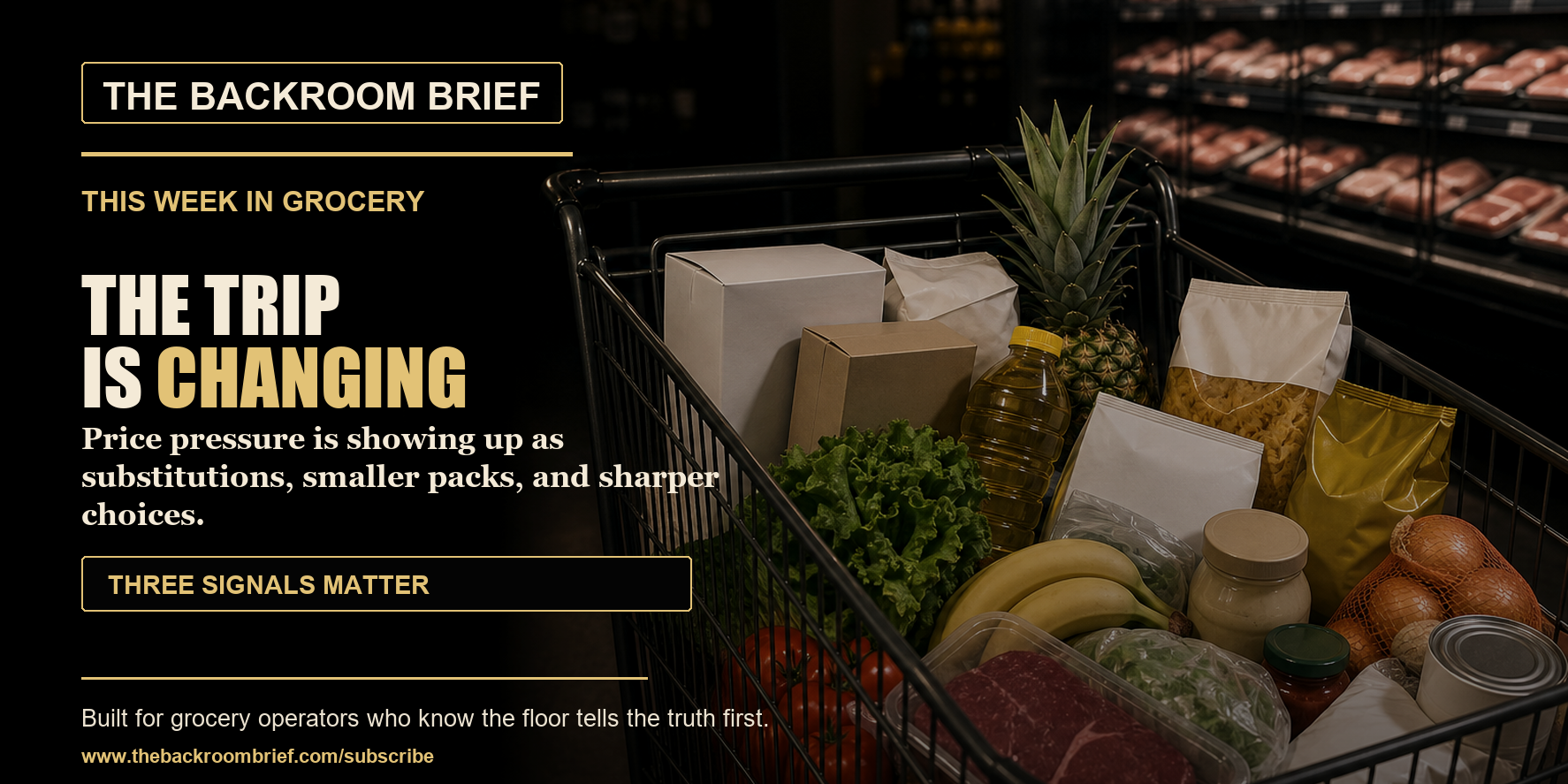
Customers are cutting snacks, buying less beef, watching promotions, switching to private label, shopping discounters, and visiting multiple stores to find the right price.
For operators, the warning is clear: traffic tells you whether the customer showed up. The trip tells you what the customer still trusts you to solve.
If the shopper is still coming in but buying fewer items, trading down proteins, skipping the add-on, or moving part of the trip somewhere else, the store may be winning today's visit while losing tomorrow's trip.
2. Private label is becoming a trust bridge
FMI's 2026 Power of Private Brands report found that 92% of grocery shoppers currently have store-brand products in their homes, and 94% say they would keep buying store brands even if grocery prices decline.
Private label cannot look like a cheap surrender. It has to look like the smart way to stay in the trip.
If the customer trades down from national brand to store brand and still feels good about the meal, the store protected the trip. If the switch feels like a downgrade, the customer may eventually trade down the store.
The best private label does not say, "This is what you settle for." It says, "This still belongs in your kitchen."
3. The store floor can still change the decision
Ibotta's 2026 State of Spend data points to a more flexible trip, with more shoppers entering the store with a loose plan and 62% valuing price over brand name.
That gives operators one last chance to influence the trip before the customer decides what dinner becomes.
A flexible trip is not automatically a lost trip.
It is a trip the floor can still win, if the value makes sense before the customer does the math alone.
The customer is not abandoning standards. They are deciding which standards they can still afford.
Trade-down does not mean the customer stopped caring.
They still care about fresh, quality, dinner feeling like dinner, and whether the product looks worth the money.
But the trip has more pressure inside it now.
The customer is making harder decisions.
Which protein?
Which brand?
Which meal?
Which store?
That is why fresh matters so much in this issue.
The meat case is not just another department. It is where the customer feels the trade-off emotionally.
Beef prices are loud. Cuts matter. Pack size matters. Chicken and pork become alternatives. Meal deals matter. The sign, the display, and the ad item all have to work harder.
The customer may not say, "I am trading down."
They may just put one package back and pick up another.
That is the moment operators have to see.
Backroom Brief Take
Great operators do not force customers to choose between value and dignity.
A shopper under pressure still wants to feel smart and in control of dinner. They do not want every trade-down to feel like a loss.
The best stores are not only trying to be cheaper. They are trying to make the next-best choice obvious.
A weak value presentation forces the customer to solve the problem alone.
A strong value presentation gives the customer a ladder:
- the premium item if they still want it
- the sharper ad item if price is driving the trip
- the smaller pack if the household wants less risk
- the private-label option if trust is strong enough
- the meal deal if the customer wants dinner solved
- the alternate protein if beef is too heavy this week
That is not a race to the bottom.
That is trip retention.
The danger is not only that the customer leaves the store. It is that they stay, but move the profit, the meal, or the next trip somewhere else.
Operator Mistake
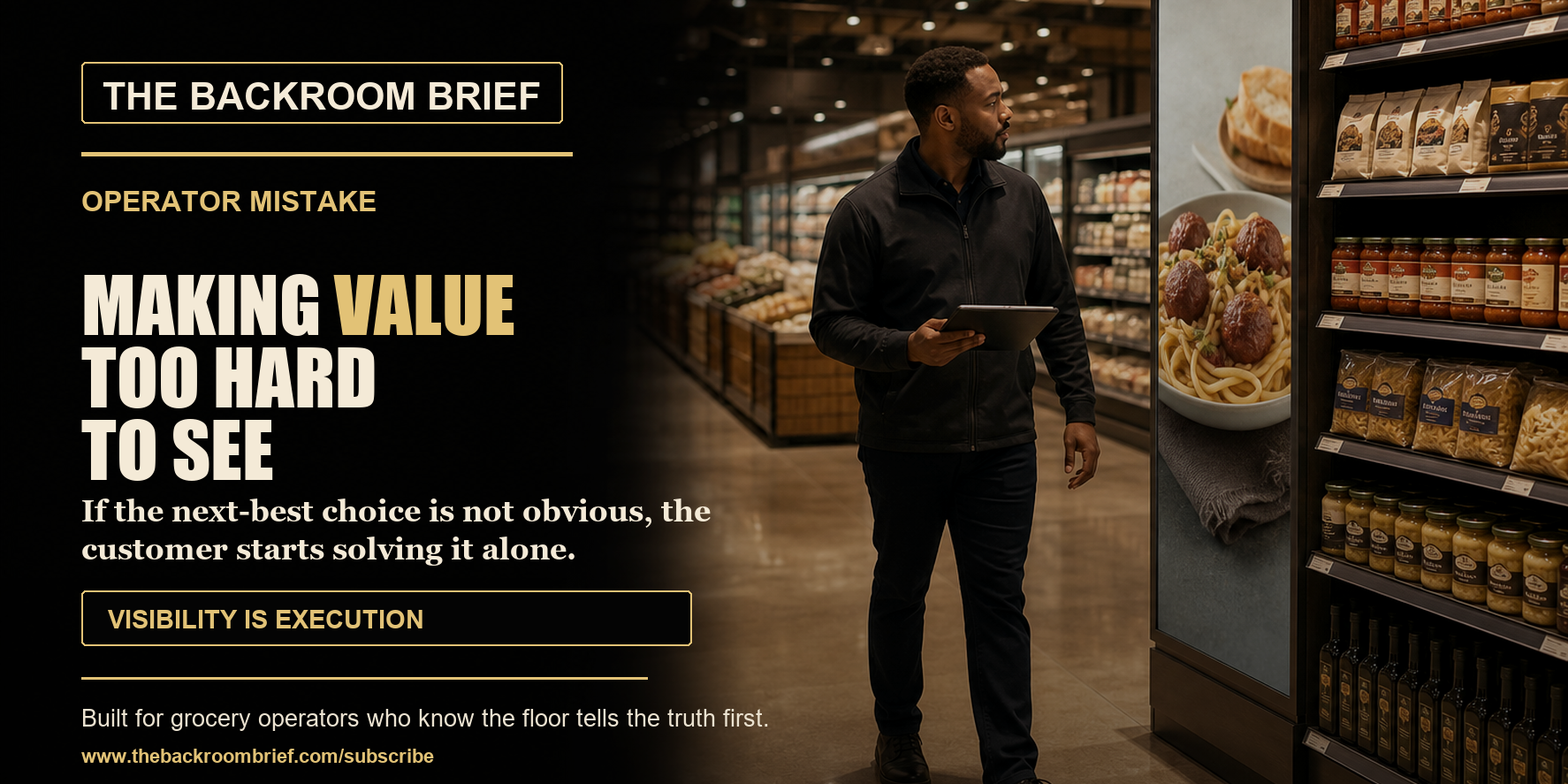
The mistake is making value too hard to see.
That happens when the ad item is technically in the store but not represented well.
It happens when the meat case has premium choices and cheap choices, but no clear ladder between them.
It happens when private label is shelved like a low-cost fallback instead of a trusted trade-down bridge.
A customer under price pressure is not always looking for the absolute cheapest answer. Sometimes they are looking for permission to keep the meal.
They need the store to show them the item is on value, the swap still feels good, the ad item is easy to find, and private label is not a punishment.
If the store does not make that clear, the customer starts building their own answer.
And that answer may include another retailer.
One Number That Matters
61%
That is the share of consumers RELEX says have changed how much food they buy because of higher grocery prices.
That number matters because it moves the issue from price perception to trip behavior.
The better operator question is:
Where is the customer changing the trip because of price?
That question belongs in the meat case, private label, endcaps, the ad, meal solutions, smaller packs, and any category where customers still show up but buy differently.
Fresh Watch
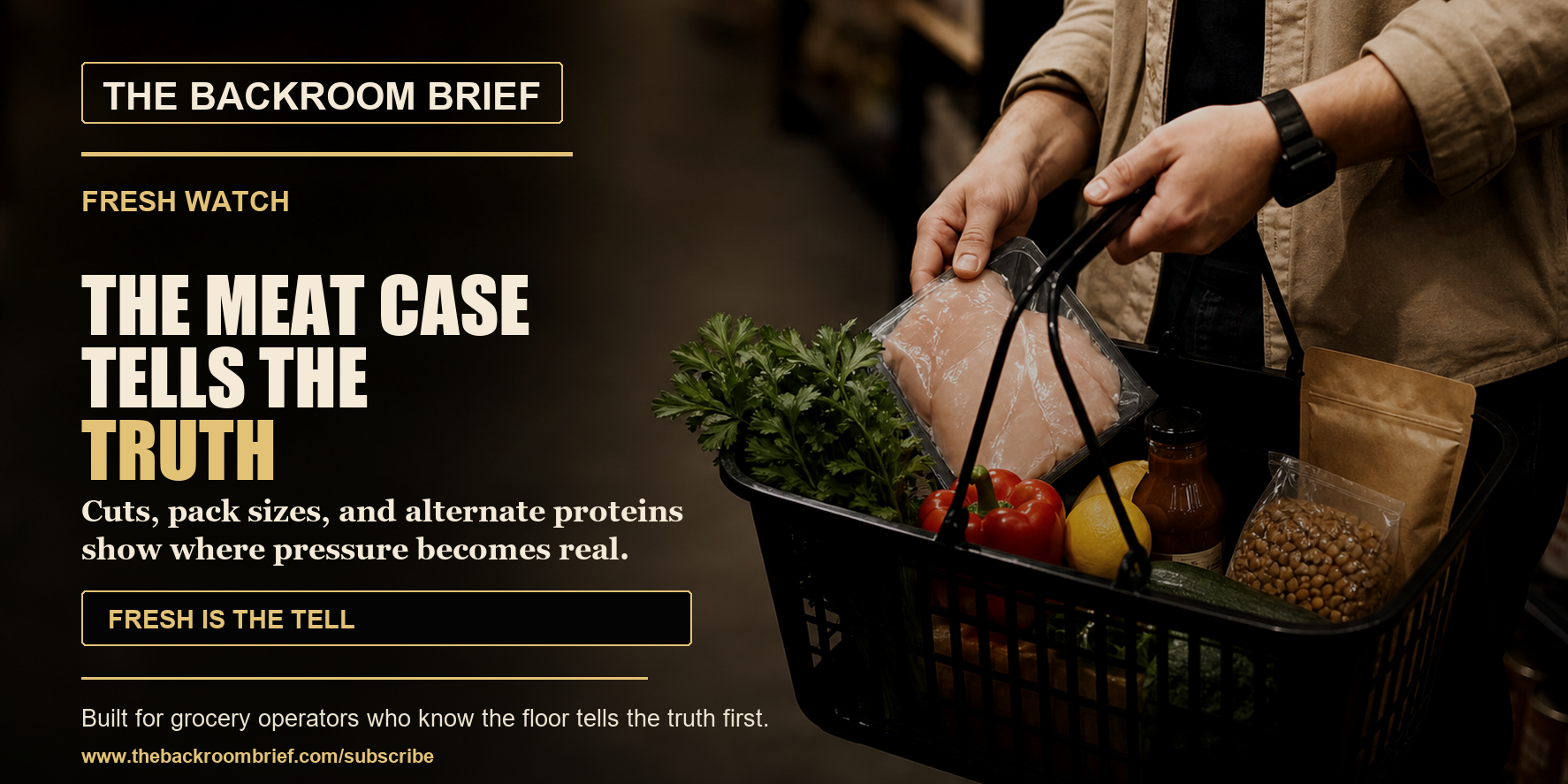
The meat case tells you where the pressure is real
The meat case is one of the cleanest places to see the trade-down trip because the choices get sharper fast.
A shopper may still buy beef, but a different cut. They may move from beef to chicken or pork. They may wait for the ad.
That is meal protection.
The case has to make the next move feel like dinner, not a downgrade: visible value item, represented ad item, believable alternate protein.
The Walk
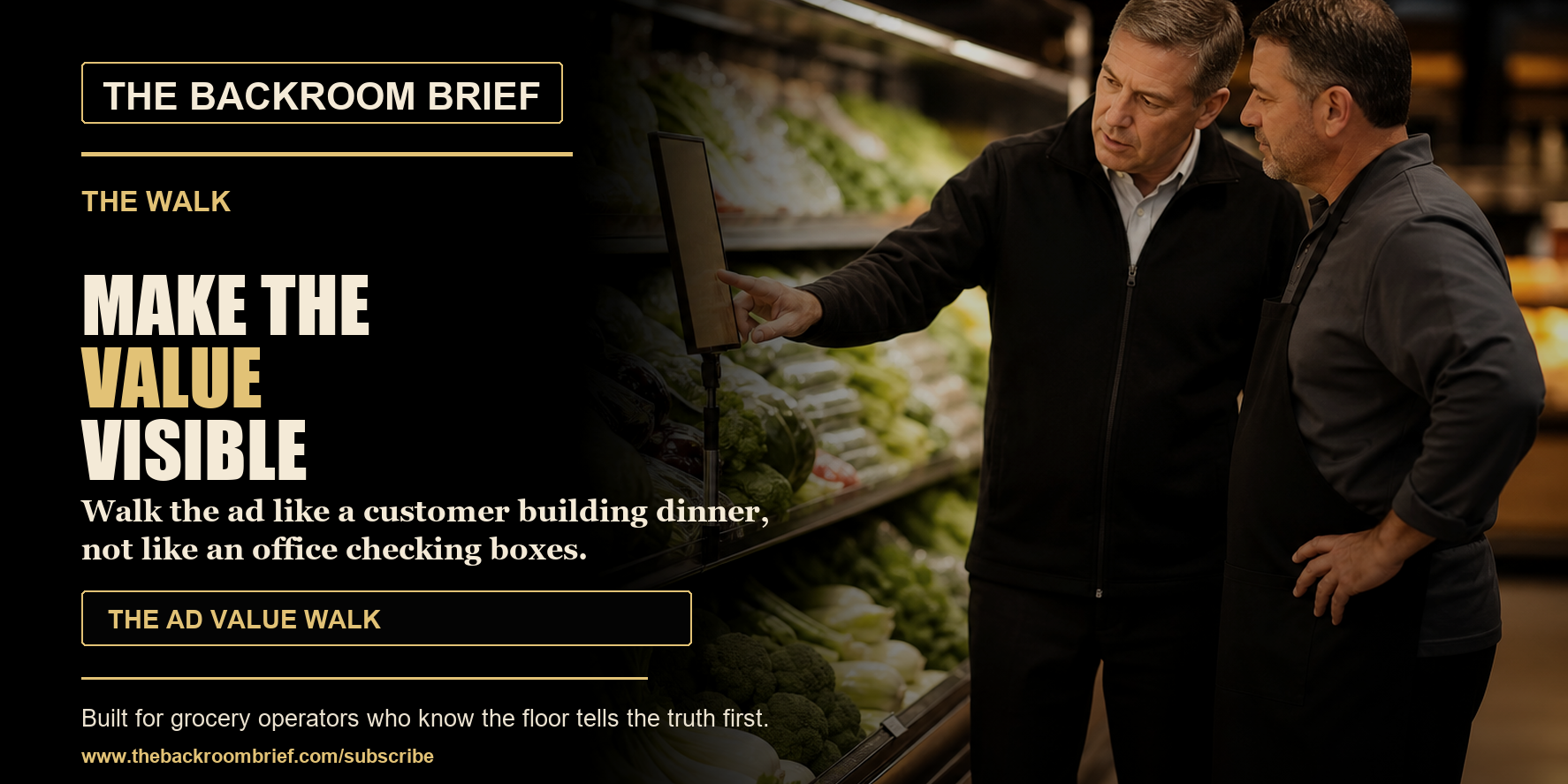
The Ad Value Walk
This week, walk the ad through the customer's eyes.
Not the office version of the ad.
The store-floor version.
Ask:
1. Does the store represent the ad clearly?
2. Are the ad items visible at the shelf, display, and department level?
3. Do the ad items make sense together as a meal or basket?
4. Does the meat case give shoppers a believable beef, chicken, pork, cut, and pack-size ladder?
5. Does private label look good enough to justify switching from national brand?
6. Does loyalty feel simple, or does it feel like hoops?
7. Can the customer feel the value before checkout?
The goal is not to make every item cheaper.
The goal is to make the value easier to understand.
A good ad item should not hide in the store. A good value ladder should not require a calculator. A good private-label item should not feel like a penalty.
The customer should be able to walk the department and see a path that keeps the meal intact.
Monday Morning Test
Pick three categories where the trip could leak: meat, private label, meal builders, ad endcaps, or loyalty offers.
For each one, ask the department manager:
If the customer wants to spend less, what next-best choice are we making obvious?
If the answer is not clear in ten seconds, the customer is probably doing too much of the work.
The best operators do not just lower the number. They make the value visible.
Bottom Line
The first trade-down signal is not traffic.
It is the quiet change inside the trip.
The customer still shows up. But the meal shifts, the ad item matters more, private label has to earn trust, and value has to be visible before the customer decides the store no longer owns the trip.
That is where operators can still win.
Not by chasing every price down.
By helping the customer keep the meal, keep the trip, and still feel good about the money.
Long before traffic reports catch up, the customer at the meat case has already shown you the trip is changing.
If this Brief helped you see the store differently, forward it to one operator, manager, vendor partner, or retail leader who would use it on the next walk.
The Backroom Brief is a weekly operator read for grocery leaders who care about what actually changes on the floor.
