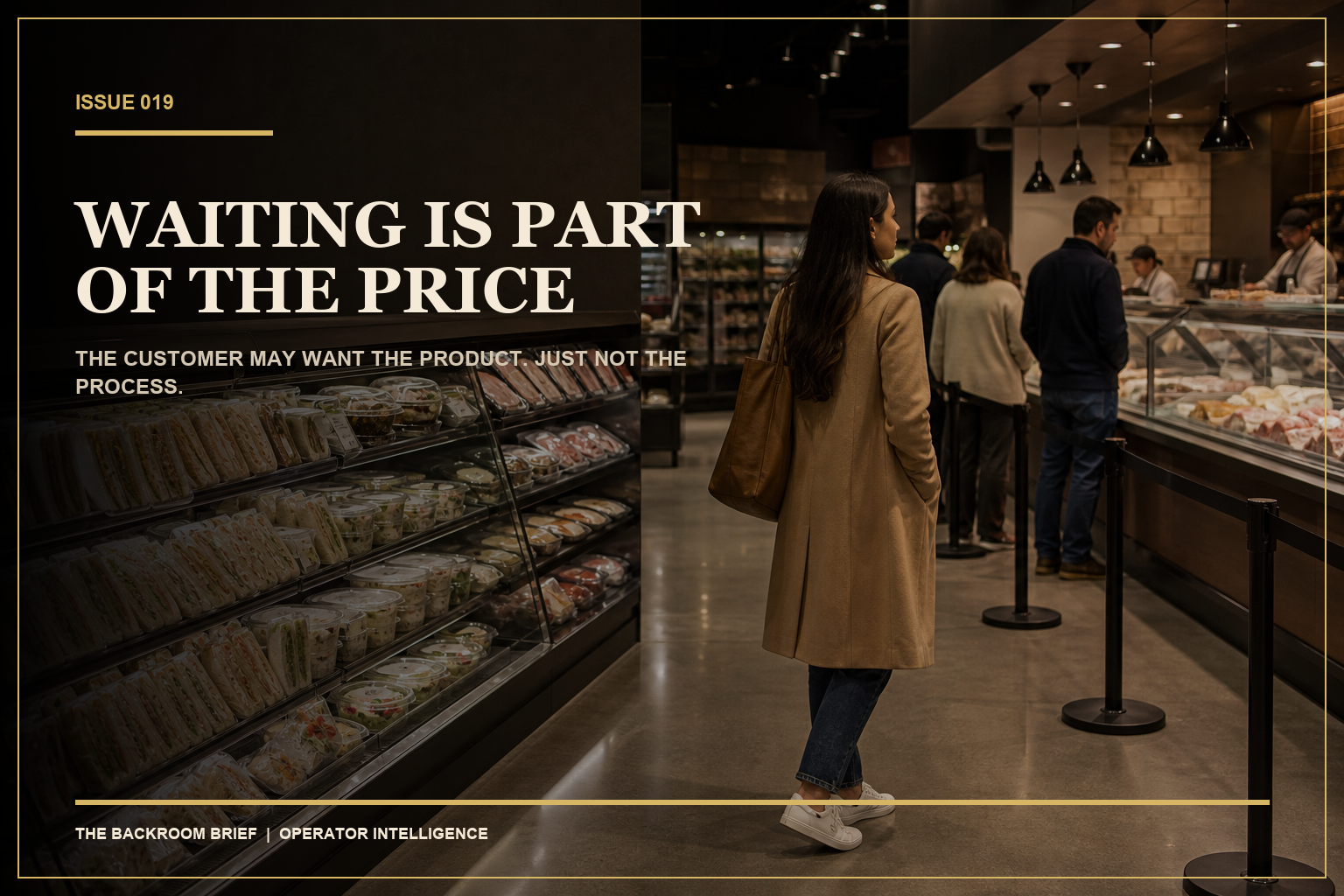
Waiting Is Part of the Price
The customer may still want the product. Just not the process.
The customer may still want the product. The question is whether the department is making them buy the process too.
The sandwich did not change
In one set of stores, chicken sandwiches sat hot and ready to grab. In another, the customer had to approach the counter, get someone's attention, place the order, and wait. Same basic product. Similar buying occasion. Very different path to the purchase.
The contrast came from a month-long chicken-sandwich contest run by an independent grocer a few years ago. The sandwich and price were materially the same, the stores had similar customer counts, and everyone followed the same promotion and contest rules. The ready sandwich moved far better.
This was not a formal study, and the old records have not been recovered. But it left the operator with a useful question: if the food and price are basically the same, what exactly is the customer choosing?
Sometimes it is the product. Sometimes it is the path to the product.
A shopper looking for an exact cut, a specific amount, or advice may gladly wait for a person. A shopper trying to get lunch or dinner moving may not.
Good service isn't always more service. Sometimes it's making the product easier to buy.
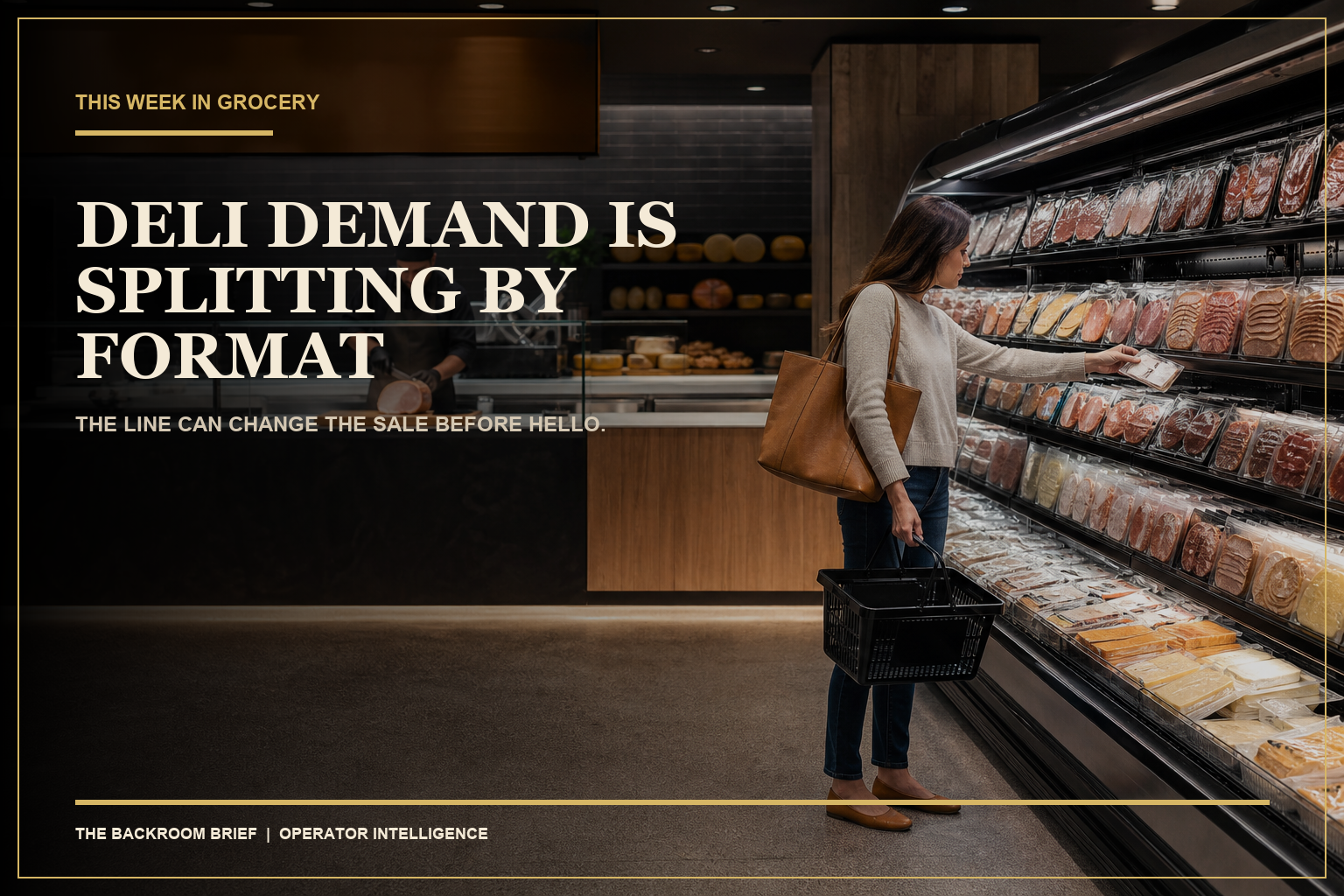
Deli demand is splitting by format
For the five weeks ending August 30, Circana data compiled by 210 Analytics showed service deli meat volume down 7.4% from a year earlier. Grab-and-go volume rose 0.8%, while pre-sliced meat rose 5.8%.[1]
Those numbers do not prove waiting caused the shift. Price, assortment, promotion, availability, food-safety concerns, pack size, and changing meal habits can all move volume. But they're not moving together. That's worth paying attention to when you're deciding what belongs behind the counter and what should be ready to grab.
An earlier field study in the deli section of a big-box supermarket gives the visible line more weight. The researchers found that moderate increases in the number of people waiting reduced purchase incidence by an amount comparable to a 5% price increase. Customers reacted mainly to the line they could see, not how fast it was moving.[2]
The study is not a current independent-grocery benchmark. It does make one floor condition harder to dismiss: the line can change the sale before the associate says hello.
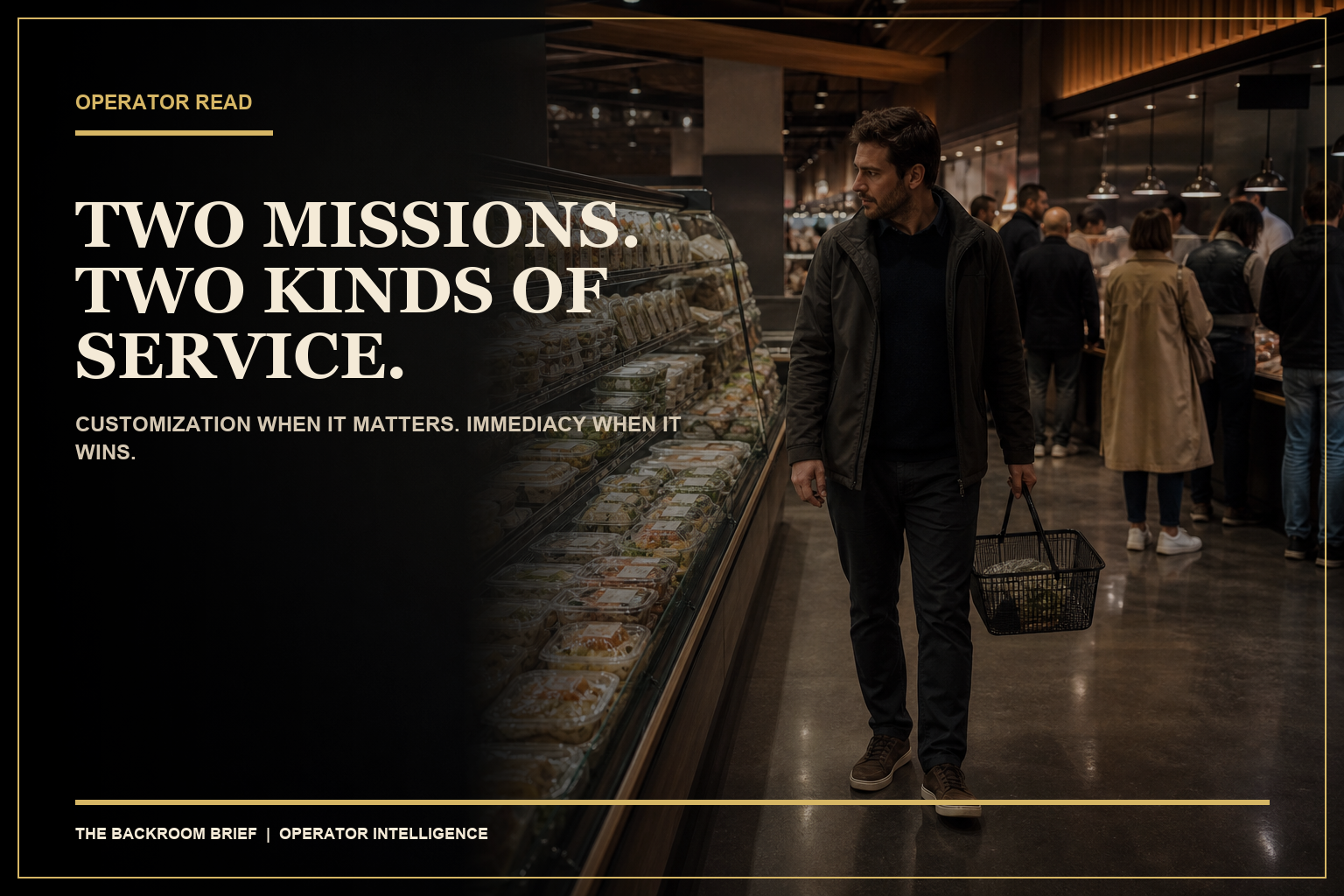
Two customers can want two different kinds of service
One customer wants an exact cut, an unusual quantity, or help making a choice. For that customer, the wait makes sense. The person behind the counter is adding something they can't get from the case.
Another customer has 20 minutes for lunch. If the familiar half pound or hot sandwich is ready, dated, and looks good, that customer can take it and keep moving. If the line looks too long, the sale may be over before anyone says hello.
The counter still matters. So does having food ready when the customer is.
A department that offers only one path forces two missions through the same door.
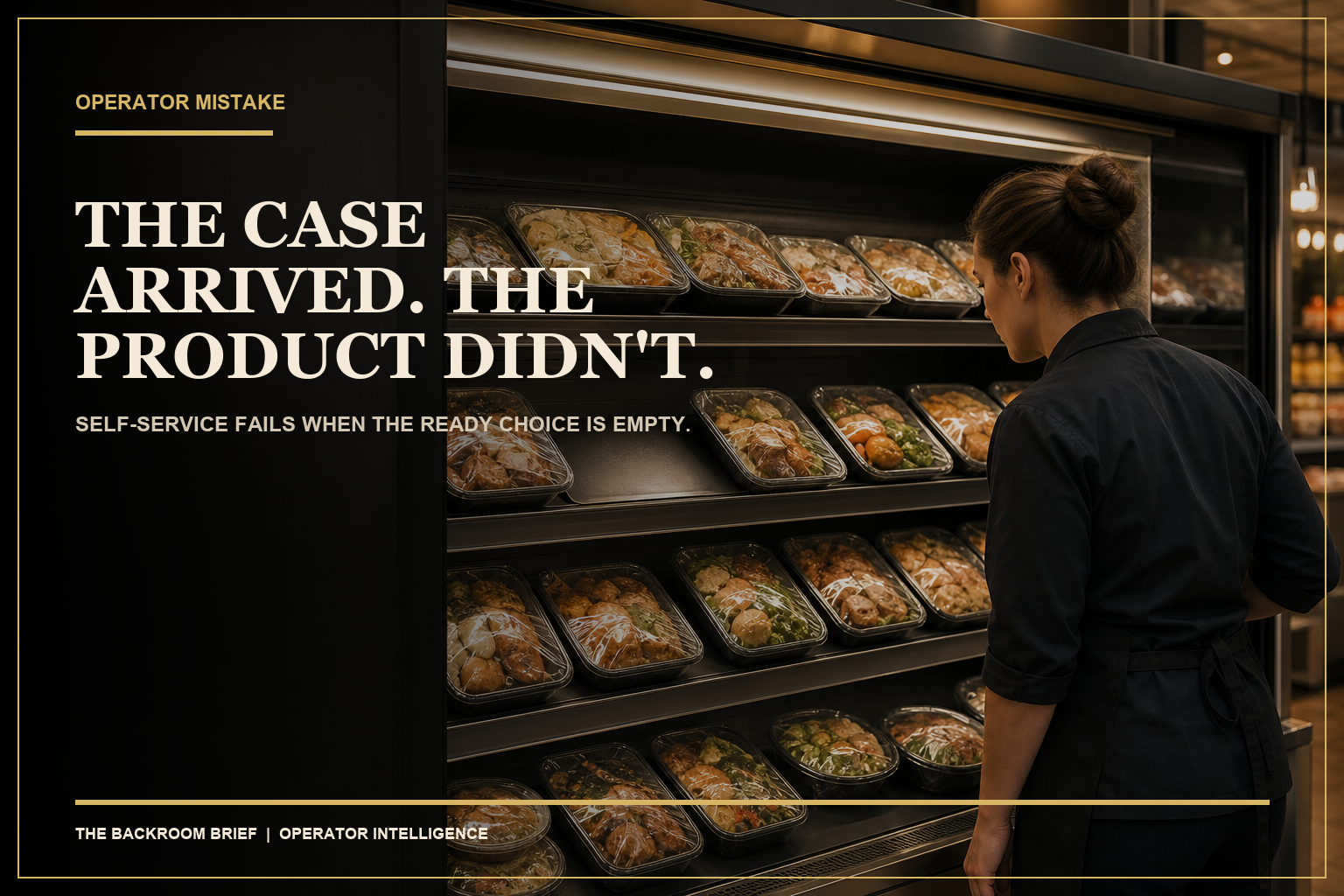
Installing self-service and calling the job finished
The new case arrives and the opening assortment looks strong. Then lunch takes off. Positions empty. After the rush, the team holds back because nobody wants the shrink. By dinner, the fixture remains, but the food is not there when the customer wants it.
The department removed the line and replaced it with a hole.
Keeping the case stuffed all afternoon creates the opposite problem: tomorrow's shrink cart carries the cost.
Self-service needs sharper production judgment. Build enough for lunch, run leaner through slower hours, then get ready again for dinner. The rhythm can be shared, but the quantity has to follow each store's movement, promotion, and leftovers from the last comparable day.
Waiting is part of the price
Waiting is part of the price. The shelf tag is not the entire cost of a deli purchase. The customer also spends time and attention.
That cost can be worth paying when service changes the product or helps the customer choose. It is harder to defend when a routine item could already be ready.
Keep the counter where expertise earns the wait. Put routine, time-sensitive items where customers can take them now. Operate both well enough that neither looks like the department's second choice.
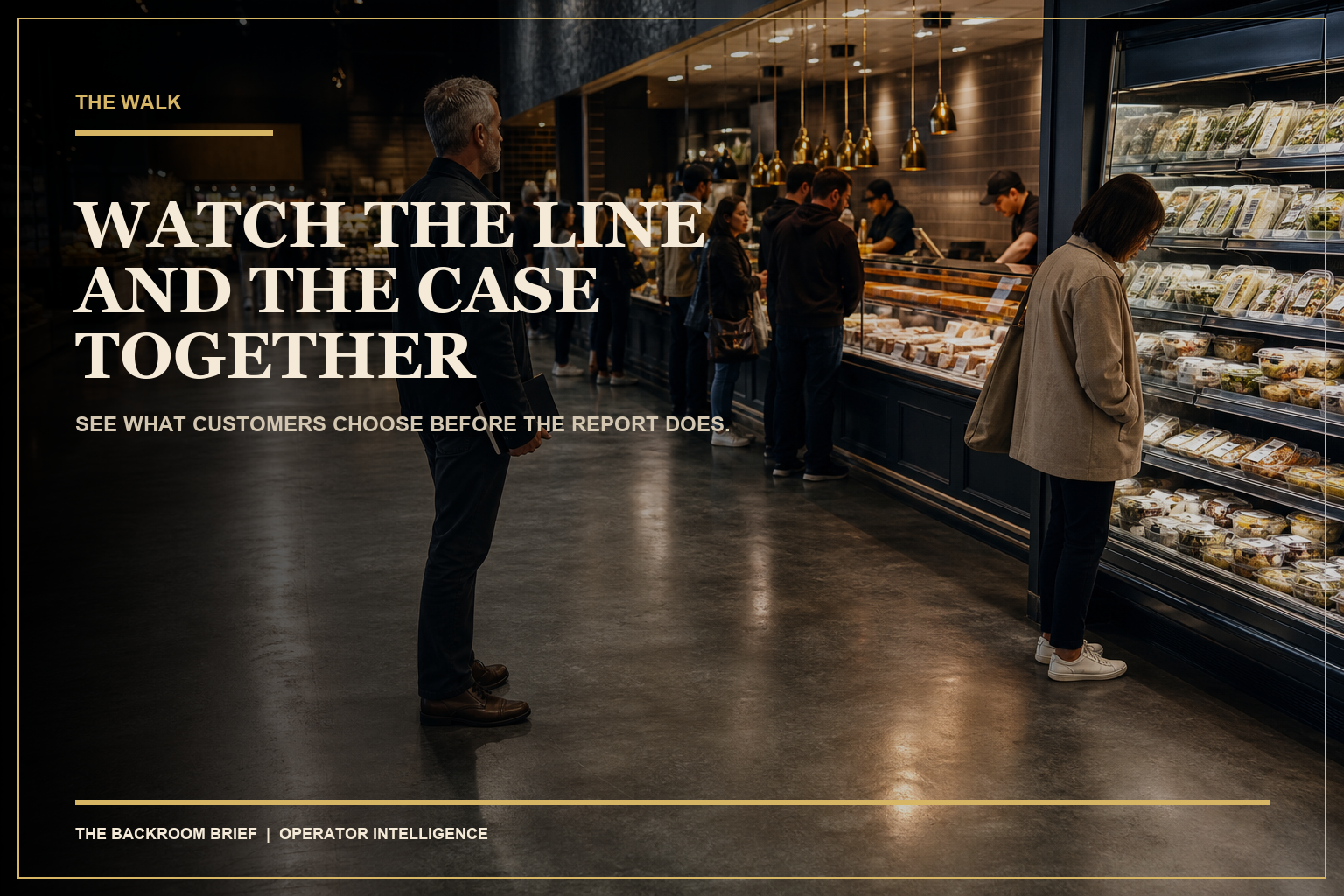
Stand there and watch what customers do
Stand near the deli at lunch, then come back during the dinner push. Watch the counter and the ready case together.
Look for:
- Who sees the line and keeps walking?
- Who checks the ready case before going to the counter?
- What is gone while lunch or dinner is still moving?
- What gets picked up, checked, and put back?
- Which orders really need a person behind the counter?
Do not call every customer who leaves the counter a lost sale. See whether the customer moved to a package. Some customers will go straight to the ready case and never look at the line.
After each rush, look at the case with the deli team. What sold? What sat? What ran out too early? What looked tired? What had to be thrown away?
Give two customers two honest choices
Choose one routine deli item people buy again and again, and one item where the person behind the counter still makes a difference. For one week, keep the custom option intact and have the routine item ready before the rush, clearly dated and priced, with enough in the case to look intentional.
During each rush, have the deli lead watch three things: what sells when it is ready, when the case develops a hole, and what customers still ask the counter to cut or make. When the rush ends, look at what is left and what had to be thrown away.
Then change one thing: how much the team makes, which item it offers, the pack size, or when it goes into the case. Watch the next comparable rush the same way.
The point is to learn what sells when it is ready, what customers will wait for, and what dies in the case when the team makes too much.
Operator Question: Which deli item do your customers still want, but no longer want to wait for?
The Idea
Make sure people know when they made the difference.
Why It Matters
Leaders study bad days because the miss demands an answer. Good days are easier to move past. The rush ends, the team gets through it, and everyone heads home.
But a strong shift is not luck. Someone stayed calm when the line built, helped another department, or caught a small problem early. When a leader names that moment, the person knows they were seen and why their work mattered.
This Week
People carry more when they know their leader sees more than the misses. Do not let relief be the only thing a good team takes home from a hard day. Make sure the person who made the difference knows: I saw what you did. It mattered.
Get the Friday Brief for one sharp grocery operator read and one practical move every week. Subscribe free and receive the Store Walk Standard in the welcome email.
Forward this to the operator who knows a full-service department still needs more than one way to serve.
The evidence behind this issue
[1] https://www.supermarketnews.com/grocery-categories/grocery-unit-sales-slide-in-august-but-frozen-foods-and-shelf-stable-seafood-buck-trend - Grocery unit sales slide in August
[2] https://www.dii.uchile.cl/wp-content/uploads/2015/11/Measuring-the-Effect-of-Waiting-Time-on-Customer-Purchases.pdf - Measuring the Effect of Queues on Customer Purchases
Get the Friday Brief