When the Department Forgets
A department can be fully staffed and still be starting over.
The position can be filled before the department's judgment comes back.
The operator judgment behind the signal
Picture a Friday afternoon at the deli counter.
A regular customer asks for "the usual." The associate knows how to slice, weigh, wrap, and label the roast beef. What they do not know is the cut, amount, and product this customer bought most weeks. The person who knew is gone.
Another employee gets called. The customer explains the order the store used to remember. It eventually gets made.
The department was staffed. The task was completed. Still, something had left the building.
It happens elsewhere. A produce question takes two people. A meat substitution gets a hesitant answer. A regular has to teach the store something it used to know.
The open shift may be filled in a week. The judgment can take much longer to come back.
Turnover is still rewriting departments
The 2026 FMS/NGA independent-grocer study reports that store-level employee turnover averaged 44% in fiscal 2025.[1] The number can't tell us what walked out the door with each person. But at 44% turnover, operators are rebuilding experience almost as often as they're rebuilding the schedule.
The loss shows up small at first. A regular explains the order again. An associate is unsure which substitute will work. Someone knows the steps but not what "not right" looks like.
A full crew can still be a new crew
Cornell researchers looked at more than 5,000 employees across 75 hospitality workplaces and surveys from nearly 60,000 customers. Service suffered most where newcomers were concentrated together.[2] It is hospitality research, not a grocery benchmark. Still, operators know the feeling of opening with several new people. Every question takes longer because everybody is looking for the same answer.
Product knowledge keeps the sale moving
Wharton researchers examined training data from 63,500 retail salespeople. Associates who chose training showed 46% more sales per hour, though roughly half the difference came from who volunteered.[3] It was not grocery and promises no grocery sales lift.
The useful part is simple. The right cut, ripeness call, substitute, or honest answer about quality keeps the customer's decision moving.
The job comes back before the feel for it
You can teach the steps. Trim it this way. Rotate it this way. Date it, clean it, close it.
Knowing when something does not look right takes longer.
A procedure can show someone how to cut a melon. It takes longer beside an experienced produce person to learn why one is not worth cutting. The same goes for a tired service case, a meat substitution, or a regular whose "usual" means something specific.
Food safety, recipes, HR, and customer privacy still belong where they belong. Experience does not outrank the rules. But the rules cannot cover every product, customer, and odd call a department will see.
The position comes back faster than the judgment.
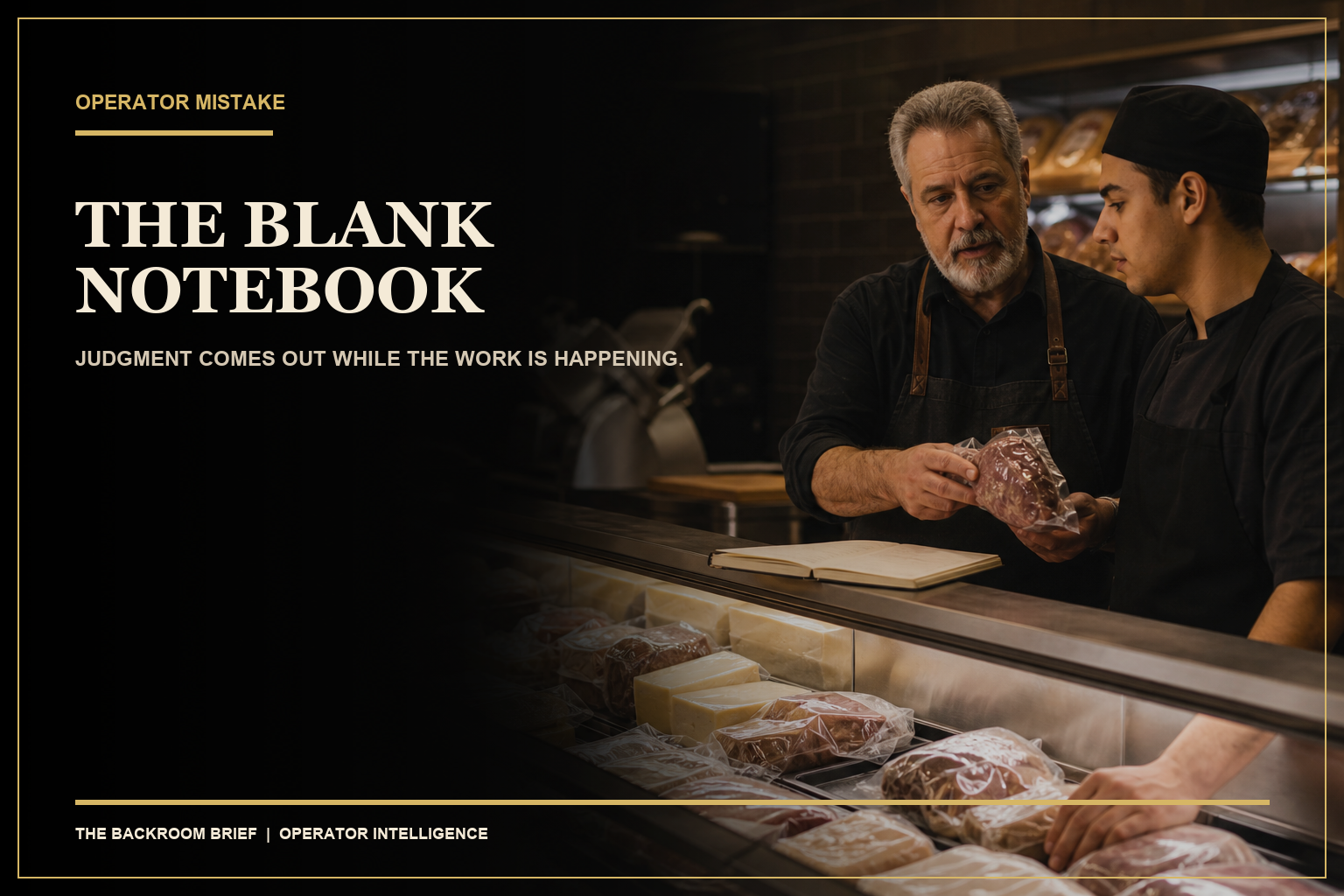
Handing the veteran a blank notebook
Someone gives notice. The manager asks them to write down everything they know.
What comes back is usually a task list. The hard part is missing because the experienced person no longer thinks about it. They look at the product and know. They hear the request and remember. They catch the small change early.
That is hard to pull out of somebody at a desk. It comes out while the work is happening.
Put another associate beside them. Let the experienced person make the call out loud. What did they notice? Why will one substitute work when another will not?
Do not save every old habit. Some shortcuts should leave. Keep the product sense, customer knowledge, and department calls the next person would otherwise learn the hard way.
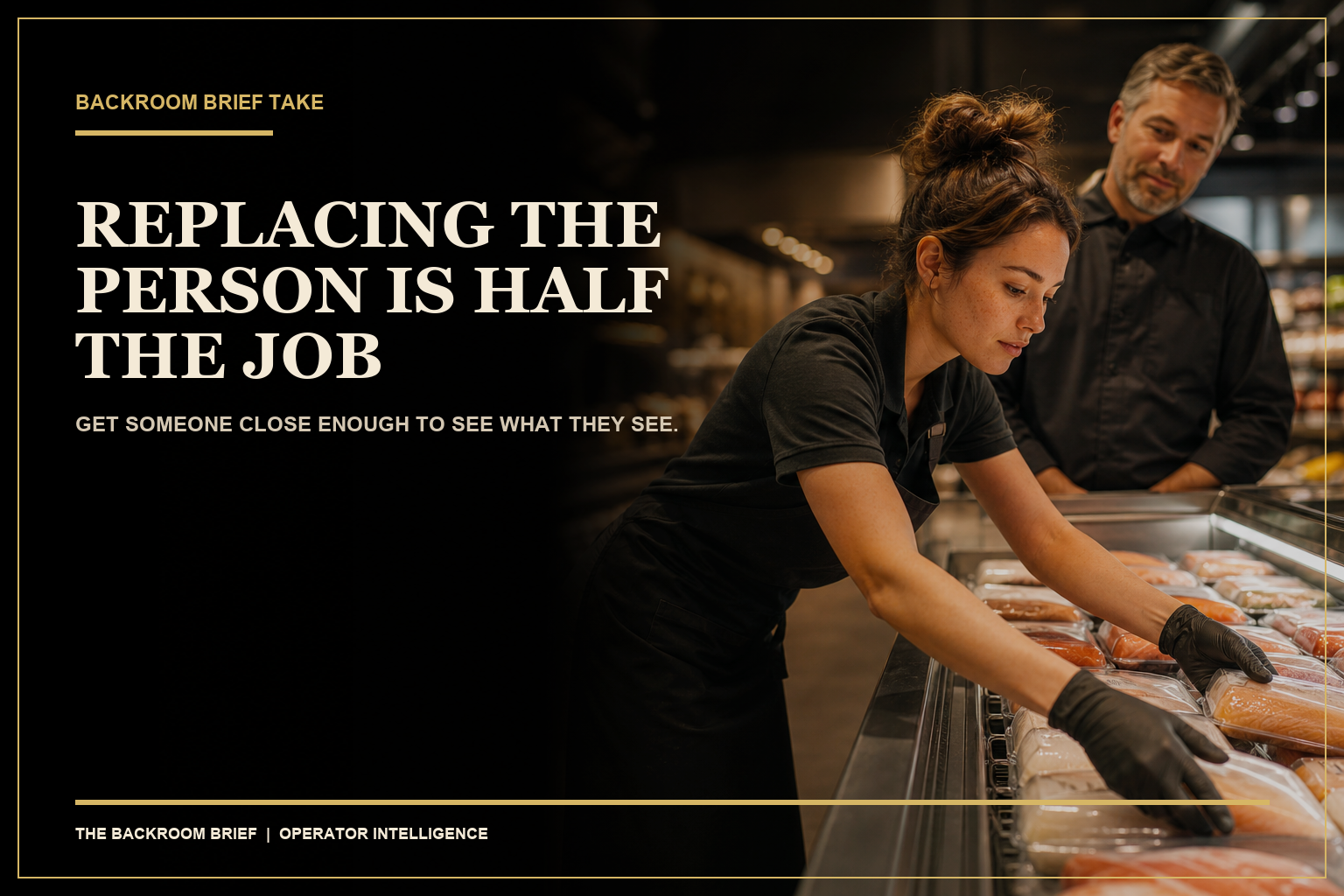
Replacing the person is only half the job
Most turnover work starts with the schedule. Fill the shift. Cover the counter. Get the new person through orientation.
You have to do all of that. It still does not replace what the person knew.
A strong department does not wait until the last day to discover that one person knows the regulars, the odd orders, the substitutions, and when product is not good enough to put out.
The answer is not more paperwork. It is getting another person close enough to the work to see what the experienced person sees before that experience walks out the door.
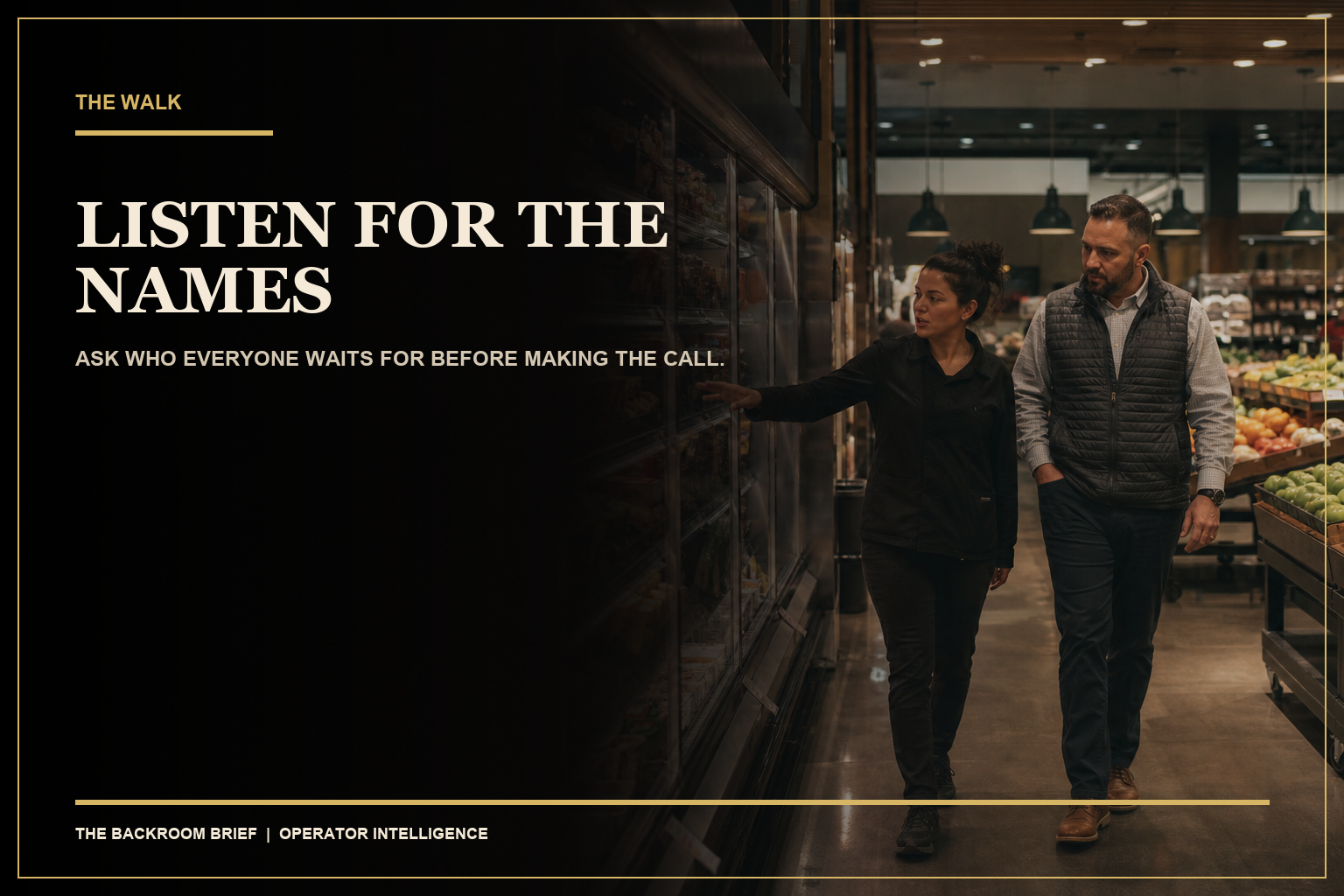
Listen for the names
You can hear where a department is leaning too hard on one person.
- "Ask Joe."
- "Mary handles that."
- "Steve knows that customer."
- "Wait until the manager gets back."
- "She can tell when it's ready."
- "He's the only one who knows how we order that."
- "Ask Maria. She knows which one they mean."
- "Wait until James gets back. He can tell by looking at it."
One of those lines once in a while is normal. When the department keeps saying them, useful knowledge is sitting inside one person's head.
Watch what happens next. Does the customer wait? Does the associate guess? Does good product sit because nobody is sure? Does somebody call the same veteran on a day off?
That is the warning light. The department may have enough people and still be one absence away from starting over.
Find one thing only one person knows
Find one thing this week that only one person seems to know. Have that person show someone else not just what they do, but what they look for before they make the call.
Keep it on the floor. Use a real product, a real order, or a real customer situation. One useful piece of judgment, seen in the work, is worth more than another page nobody opens.
Operator Question: What does one person in your department know that the rest of the team would have to learn the hard way if that person were gone tomorrow?
The Idea
Do not make being needed the only proof of your value.
Why It Matters
Being needed feels good. You are the one everyone calls, the one with the answer, the one who fixes it, the one they wait for. After enough years, that can start to feel like proof that you matter.
Then somebody you taught makes the call without you. That can feel strange.
This Week
Their needing you less does not mean your leadership mattered less. It may be the clearest evidence that it mattered. The goal was never to leave people waiting for you. It was to leave them stronger than you found them.
Get the Friday Brief for one sharp grocery operator read and one practical move every week. Subscribe free and receive the Store Walk Standard in the welcome email.
Forward this to one operator who knows the hardest thing to replace isn't always the person. It's what they knew.
The evidence behind this issue
[1] https://www.prnewswire.com/news-releases/new-study-independent-grocers-demonstrated-resilience-amid-economic-uncertainty-302839118.html - 2026 U.S. Independent Grocers Financial Study release
[2] https://news.cornell.edu/stories/2010/01/study-shows-employee-turnover-damages-service - Worker turnover hurts customer service, study shows
[3] https://knowledge.wharton.upenn.edu/article/why-training-your-employees-will-increase-sales - Want to Stop Retail Showrooming? Start Training Your Staff
Get the Friday Brief